
Most years, the May long weekend finds greenhouses packed with eager gardeners, snapping up their favourite plants by the cart load before they disappear from greenhouse shelves.
The long, hot days of summer will eventually arrive and when they do, we will be grateful for plants that not only stand up to the heat, but bask in it -- without demanding all of our attention.
Succulents represent one of the biggest design trends in the gardening world, mainly because most of them can tolerate a fair bit of neglect. Synonymous with hot, dry, desert-like conditions, succulents are perfect for creating original and imaginative landscapes and patio containers.
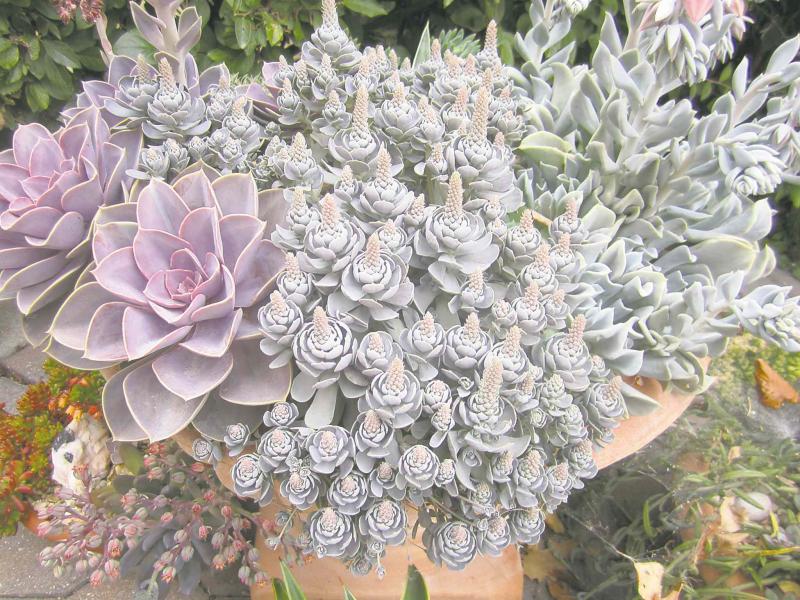
Apart from the overriding need to not be overwatered or potted in soil mix that is too rich in organic matter, does the practicality of succulents equate to boring plain-Jane looks? Indeed, the highly decorative aspects of succulents will not disappoint. Not colourful enough for you? The reality is the remarkably intricate geometric form of the leaves, rosettes and stems that adorn cacti and other succulents come in a wide range of jewel-like colours including red, yellow, blue, mauve and shades of green.
On a recent visit to Our Farm Greenhouse near Portage la Prairie, home to the largest selection of succulents of any greenhouse in Manitoba, I was bowled over by ready-made succulent combinations in a variety of imaginative containers from wide patio bowls to teapots.
Owned by Leslie Doherty and managed by the Doherty clan of siblings, I talked to Shea Doherty about the growing demand for succulents.
"Succulents now represent more than 20 per cent of our entire nursery operation," said Doherty.
Last year, Our Farm Greenhouses made the leap to wholesale distribution and is positioning itself as a major distributor of succulents to local greenhouses.
Many succulents are sold as a cutting from Costa Rica and then they are shipped to California where the arid, hot climate allows them to be grown outdoors. From there, major growers such as Altman's distribute them worldwide. As Our Farm Greenhouse expands its collection into the range of 2,500 to 3,500 different varieties, it will be possible for them to grow them in the greenhouse without having to bring them in from the U.S. The savings in shipping costs will be significant.
This spring, succulent designer Doherty will have 800 succulent hanging baskets for sale. They range in size from 25 centimetres to 45 cm and 400 of them areunique so gardeners can be assured that they are not taking home a cookie-cutter basket. Prices range from $20 to $60. All of the succulents in the larger baskets are two years old. Look for diverse varieties of Euphorbia, Senecio, and Aeonium (especially Sunburst Variegated Aeonium). Fall in love with the Australian echeveria varieties and their giant leaves.
If you visit, look for Doherty. His enthusiasm for all things succulent is positively infectious.
Pauline Knoll, a succulent enthusiast who once owned a greenhouse in Winkler and who also worked at Our Farm Greenhouse, recently sold her home and moved to George Lake, which is six kilometres from the International Peace Gardens, home to one of the largest succulent collections in North America.
Today, Knoll assists Johannes Olwages, curator of the succulent collection. Although the collection is indoors, Knoll plants containers for outdoor displays, combining succulents and cacti, sometimes including an annual sedum or a short to medium-sized ornamental grass for height, using 30-cm containers that can be easily moved to a drier location in the case of a heavy rain or dry out more easily.
"The colour of succulents is amazing," said Knoll, who adds they become more colourful when they are grown outdoors.
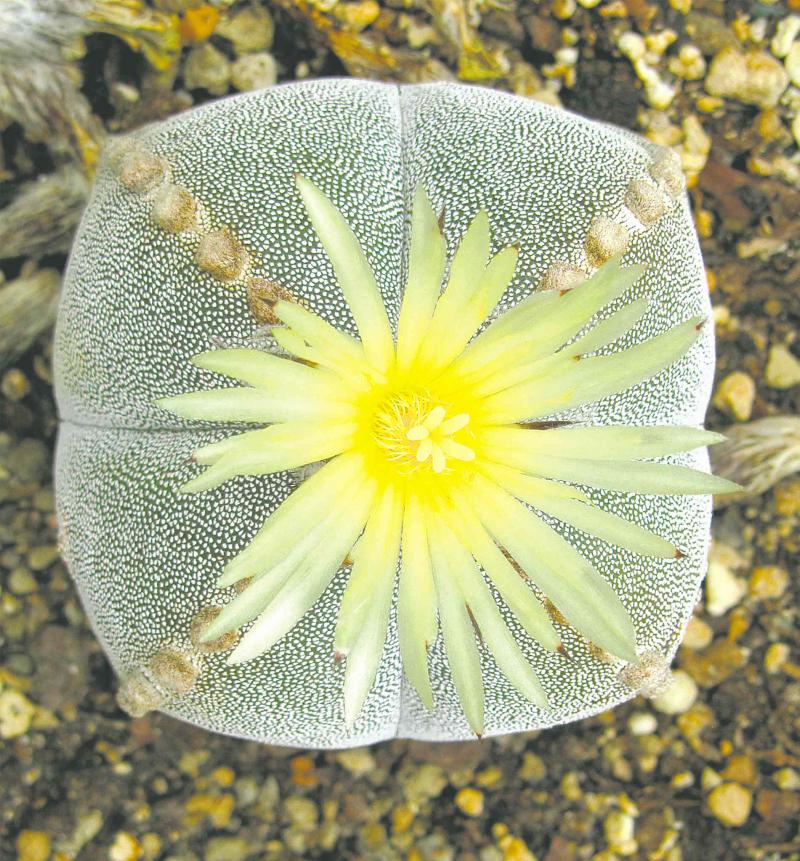
It is commonly said that all cacti are succulents but not all succulents are cacti. Olwages says that while both have the ability to store moisture in the fleshy tissue of their stems, leaves or roots for later use, cacti are distinguished by specialized cottony, cushion-like structures called areoles from which spines, flowers and roots grow.
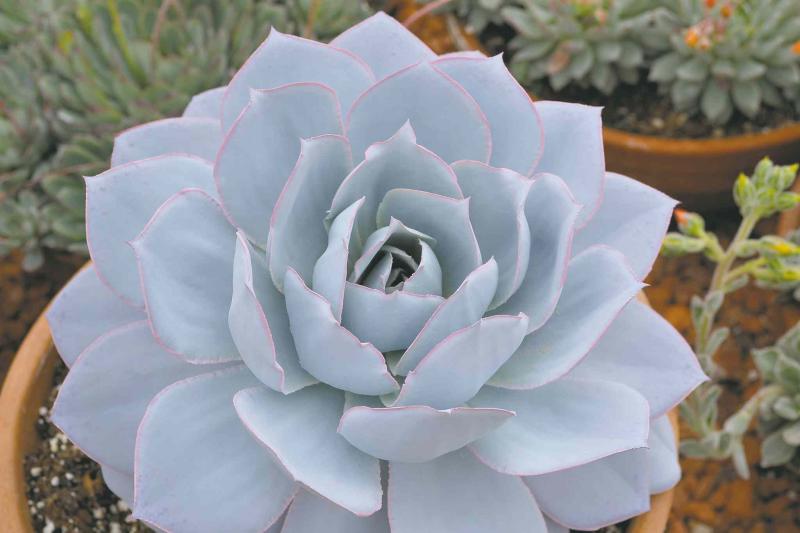
Olwages recommends gardeners consider adding Echeveria cante White Cloud to their collection.
"It is one of the most striking echeverias out there," said Olwages. "The entire plant seems to fluoresce with a light of its own due to a fine white powder that completely coats its blue-grey leaves that are outlined with a thin red edge."
The rosette of Echeveria cante grows to 30 cm wide. Take care to not rub off the fine powdery coating as it is only produced with new growth. Plants should be watered from the side, not the crown.
Knoll also lives close to the Saskatchewan border and occasionally takes advantage of the chance to visit Solar Gardens Greenhouse in Saskatoon, which she describes as a must-see for any succulent aficionado.
Owned and operated for 36 years by Roger Valliere who has travelled the world over to add to his collection, Solar Gardens sells succulents exclusively.
"Demand to know more about succulents is absolutely huge," said Valliere whose succulent workshops in April were attended by more than 1,000 people.
"Succulents have gone mainstream because they are very low maintenance," said Valliere. "At one point they were just for the wealthy because it took a lot of money to produce a small crop, plus the grower had to have them for a long time. For example, a 6-cm succulent from leaf node to fully grown can take about three years."
Today with increased popularity and greater ease of growing more varieties, succulents are much more affordable.
"At one point, basket-ball-sized imported cabbage-type echeverias from Australia and New Zealand would have sold for $150," said Valliere. "Now that same magnificent plant is about $35."
Valliere attends succulent conferences in Europe and travels to Costa Rica where he finds unique new specimens. Once home, it takes about five years to grow a crop from one cutting.
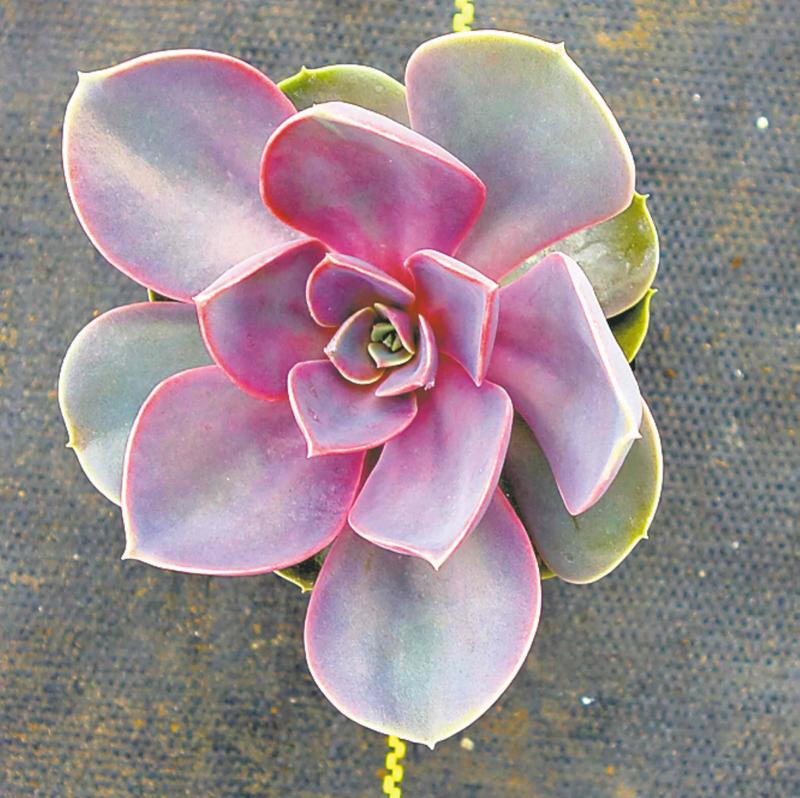
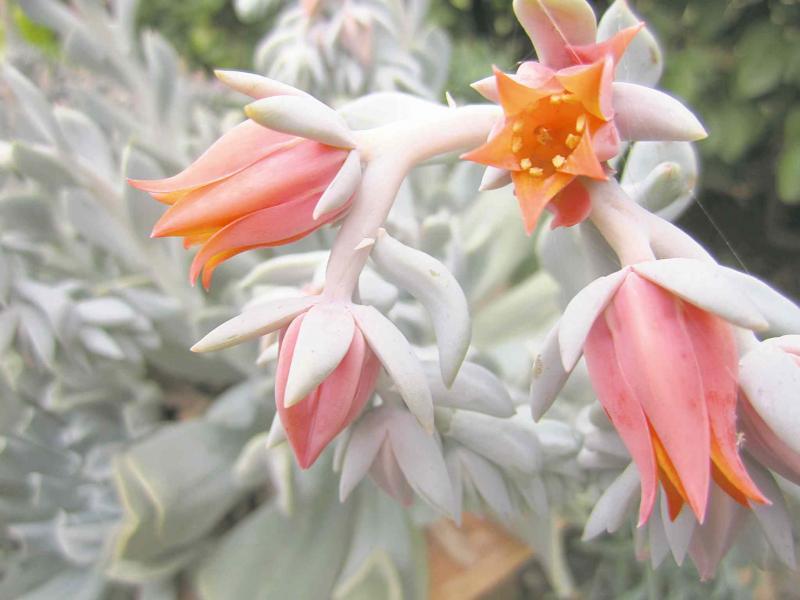
Valliere says some of the coloured succulents that gardeners should look for include Echeveria Perle von Nurnberg which has waxy pearly-purple and bluish rosettes and Lola, the second most sought after echeveria rosette with a rosebud shape. Both produce flower spikes on long stems.
Marilyn Dudek, a master gardener, is gradually reintroducing her tender succulents to her North Kildonan garden after overwintering them indoors in a cold room under lights for 14 hours a day.
Since the beginning of May, Dudek has been moving them to and from her garage using a cold frame that sits on a wagon. Succulents like cool nights but tender hybrids should be protected from any risk of frost. Once daytime temperatures are consistently around 8 C, non-hardy succulents can stay outdoors.
Dudek has been growing succulents for more than 20 years. Once, on a visit to a succulent greenhouse in Carmel, Calif., Dudek watched as the grower chopped off the heads of beautifully formed echeveria rosettes from their too leggy stems, leaving only a 5-cmstub. The short stem was allowed to callous for a few days and then rooting compound was applied to the calloused area and the plant was placed in a freshly prepared container of cactus soil.
Dudek has followed this same practice successfully with any of her succulents that become leggy.
Some gardeners will combine succulents with annuals. Joanne Jones, greenhouse manager at St. Mary's Nursery, recommends annuals that like the same conditions as succulents. Solenia begonia, for example, has a shallower root system, thrives in full sun and tolerates dry conditions. Portulaca and zinnias will work well, too.
Jones suggests planting succulents closely together. Her favourite picks include fine gold leaf stonecrop, lemon coral sedum, euphorbia geroldii and agave.
This summer check out the mosaiculture sculptures at the Children's Nature Playground Garden in Assiniboine Park. Imaginative wire frames in the shape of frogs and musical instruments have been planted with a combination of succulents, alternanthera and santolina.
"The wire frames are filled with a growing medium inside and then covered in plant material lasting the entire season," said Gerald Dieleman, director of horticulture.
Succulent plants in these delightful mosaicultures include a variety of echeveria types, mixed varieties of sempervivum (Hens 'n' Chicks), Aeonium Kiwi, Orostachys iwarenge, variegated sedums and more.