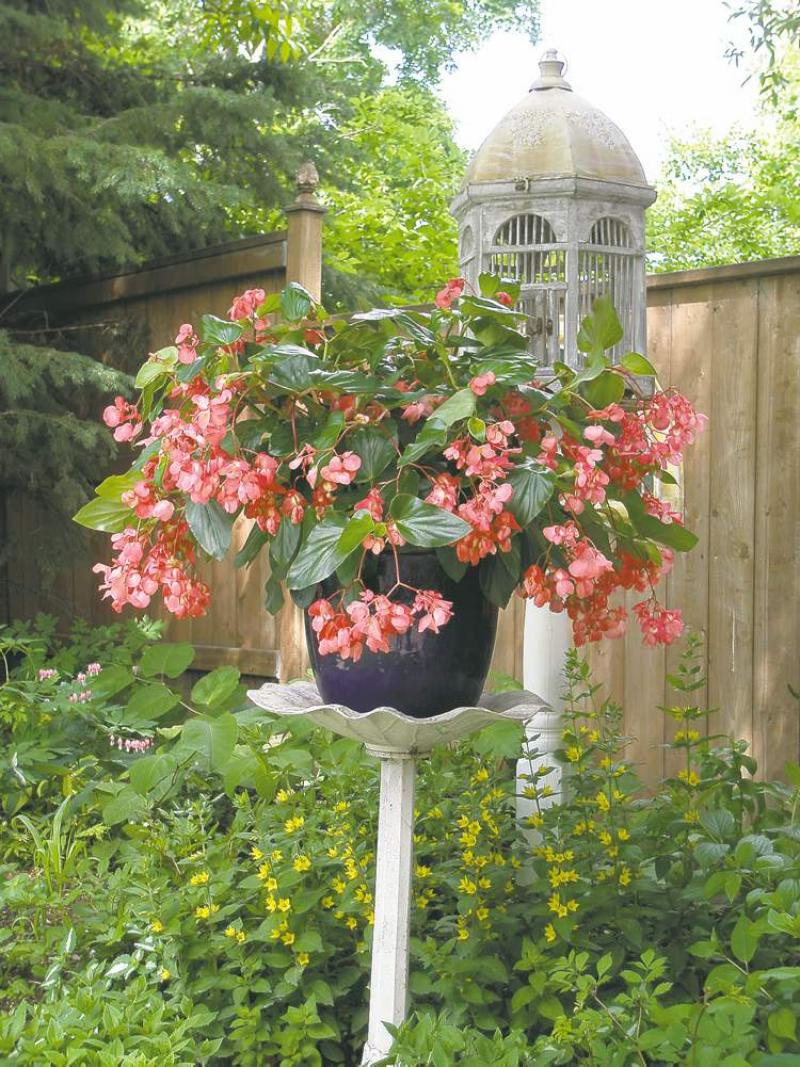
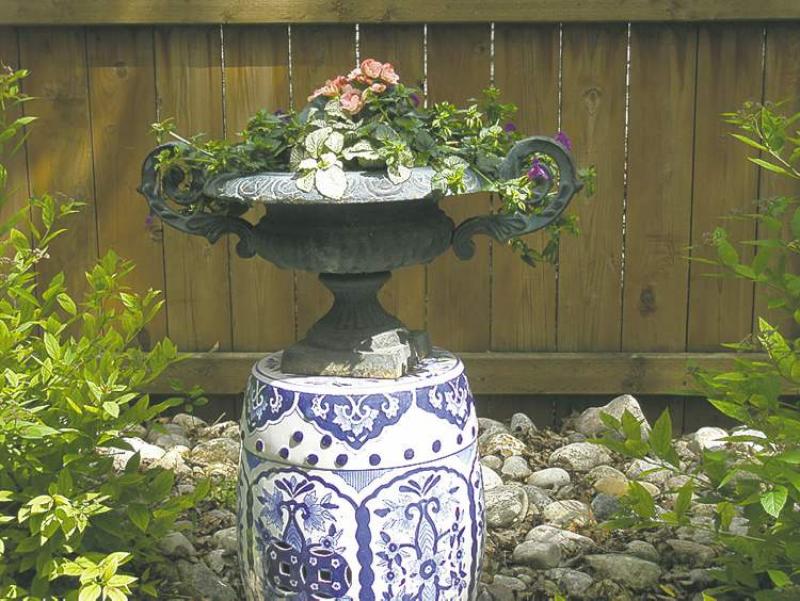
Flowers in bloom appeal to most everyone; however, the many physical tasks involved in maintaining flower beds can be enough to deter some from the pleasures of gardening. Container gardening, though, whether it is on a large or small scale, provides a colourful, portable accent for any part of your outdoor space.
A passion for containerized floral displays has its roots in ancient history but perhaps the most famous example in relatively recent times would be the exotic container displays of the Lower Orangery Exotics Garden at Hampton Court Palace in the late 17th century. William III and Mary II set the gardening world abuzz with their extensive use of elaborately designed containers showcasing all types of rare plant material sourced by plant collectors from around the world. Hampton Garden is undergoing a restoration including the recreation of the original containers.
Today, a plentiful supply of unusual, fascinating plants is readily available to gardeners at the closest garden centre. Containers, too, are available in a dizzying range of materials and sizes. While the traditional terra cotta container remains popular, lightweight materials such as fibreglass allow for the easy use and storage of oversized containers. Heavier containers, though, can easily be moved throughout the garden with the use of a two-wheel dolly.
Extending the beauty of your container displays into the hot, dry summer months of July and August has a great deal to do with the planting medium in which they have been planted. Good water retention and drainage is essential and this is most easily achieved through the use of specially formulated potting mixes.
David Hanson and Evelyn Yauk, co-owners of Sage Garden Herbs, stress the ideal potting mix will have three main qualities: good structure to anchor the plant, excellent aeration plus moisture-holding qualities for good water retention.
"A 50 per cent blend of cocoa fibre in the mix helps to keep the soil evenly moist."
Good water-holding capacity is critical for containers and makes for less stress if you happen to be going away."
Vic Lesser from Red River Soils recommends the use of a potting medium that includes an ingredient called Zeolite, which attracts and holds nutrients, keeping it in the medium longer rather than leaching out of the container. "Zeolite is totally organic. It holds between three and four times its weight in moisture, acting like a sponge. As the plant dries out, Zeolite has the capacity to release water and nutrients back into the soil."
Lesser also recommends the addition of earthworm castings to the soil surface of potting medium. "The castings contain micro-nutrients and enough of a living bacteria count to stimulate the breakdown of organic fertilizers that have been added to the potting medium." Worm castings have the added benefit of a slow release of nutrients with each watering.
While regular deadheading of spent blooms helps to ensure repeat flowering, fertilizing keeps them at their floriferous best. In previous years synthetic fertilizers were the fertilizer of choice, but environmentally friendly organic fertilizers such as Gaia Green produce equally good results by stimulating biological activity in the potting medium. Lush, vigorous growth is not the only advantage of fertilizing: plants will also have an increased ability to resist disease and pest infestation, reducing the need for chemical pesticides.
"If you are looking to attract beneficial insects such as butterflies and ladybugs, think about diversity in your container plantings. Mix it up: don't just use all vegetables or all flowering plants. If you're planning to eat some of what you grow, though, make sure it is grown chemical-free," said Hanson. A favourite plant, for example, that serves a variety of purposes, is the Paloma Sunbeam Fuchsia. "What we love about it is that it is very attractive to hummingbirds. A little-known fact is that it produces an edible, very tasty berry at the end of the season. Makes an interesting garnish in a salad."
Two options for compost-based fertilizers include Earth Safe All Purpose Organic Plant Food and Evolve Organic. Both are slow-release fertilizers. Simply mix liquid in water and add to your container with a watering can. Fertilizing once a month should be all your container display will need. Consider, though, that if your container display holds perennials that you intend to transplant into the garden in the fall, fertilizing with either a synthetic or organic fertilizer should cease by the end of July so plants harden off in time for winter.
Regular rainfall can lessen the amount of watering required for containers; however, even heavy rainfall may not reach the soil if it is covered with a thick canopy of blooms and leaves. The only true test is to feel the soil: it should be evenly moist but not saturated. If uncertain, check for dryness approximately one inch beneath the surface.
The best time to water is early in the morning although wilting leaves under a hot afternoon sun can signal the need for a second watering. Overwatering, though, can result in yellowing and premature leaf drop. The easiest containers to water are those that contain plants with similar moisture requirements.
Self-watering planters are ideal for vacationing gardeners. The average self-watering planter needs to be watered about once every three weeks, says Laura Wittig, Equinox Environmental Products. "Self-watering planters have a built in reservoir in the bottom. Once filled, the water will sit in the reservoir so the plants can take it through their root system as required." Prices range anywhere from $75 to $700.
Monitor your plants for the first signs of disease or pests. I have to run into the house to get my glasses sometimes if I suspect an aphid infestation. The first sign of a glistening, sticky residue on leaves should be treated as soon as possible with several strong sprays of water from the garden hose -- this method, if repeated over consecutive days, really is more effective than the use of a pesticide, which can do more harm than good.
In addition to the loving care and maintenance that goes into your container garden, don't hesitate to cut back your plants to prevent straggly displays. Trailing plants such as diascia, petunia, verbena, torenia and others are reinvigorated when cut back, resulting in more compact, bushy growth and branching.
And finally, keep a record of your favourite performers. Take note as to whether they have met your expectations. I'm noticing, for example, the much-hailed Wasabi coleus isn't so sure that it likes a full sun exposure as indicated on the plant tag. Good thing I planted it in a container -- it is now residing in the shade.
Colleen Zacharias is a master gardener and prairie horticulturalist.
Colleen.Zacharias@gardensmanitoba.com