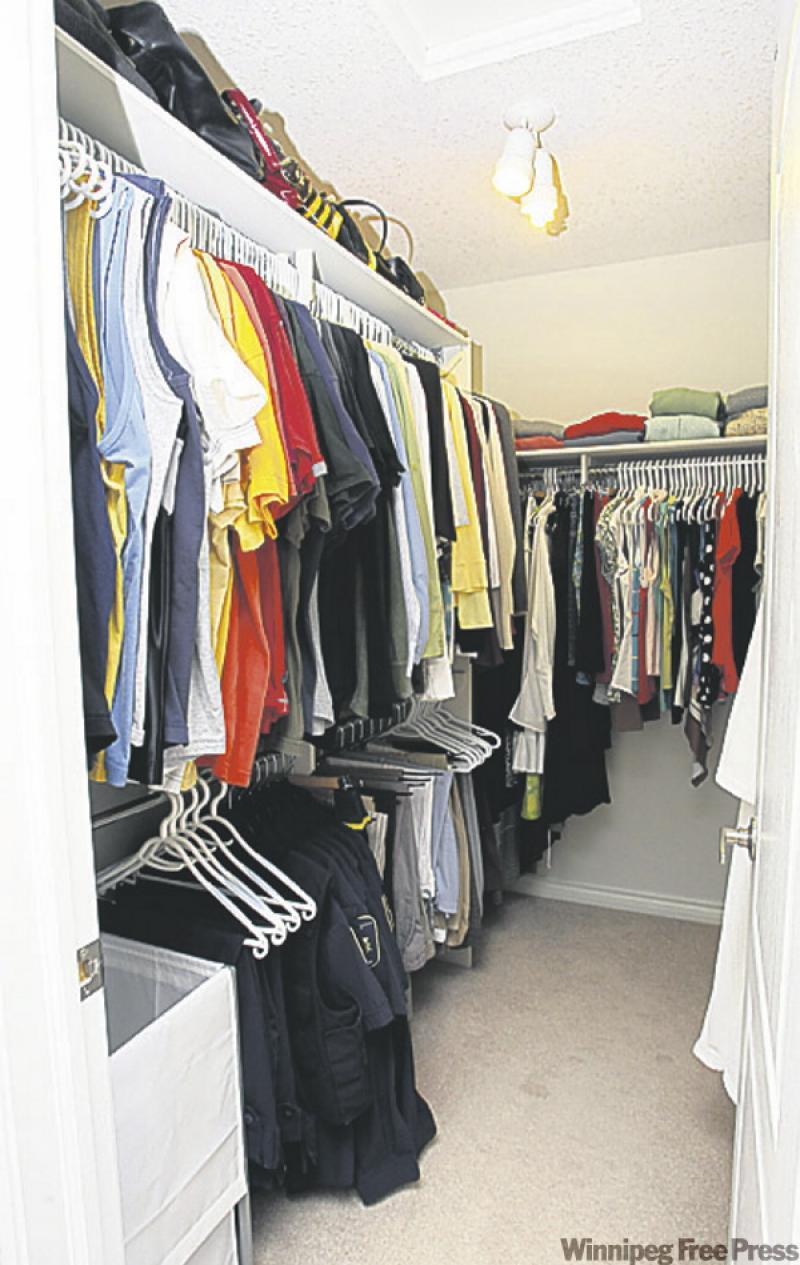
EDMONTON -- You know there are usable batteries (or picture hooks, or masking tape) somewhere in your house, but you can't on your life recall where.
Meanwhile, that spare room (or closet, or nook) has become so overrun with odds-and-ends that you can no longer use it for anything else.
It may be time to seek professional help.
There are plenty of people out there willing to offer advice, along with scores of stores selling every size, shape and configuration of organizer to get you and your home back on track.
Take a look around any good-sized grocery, housewares, office-supply or drugstore to see the growing array of storage totes, closet organizers and filing systems available to satisfy consumers' increasing appetite for organization.
"We have so much more stuff, all of us. So much more toys, clothes, tools, outdoor living furniture, you name it," says Brian Miller, marketing manager for Rubbermaid Canada, makers of that most basic and enduring staple of home organization, the Roughneck tote.
Rubbermaid's storage offerings have expanded over the years along with consumer demand, as has the range of stores carrying such products, he adds. The company's most recent efforts have centred on two organizational hot spots, the kitchen (with food-storage containers) and the garage, for which a huge array of organizing contraptions are now available.
Twenty years ago, "if you had some shelving and a nail up (in the garage), that was pretty sophisticated," says Miller. Now, whole stores are devoted to getting the garage in order.
That's partly because, like the stuff inside our homes, the stuff outside our homes is accumulating like never before. The popularity of "outdoor living" means people now have furniture, toys, cushions and more outside, all of which need to be stored somewhere, says Miller.
The problem comes not in finding the devices, but in using them. Simply choosing an arsenal of organizational weapons can be intimidating, if not overwhelming. That's where the professionals come in.
As homes have become bigger, our possessions have increased to fill them, feeding a growing industry of storage and organization.
Professional organizer Stacy Walker says the sheer numbers of storage options available now can sometimes exacerbate the problem. "People will rush out and buy a bunch of stuff to organize their stuff and then they just have more stuff," she says.
But those people are skipping the critical first step in getting organized, she adds. "The key is always, always, purge first, then figure out what you need to store, then get the product to store it."
Nicki Parsons, another local home organizer, says everyone needs to begin the same way: by getting rid of stuff. "You always want to start with a purge. Ask yourself, 'When did I use this last, what did I use it for and will my life suffer without it?' "
Be brutal. Be quick. Don't agonize over each piece or stroll leisurely down memory lane. Until you whittle down the volume, you won't know how much you need to store, let alone where to store it.The next step is to find places to put things that make sense, so you can find them again when you need them, says Parsons.
"Creating homes for everything is the key to having a well-organized space. A place for everything and everything in its place."
-- Canwest News Service
Tips from the pros
The junk drawer: "Everybody needs a junk drawer," says Nicki Parsons. "But it needs to be well-organized." Get a simple tray-style organizer and, if you're really inspired, label the compartments so you know where everything goes.
Purging: For an effective purge, make four piles: keep, toss, donate and memorabilia. Make a "memory tote" for each person in the family, where keepsakes are stored.
Kids' art and school work: Keep the artwork and papers you want for a year, then choose 10 favourite items to put in a binder or folder. Keep it out for a while for the kids to look at, then put it away in their "memory tote."
Kids' toys: Create defined spaces where the toys belong, to keep the toys tidy and to set a clear division between kids' space and parents' space. Like everything else, purge toys regularly. Parsons likes to take items to Once Upon a Child because they buy it outright, rather than on consignment.
Mud room/entrance: Use some kind of functional storage like a bench seat that opens, or under which baskets can be placed -- one for each family member's hats, mitts and other accessories. Put shoe racks in the back closet that run up the wall, making use of the vertical space, Parsons suggests. Coat hooks on the wall -- higher ones for parents, lower ones for kids -- make it easier for each person to ensure his or her own coats are kept off the floor.
The "catch-all" or storage room: Parsons calls it her "five-minute room rescue." Tackling the whole room at once is too daunting for most people. Instead, take five minutes each day for a month to pick away at it. "Go in there and start by clearing a path, then create homes for these different things."
Piles of paper: Use a three-tiered paper tray. Label the topmost tray "important" and put bills and other immediate concerns in it. The middle tray should be labelled "file," for items like bills that have already been paid. The bottom tray is marked "read," when time allows.
Clear plastic tubs: They may not be the prettiest, but they're the most functional, says Stacey Walker. "It gives you a parameter of how much to keep. Once the container is full, do you get rid of stuff or do you buy another container?"