EDMONTON -- Give me an arbour, give me the trellis'd grape, poet Walt Whitman once wrote.
We heartily agree. The humble trellis and its cousins (the obelisk, the pergola, the arbour, the ol' bean pole) have enjoyed supporting roles in the garden for millenniums. And they're big multi-taskers. As well as offering a structure upon which plants can climb, spread and drape themselves, they provide privacy, dappled shade on a scorching day, a way to mark off different areas of the yard and esthetic possibilities.
Trellises can be a big part of a deck as well as the look and feel of a garden's architecture. They also run the gamut from dead simple to highly elaborate and from inexpensive to pricey.
The lattice news
Wooden lattice is an affordable, popular trellis material that's getting a makeover in 2010. The new trend is toward a horizontal configuration, rather than a traditional checkerboard pattern on the diagonal or up and down. This look is more modern, very clean and refined, and does not necessarily include vines and other climbing plants.
However, it you have a traditional house, you're going to use a traditional lattice. If you have an English-garden style, modern lattice will seem out of place.
New takes on screens
There's now a much wider range of materials used in garden screening, such as glass in a frame. This could be frosted or coloured, and might also be artistic glass, which is stained or patterned. Even mirrors, which can make a garden look bigger.
Another new theme for screening and plant support is fencing made of willow. It rolls out and it's made of little pieces of willow bound by wire, six feet high and eight to 10 feet long. Stick this between two pieces of wood and you end up with a very full screen. You can't see much through it, and it's a very natural look.
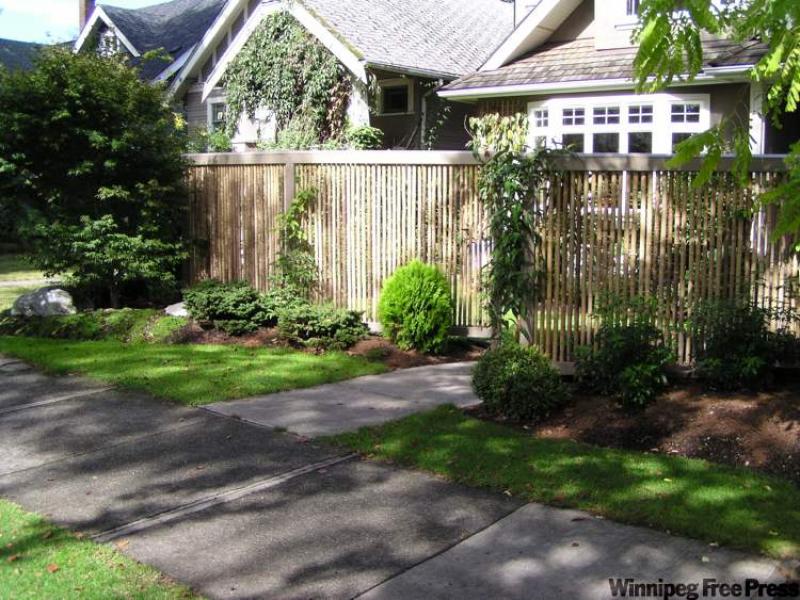
Free-standing bamboo screens are another option this year. These are basically good-sized pieces of bamboo lashed together with string. You could stand them up against the back of a container, or put a number of containers in front and have them grow all the way up.
As for obelisks and other structural pieces that can be placed in containers or at ground level to mark the corner of the vegetable plot, there's a wider array of styles and sizes each year. Think fan trellises, think rectangles with half circles on top, sometimes in decorative glass.
While they're not an off-the-shelf item, consider using fabrics as screening in the garden -- a sturdy type of material hung with dowels, for example.
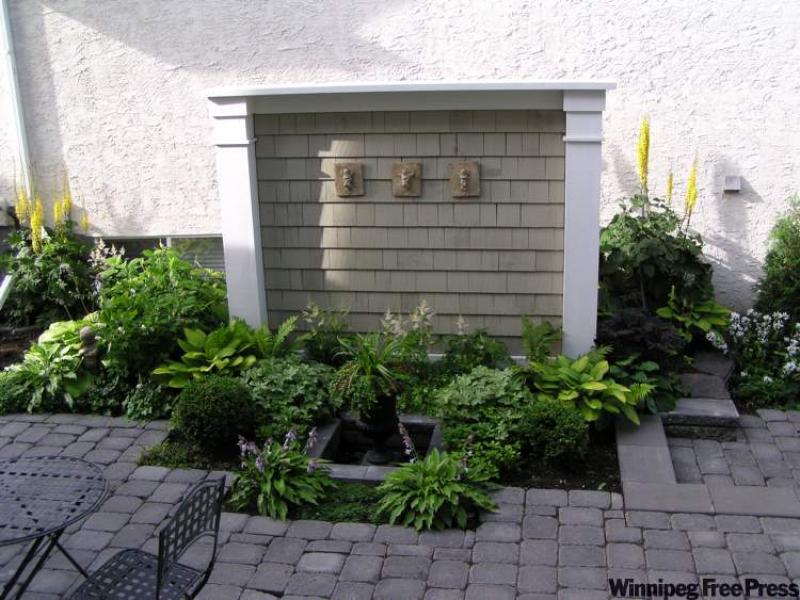
The sky's the limit when it comes to ideas for novel garden structures. You could use a screen that's Japanese, like a shoji; it could be bamboo or have elements of bamboo. A portion of the screen could be wooden lattice; there could be a place in the middle for a mirror or a vase.
Plants that screen
Don't forget that plants themselves make great screening material. Along with climbing vines, grasses are considered architectural plants. Hedges have long been used as screens and demarcations in the yard but they're used more in blocks rather than rows in contemporary settings.
-- Canwest News Service