Gerry Engel
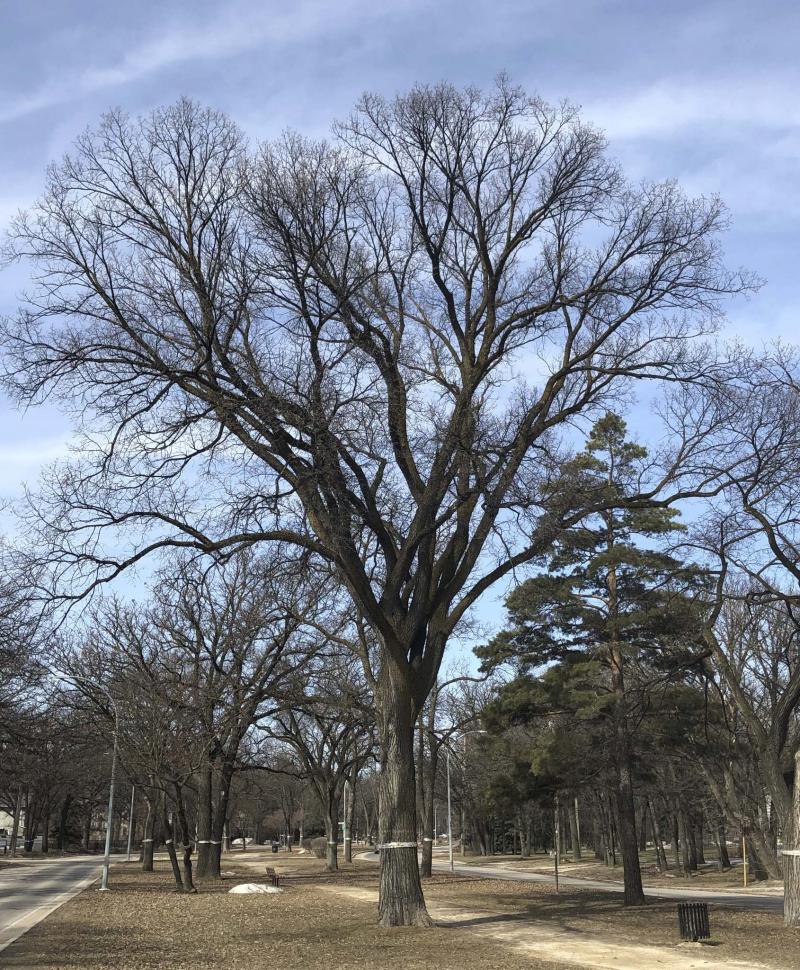
Still banding elm trees after all these years?
Mathew McCarthy
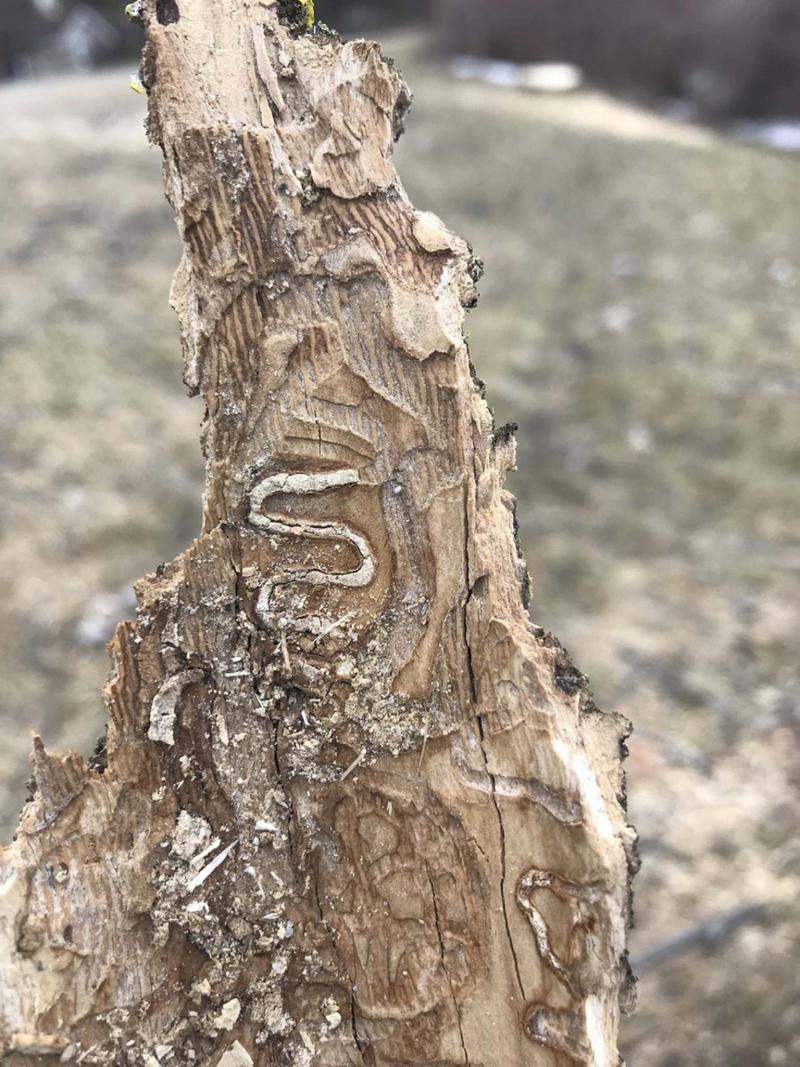
Once an ash tree is infected, the larvae of the emerald ash borer feed on the living tissue beneath the bark.
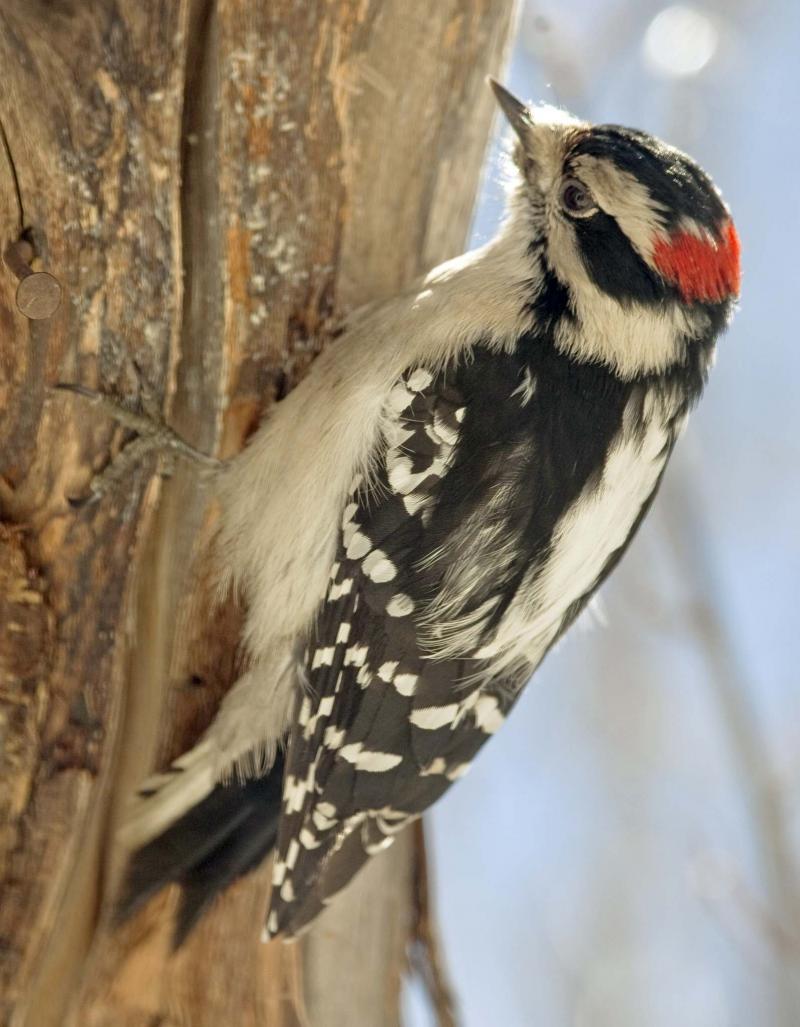
Who knows the risk of chemical injections to the Downy woodpecker as it feeds on EAB larvae?
Darlene Stack
Matt Vinet
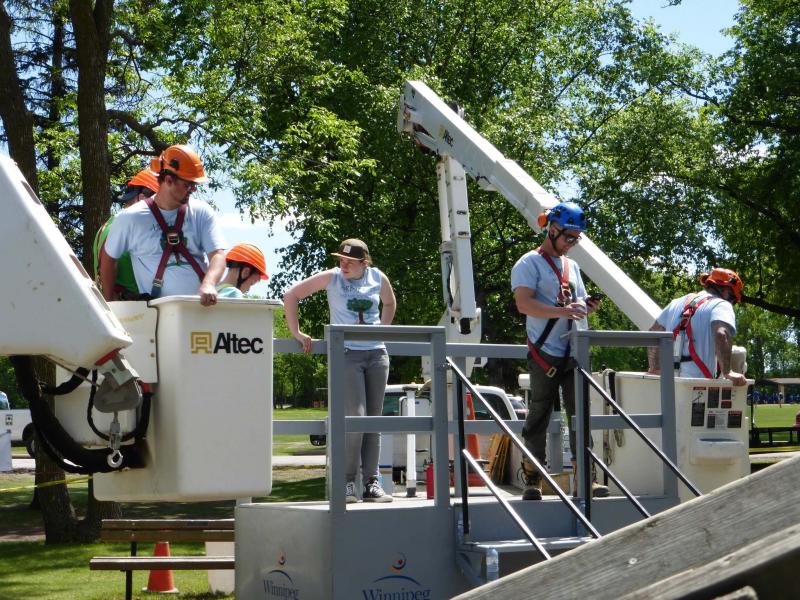
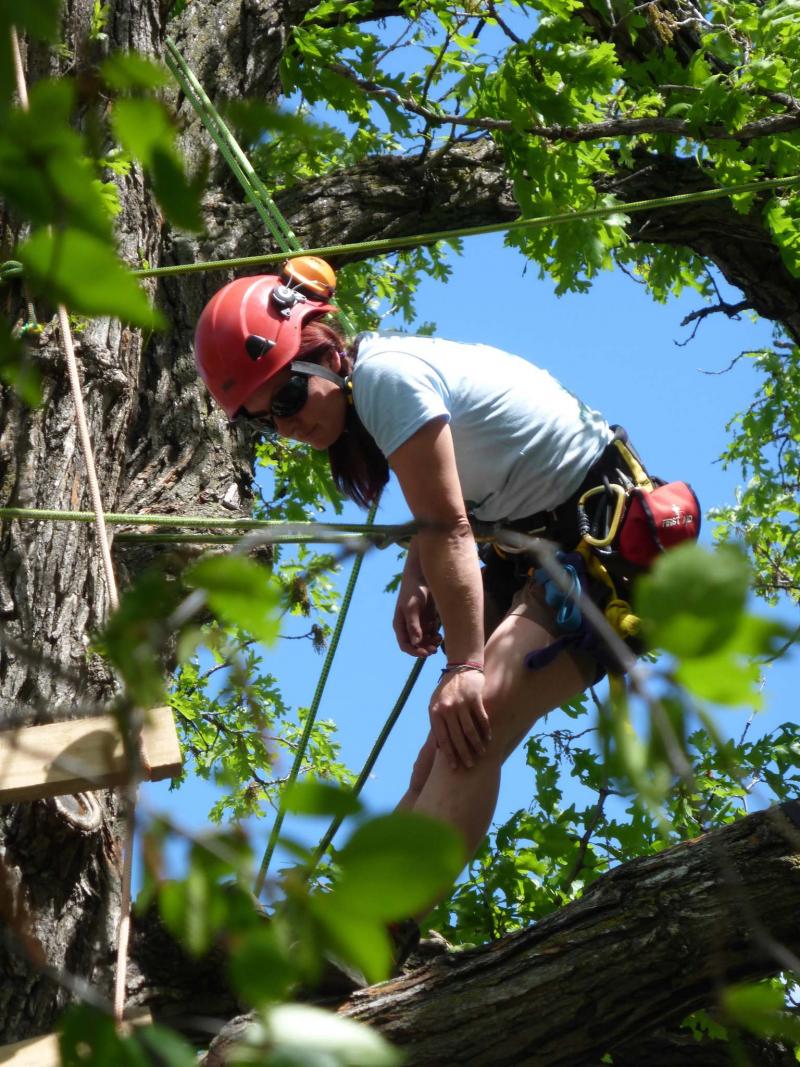
A certified ISA arborist (above) can answer your tree questions on Arbor Day.
People in the arborist profession see trees differently. Ever wonder, for example, why they call it an urban forest? The phrase was coined in the 1960s by Eric Jorgensen, a professor of forest pathology at the University of Toronto. At the time, urban elm trees in eastern North America were being ravaged by Dutch elm disease (DED). Jorgensen had an innate understanding of the value of trees to the urban environment. A visionary, he foresaw the need for training in urban forestry and influenced a new approach by municipalities to the cultivation and management of city trees.
Gerry Engel can see the urban forest for the trees. An arborist who has International Society of Arboriculture certification and is president of Trees Winnipeg, Engel gets to the root of the matter. Born and raised in the North End of Winnipeg, he recognizes the environmental, economic and social benefits of our urban canopy and the urgent necessity that urban reforestation has to be the No. 1 priority for the city and homeowners. But the need to get right our collective perspectives and approaches to tree management and care is critical, Engel says.
Undoubtedly, the clear and present danger posed by the emerald ash borer (EAB) is of significant concern to Engel. If your arms are wrapped tightly around the ash trees on your property and the piece of the boulevard in front of your home in the hope that somehow, you can save them from the scourge of EAB, there are some important things to consider.
First, there is no silver bullet. Once an ash tree is infected, the larvae of the emerald ash borer feed on the living tissue beneath the bark, destroying the tree’s ability to transport nutrients and water throughout the tree including the roots. Engel does not dispute the efficacy of the injection program to slow the spread of the disease and reduce ash mortality. He sees other challenges.
One being what the long-term effect is on woodpecker species such as the Downy woodpecker and Pileated woodpecker, which forage in EAB-infested ash trees that have been injected with a systemic insecticide, imidacloprid? A neonicotinoid, imidacloprid was banned in the U.K. in 2018 because of its potential to contaminate soil and water and harm pollinators. "There is much more that we don’t know than we do know," Engel says. As proper stewards, he says, everything we do in relation to an ecosystem should be in balance with nature.
Once found, EAB cannot be eradicated. Injections, with reapplication required every two years, are not 100 per cent guaranteed to save an ash tree. It may still die from EAB or other stresses. If the flyer in your mailbox says otherwise, don’t believe it.
Once an ash tree dies, Engel says, it becomes hazardous very quickly — within two years. The tree is no longer stable and removal is only possible with a bucket truck or aerial lift. "Time won’t be on your side if you decide to delay removal of a dead ash tree," Engel says, "as the whole tree is likely to fall."
To aid in the detection and management of EAB, Trees Winnipeg launched Winnipeg Forest Watch, a surveillance program that trains volunteers to identify signs and symptoms of EAB. Volunteers collect data by surveying their neighbourhoods and recording the location of affected trees. The program is free. Visit treeswinnipeg.org online to download an application.
Engel is committed to ensuring we do not lose our focus on the responsibility to protect our elm trees, specifically in terms of the spread of Dutch elm disease and the amount of heel-dragging in the time it takes to remove diseased trees.
Leaving diseased elm trees standing increases the likelihood of increased spread of the disease, Engel says. The problem is directly associated with the two periods of beetle migration. The first period is in the fall when the beetle larvae become adults and leave the upper elm tree to move into the basal area of the tree where they eat their way into the wood and hangs out for the winter. The second period, Engel says, occurs in the spring when those same beetles emerge from the base of the tree, fly up to the upper canopy, eat their way into the newly forming wood and lay their eggs for the next generation.
"If we are going to succeed in controlling DED at the levels our city has previously proven itself capable of as recently as five years ago," Engel says, "then having a rapid removal process in place for trees diagnosed with DED before the second or spring migration should, in my view, be our target immediately." In sensitive areas, rapid removal before the first or fall migration should also be considered.
Why are some of us still banding our elm trees? There is no correlation between the use of tree bands and the prevention of DED, Engel says. Two decades ago, when malathion was routinely being sprayed in neighbourhoods as a control for cankerworms, tree bands were a non-chemical alternative. These are different times. "Consider that the bands are not biodegradable," Engel says. "The band is simply control for the cankerworm which is one isolated insect that does varying degrees of damage."
There are ebbs and flows in the life cycle of the cankerworm. The trees will rebound, he says, providing you keep them well-watered.
Melva Widdicombe is an active member of her neighbourhood tree committee. A longtime resident of Armstrong’s Point, Widdicombe says her tree committee is not recommending tree banding at this time, although some neighbourhood residents still follow the practice.
Widdicombe says her committee is still in the process of discussing and researching the effectiveness of the ash tree injections. As for the boulevard planting in her community, the committee, alarmed by the rate of elm-tree losses and the reality that the city could not provide the necessary replacements, raised funds through private donations and the heritage-house tours it organized to buy and plant dozens of trees.
Instead of the more expensive ball and burlap wire-cage trees the city plants, they chose container-grown trees they were able to plant manually on the boulevards but were large enough that they would be visible to snow-plow operators and municipal grass cutters. Some damage occurred to a couple of the trees this past winter, but nothing lasting, Widdicombe says.
In some neighbourhoods, residents will come together to help in the reforestation of their community and in others, individual homeowners will plant trees on their private properties. Either way, there will be plenty of questions.
Arbor Day is an annual event that draws visitors from all across the city. This year’s event takes place June 1 at St. Vital Park.
"We celebrate the trees in our communities and the arborists who care for them," Engel says. "It’s also a great chance to receive tree care advice from ISA-certified local arborists who staff the ask-your-arborist booth throughout the day."
colleenizacharias@gmail.com