New Homes
New Homes
Seniors play an important role in Canada's housing market
For the sake of this article we will classify a senior as anyone over 65, although I appreciate many in that age classification don't see themselves as seniors.
According to the most recent census, the majority of seniors don't live in what we would call seniors' housing, or residences specifically designed for senior citizens such as retirement homes or nursing homes. In fact, 98 per cent under 70 and 94 per cent under 80 live in their own homes. Even for those over 85, the majority continue to live in their own homes.
The primary factor influencing the move from one's own home to seniors' housing is the loss of a spouse.
The senior market segment is one to watch for future housing trends. The number of seniors will continue to grow in all age categories through 2031. Over the next six years the 65 to 74 age group or younger seniors will experience the greatest growth. This is an important fact as more than 90 per cent of this group lives in private housing and is likely to have equity built up from owning their own home without a mortgage.
This isn't to say there won't be demand for retirement homes, but this demand won't peak for about 15 years. From a regional perspective, it is important to note Manitoba has the lowest percentage of vacant spaces (4.6 per cent) for seniors' housing of any province in Canada (national average is 9.7 per cent).
About nine per cent of all new home sales for the past five years have come from those 65 and older. Eleven per cent of all new condominium sales are from this age segment.
Today's younger seniors have established equity in their current homes. It is also safe to say today's seniors are considerably more mobile than their parents were.
Speaking of mobility, today's senior is more prone to take an extended winter vacation south of the border than a generation ago. They are also more interested in travelling across Canada in order to visit children and grandchildren who may be located in other provinces.
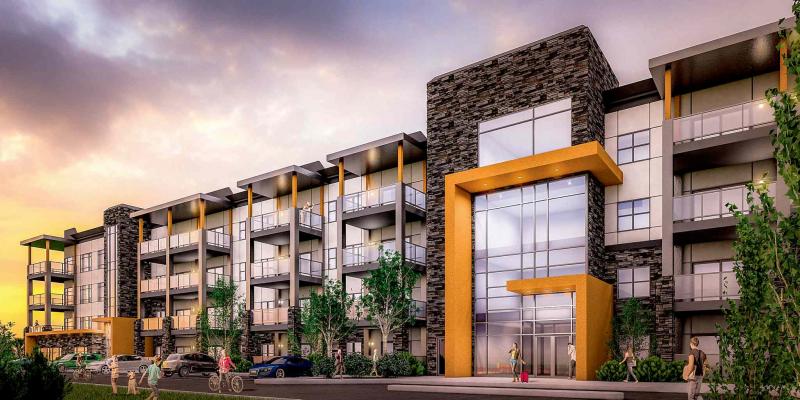
With this greater equity and mobility in mind it would not be surprising to see a more concentrated effort towards marketing the condominium lifestyle to the senior population in this and other Canadian markets.
Mike Moore is president of the
Manitoba Home Builders Association
New Homes
Vancouver residents vote against tax increase
Vancouver residents recently voted No in a plebiscite regarding a $7.5 billion transportation plan. A significant 61.7 per cent of voters rejected the notion of increasing their sales tax by 0.5 per cent to help fund this major infrastructure project.
Jordan Batemen, the leader of the No campaign, argued that TransLink, Vancouver's transportation authority, already wastes too much money and shouldn't be given any more. The onus will now be on TransLink to deliver improved services through cost savings.
Vancouver Mayor Gregor Robertson admits to needing an alternate solution from the BC provincial government as municipal increases in property taxes is not an option. The transportation plebiscite was forced by the provincial government as part of a 2013 election campaign promise.
The proposal was part of a tri-party (federal, provincial, municipal) funding plan; however 20 of the 23 voting municipalities voted No, even transit-friendly urban areas.
Referendums of this nature are a common practice in the United States, but seldom used in Canada. A few Ontario municipalities were considering similar strategies but are now likely backing off in anticipation of some backlash.
In Toronto, they have looked at new vehicle levies, gas taxes and sales taxes, but have not moved forward. Montreal is calculating possible revenues from private developments along subway lines. The BC provincial government said that they would not consider diverting funds from the carbon tax or imposing a new vehicle levy.
Most agree that this was not so much a vote against improved transit or better infrastructure but rather a vote against higher taxes, in any form.
Vancouver is an expensive place to live. Housing costs are the highest in Canada and rank among the most expensive anywhere. They had a Provincial Sales Tax, then a Harmonized Sales Tax and then voted in a referendum to bring the PST back again. Then came this motion to increase that tax.
To be fair, the Yes campaign wasn't very well organized. However, it appears as though any tax increase for any cause was going to be rejected. A tax is a tax; call it whatever you want. Whether it is a transit levy, a vehicle surcharge, a road toll, a development charge, a frontage levy, a fuel surcharge or an increase to the PST, it's still a tax and the burden falls upon the taxpayers to bear the brunt.
The people of Vancouver said No very loudly and told their governments to find a better way.
Mike Moore is president of the Manitoba Home Builders' Association
New Homes
New home starts strong, outlook promising
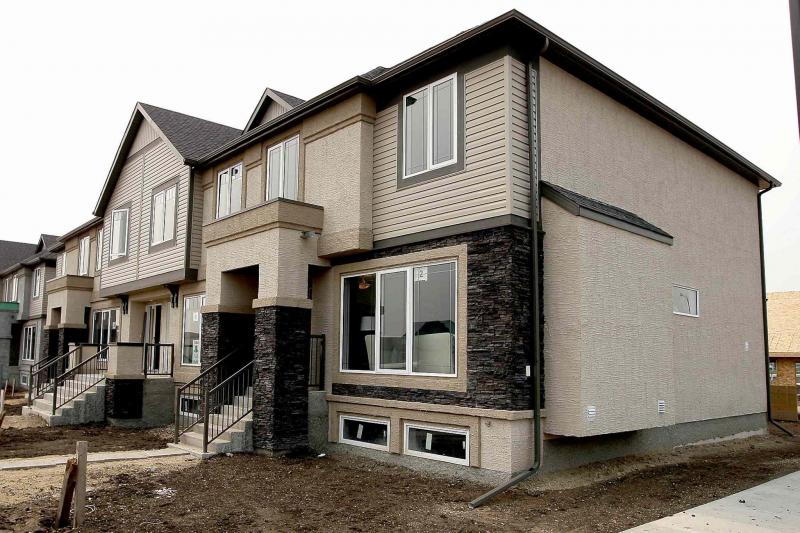
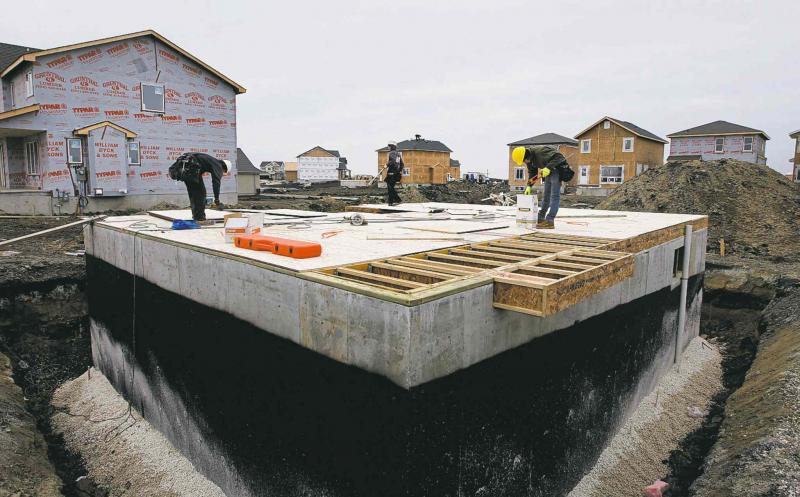
Looking at the first five months of this year, the total number of new home starts in Winnipeg and the surrounding area is on par with last year. As noted earlier in the year, the multi-family (apartments, townhomes, condominiums) are ahead of last year's pace, while the single-family homes are slightly behind last year.
History has shown the larger projects tend to get started earlier in the year and then taper off to anticipated levels, while single-family homes build as the year progresses. Don't be surprised if the year-end totals finish exactly as anticipated, fairly well on par with last year.
Early indications are that new home starts in Winnipeg and the surrounding areas will continue at the current level in 2016 before ramping up a bit in each of 2017, 2018 and 2019. The fast-paced increase in starts at the start of this decade had no option but to cool off for a three or four year period before heating up again.
One school of thought is that this year and next year will both be excellent times to purchase a new home as the market is more stable and predictable. Interest rates remain unchanged throughout this year and the labour availability, although tight, is able to accommodate current new home demands. If the increased demand for new housing over the last three years of this decade plays out as forecast and the skilled labour force declines due to retirement, the wait time could be longer and costs could rise at a faster pace.
Both the new home and resale markets remain healthy in the Winnipeg area. One interesting observation is that the turnaround time from listing or purchase interest to sale is lengthening slightly. This may be due to increased listings on MLS and the tremendous amount of choice options for new homes. The number of sales for both markets is consistent and the increase in value and price is on par with last year. Consumers are just taking a little longer to make their final decisions.
It is important to note that Winnipeg and Manitoba have not experienced the declines that are currently occurring in Saskatchewan after that boom period. The impact of lower oil and gas prices in Alberta has not been fully played out in their market either. While we have not enjoyed the natural resource booms both of our prairie neighbours have experienced, we will continue to produce a superior product at a superior price.
Mike Moore is president of the
Manitoba Home Builders' Association
New Homes
Summer is a great time to renovate your home
I'm glad that I waited until now to promote the spring and summer renovation season. Usually, we try to get things going full speed during the May long weekend. You remember, that was the weekend that featured hail and snow.
If you haven't done so already, July and August are the perfect months to do a thorough inspection of your house and to determine what needs fixing or building. I've got three projects happening right now. One involves replacing a window while another involves some digging in the backyard. Both could be done at different times of the year, but doing them when the weather is nice and the impact on living conditions will be minimal, is a definite bonus.
If you don't have a deck, I'd recommend building one. If you already have one, add to it. We've been lucky the past few years with a fairly low mosquito count. Not so this year, so a little separation from the ground can be a good thing. Whether you want to create different activity areas on different levels or utilize one large single space, you'll be glad you created this extension of your home to take advantage of beautiful summer weather.
Let your imagination run wild when planning the various amenities that would go with your new deck and backyard. Furniture, loungers, barbeque, pizza oven, umbrellas, hot tub, fire pits, lighting, sound systems, heaters and a portable bar are just a few suggestions to make your backyard a paradise.
Does the fence need repairing, re-setting or repainting? Are the eavestroughs and downspouts distributing water or overflowing with water?
Weeding the lawn and garden is a lot easier when the soil is soft and moist than when it has hardened.
I mentioned windows earlier. If the window is clean and you still can't see through it, the time might be right to replace it. If the inside of your window featured a festive Christmas glaze last winter, it might be time to replace the window. Similarly, if the wind howling through your doorway could blow out a candle, you might look at replacement now -- not in the dead of winter.
If you've got a big kitchen job to do, why not do it now and barbeque your meals for the next few weeks. Take advantage of the summer weather to get your renovation projects done!
Mike Moore is president of the
Manitoba Home Builders' Association