Renovation & Design


Renovation & Design
Recurring ice problems remedied by adding or relocating downspouts
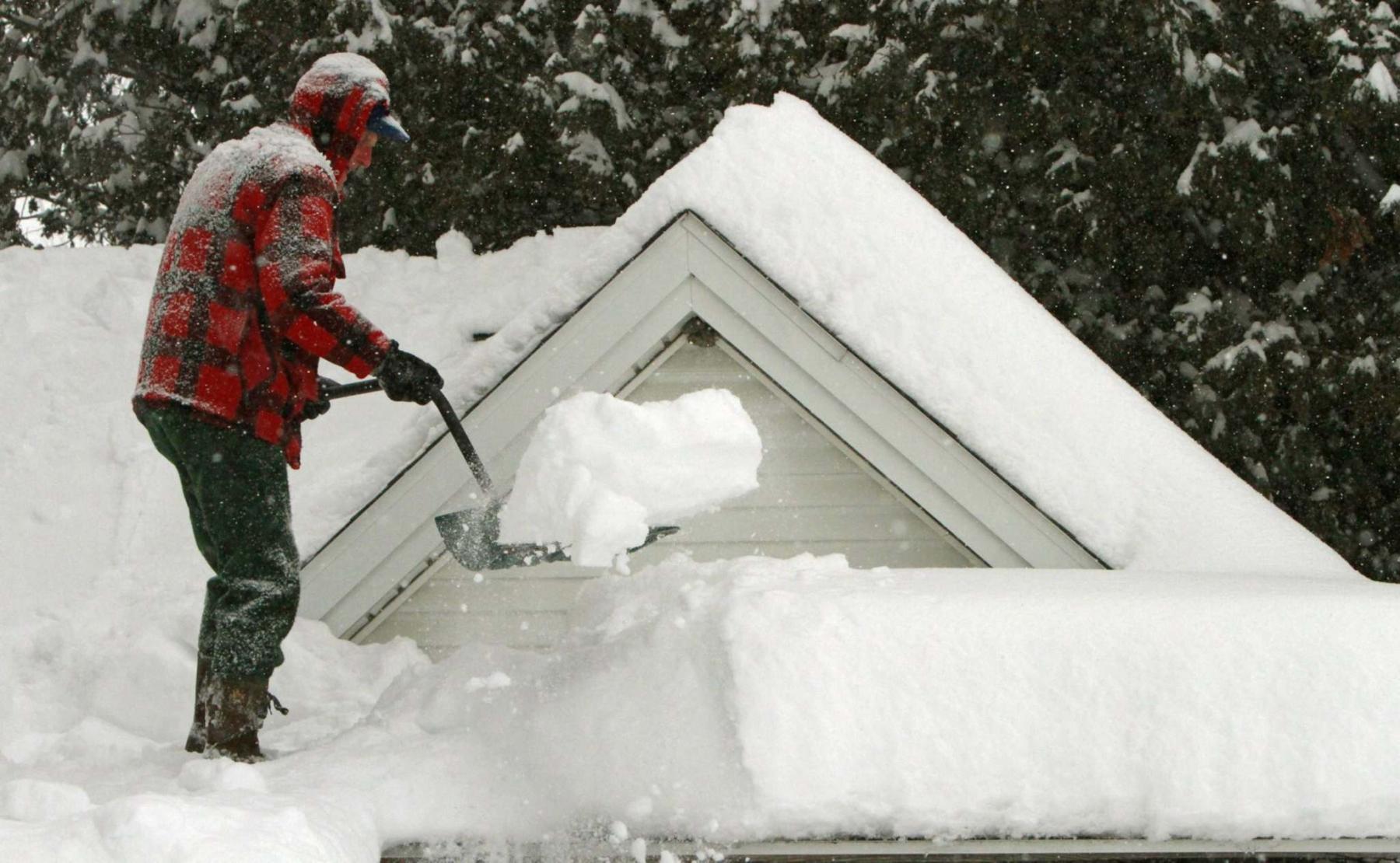
Question: In winter, the sidewalk that leads to my front door, as well as the porch in front of the front door, becomes incredibly icy. I asked my handyman to take a look and he said that the problem has to do with the fact that there’s only one downspout serving the whole front of the house, which is a design flaw. The downspout is on the right side of the garage.
Do you think that having one or two additional downspouts would solve the problem, and can you recommend a company that can do this? A friend suggested having heated wires in my eavestroughs to help melt the snow and ice. Would that solve the problem?
Thank you, Choo
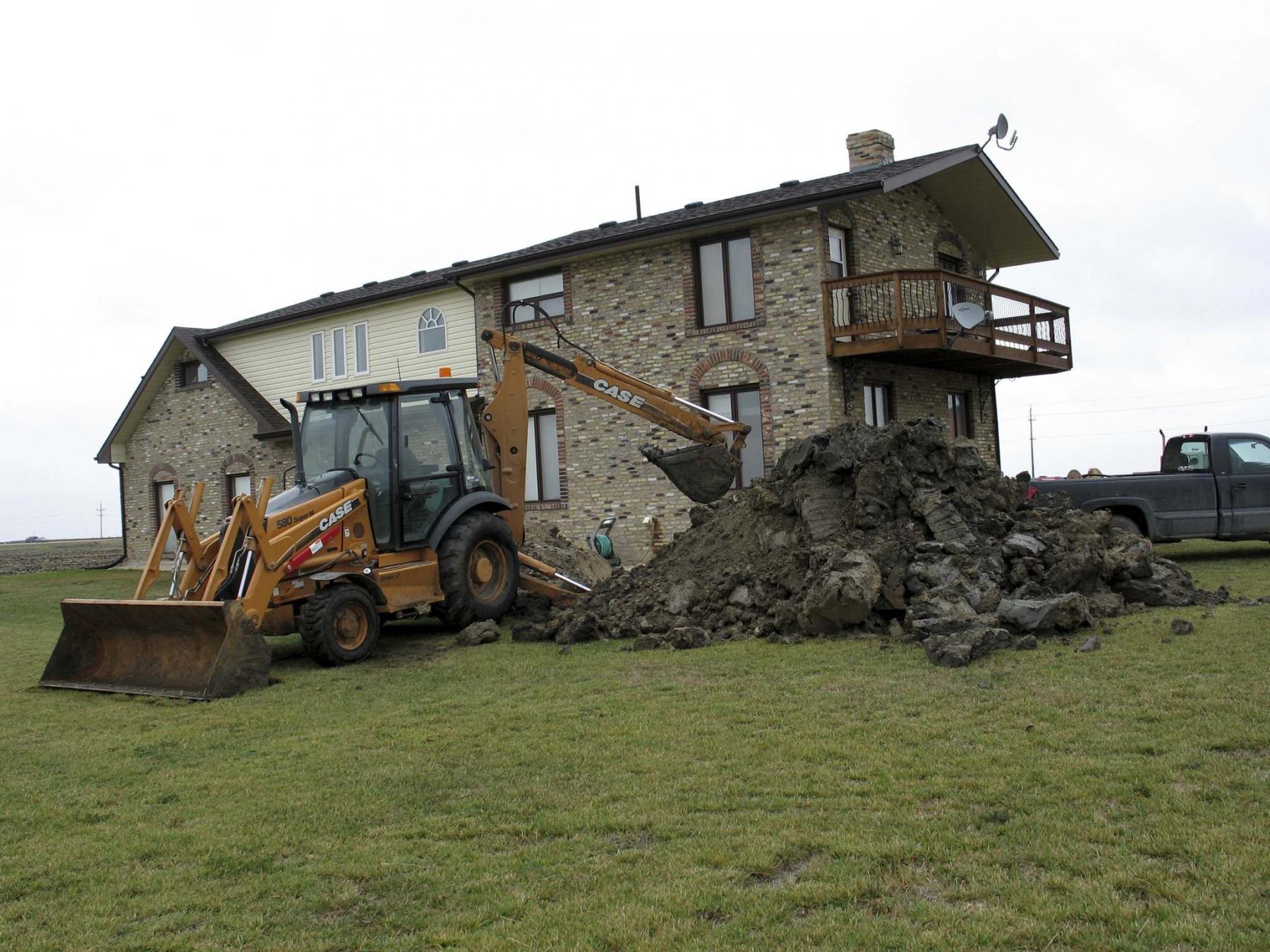
Answer: Icy sidewalks, driveways, and other areas around a home can be a serious safety issue, but may be solved by relocation or adding downspouts, combined with regrading. Water management is important for several reasons and attention to the details may help prevent the icy conditions you are experiencing.
Ice buildup near your home is likely a function of a few items to do with water management. Since it appears you have an attached garage on the front of your home, which is a common design in newer developments, this may be one of the issues. Because the garage may have the driveway and sidewalk directly adjacent, it may be somewhat difficult to properly discharge the rainwater and snow melt from the roof away from these areas. Often, the builder will simply ignore the front corner of the garage when installing downspouts for roof drainage. This may be done in an attempt to prevent it discharging directly onto both surfaces, preventing ice buildup, but may also create a problem elsewhere.
Depending on the design of the roofs on your home and garage, installation of eavestrough downspouts should be attempted at each corner of the building. This should be done to evenly distribute the runoff, while preventing ponding in one or two areas, or poorly draining locations. Also, if there are various heights and angles to the different roofs, installing downspouts near all building corners will be ideal.
While the garage may be responsible for much of the water dumping on your sidewalk and causing the ice, the eavestrough system on the house may also play a part. Inspecting those troughs to see where they terminate may also provide a solution. Often, upper roof downspouts will be installed to terminate directly onto a lower roof, possibly your garage. If this is the case, much of that water will also find its way into the offending downspout, increasing the amount of water for ice formation. Using heating cables inside the troughs should be unnecessary, and may simply be a waste of money and energy.
The next item to address is grading of the soil adjacent to the foundation, home, and sidewalk/porch areas. Check the soil surrounding the house to see if it is level or higher than in the problem area, which can occur from erosion where the downspout terminates. If that is the situation in your home, regrading to raise the soil around the sidewalk and porch should help shed water away. This can be done by spreading topsoil and grass seed if the lower area is part of the front yard. If it is depressed adjacent to the house or garage foundation, where grass or vegetation may not be planted, installing a combination of soil, sand, or decorative stone may help improve the runoff from the nearby downspout.
Water management in two main areas, eavestroughs and grading, may help minimize the ice problems you are experiencing on your sidewalk and front porch area. This will likely include adding or relocating downspouts, but may also require some regular maintenance to the soil adjacent to your home and garage foundations, as well.
Ari Marantz is the owner of Trained Eye Home Inspection Ltd. and the past president of the Canadian Association of Home & Property Inspectors — Manitoba (cahpi.mb.ca). Questions can be emailed to the address below. Ari can be reached at 204-291-5358 or check out his website at trainedeye.ca.
trainedeye@iname.com
Renovation & Design
No need to remove existing attic insulation prior to upgrades
I have a home built in 1950 with just two inches of what I believe is rock wool, wrapped in a waxy paper, in my attic. To pull this out and install a continuous vapour barrier and then re-insulate with fibreglass would be a lot of work. I am wondering if it would be wise to just place the fibreglass batts over the existing insulation, and then use an oil-based paint on the ceilings to create a vapour barrier. What would you suggest? Thank you— Pat McDonnell
Answer: Adding more insulation to an existing attic, which doesn’t have a traditional polyethylene air/vapour barrier, may not require major work prior to re-insulation, as long as a few precautions are taken. If done properly, adding more insulation may be a very straightforward process.
In most homes with conventional attic spaces, even ones as old as your home, increasing the thermal insulation in your attic should not require a lot of work prior to the upgrades. Having a well installed and sealed air/vapour barrier, as in newer homes, will be secondary to the benefits of the added insulation. Since the ceilings of the home, underneath the attic, likely have numerous coats of paint they may be moderately well air sealed already. Also, the paper backing on the existing older insulation may provide a reasonable air barrier, especially if it is continuous, secured to the ceiling joists, and not in deteriorated condition.
Where this model fails to provide adequate protection is at the tops of the partition walls, light fixtures, ceiling cracks, or any other protrusions into the attic from the living space. If you really want to help prevent excessive warm air and moisture from accessing your attic after re-insulating, then these areas could be addressed. That will require locating the potential problem areas and partial removal of the existing insulation in those locations. The tops of the wall plates, light junction boxes, bathroom fan housings, and other areas of concern could be individually sealed. This could be done by covering these areas with a few inches of spray-on foam insulation, rigid extruded polystyrene insulation, 6MIL polyethylene sheathing and acoustical sealant, or a combination or all these materials. Individually addressing these most problematic locations may prevent the majority or air intrusion, as little should be able to penetrate the majority of the ceiling areas covered with plaster and paint.
While air sealing may be one important factor to consider when adding thermal resistance to your attic, the type of insulation is much more critical. One reason that the existing rock wool insulation is covered in waxy paper is because it does not provide any inherent resistance to air or moisture by itself. This is also true of most types of fibreglass insulation. Fiberglass batts may slow the movement of air, but will not prevent much of the air leakage by itself. Blown-in fibreglass may be even worse, which is why neither type is the ideal product to add to an older attic lacking full 6-mil poly underneath. While spray-on foam is the most air resistant, it may not be cost effective and will require much more work in removal and discarding the existing rock wool. A much more reasonable alternative to both of these types of insulation is cellulose fibre insulation.
Cellulose fibre may be the best choice for most older home attics for two main reasons. The first reason is that it is roughly the same cost as blown-in fibreglass insulation, so will be more affordable than spray foam. The second reason for its superiority to fibreglass is that it does significantly stop air movement over time, provided enough thickness is installed. This second property is why it should be chosen for your home, and blowing it in over top of your existing paper-backed insulation should allow excellent coverage. An added benefit is that it is made from recycled newspaper, so it is much more environmentally friendly than other forms of insulation.
One other consideration before upgrading your insulation is to ensure this added thickness of thermal resistance does not cause any new, undesirable affects in your attic or home. Too often adding insulation without additional ventilation and eave protection can lead to frost buildup and moisture issues, after completion.
Installing insulation stops/air chutes at the perimeter of the attic should be done to prevent problems in those areas. Because the insulation will not be as thick in those areas, due to the low hips and sloped roof, care must be taken to prevent the new insulation from touching the underside of the roof sheathing at the eaves. Adding insulation stops, which double as air chutes for any existing soffit vents, around the entire attic perimeter should ensure this problem is minimized. Having a roofer install additional roof vents near the peak of the roof, as soon as weather allows, will also help prevent condensation in the rest of the attic, which should be much cooler in the heating seasons after the upgrades.
There should be no need to remove the existing paper-backed thermal insulation in your older attic prior to upgrades, as long as you follow a few guidelines. Installing insulation stops around the perimeter of the attic, and additional roof and soffit vents if possible, should be all that is required prior to installation of blown-in cellulose fibre insulation, rather than your proposed fibreglass batts.
Ari Marantz is the owner of Trained Eye Home Inspection Ltd. and the past president of the Canadian Association of Home & Property Inspectors — Manitoba (cahpi.mb.ca). Questions can be emailed to the address below. Ari can be reached at 204-291-5358 or check out his website at trainedeye.ca.
trainedeye@iname.com

Renovation & Design
Living room seating requirements vary greatly
Question: How many seats should I make available for an average size living room? Thanks.
— Carrie
Answer: With endless designs, layouts and room sizes there is not one suggested rule of thumb. The criteria of seating should depend on the function of the room and the group size of your personal family and guests. However, designers recommend 48 to 100 inches of space between the couch and chairs. Adjust space depending on your family needs, but you should not have to turn sideways to walk between furniture. In an ideal setting you should be able to hold a comfortable conversation in the room, eat or play a game around a table and be able to see the television.
Question: The project I am currently working on requires me to paint my ceiling one colour and the walls another. I hate taping because I find it time consuming and I am lazy. How can I achieve a professional looking edge with less effort? — Paxton
Answer: Find yourself a straight edge tool. Hold the tool firmly onto the ceiling edge. Paint about two inches of the trim. Carefully remove the straight edge and wipe all paint off of the straight edge. Reposition the tool onto the wall and paint another two inches, being careful to wipe the straight edge each time.
Question: I have a pair of black boots that are turning my socks/stockings black. Is there anything I can treat my boots with on the inside, so my clothes no longer turn black? — Catrina
Answer: Assuming your boots are leather, your best bet is to purchase a waterproof compound, formulated specifically for leather; available as a spray or wax polish. Test on an inconspicuous area to ensure the dye stays put. Apply the product to the inside and outside of the boots and leave for a few hours, then buff with a rag.
Helpful tips
To keep brown sugar soft, I switched to Splenda brown sugar. I’ve never had this problem again and the beauty is you use only half the measurement when baking or cooking. If a recipe calls for one cup you use a half cup. I use it in my muffins, on top of hot cereals, etc. — Riley
Instead of tossing the core of Romaine lettuce into the compost bin, grow a new head of lettuce using the core. Simply place the core in a bowl of water and watch a new head of lettuce grow. Change the water every few days to reduce bacteria growth. — Hannah
When we go camping in the winter, we take several hand warmers with us. We place our hot mugs inside of clean, wool socks along with a hand warmer to keep drinks hot longer. — Luis
The best tip I ever received for making muffins, cookies and cakes is to have all ingredients at room temperature before mixing them. Doing this will make the final result airier. — Mary
The muffins I bake are very light because I swap out milk for yogurt and it gives them an extra special texture. — Phyllis
Note: Every user assumes all risks of injury or damage resulting from the implementation of any suggestions in this column. Test all products on an inconspicuous area first.
Have a great suggestion or tip? Please send an email at: reena.ca. Reena Nerbas is a popular motivational presenter for large and small groups; check out her website: reena.ca.