Renovation & Design
Renovation & Design
Assorted advice to make autumn yardwork less yucky
After carving a pumpkin, spray the inside with 50/50 bleach and water to slow down the formation of mould.
Stuff wet boots and shoes with dry, crumpled-up newspaper. The ink in the paper will absorb the moisture and any odours.
Before cleaning out the gutters, attach a long, bendable PVC pipe to a shop vacuum. In many cases, you will be able to clean the gutters without standing on a ladder and risking injury.
Raking leaves onto a tarp can make fall cleanup much easier. When the tarp is full, pick it up and dump the contents into a garbage bin.
Mulch leaves by grinding the matter into bits — this will reduce the size of your cleanup load, and you will be left with compost material or garden fertilizer. If you do not wish to vacuum the shredded leaves, you can let them sit and feed the soil. If you have oak trees, rake the leaves, because oak leaves decompose slower than maple or elm leaves.
To remove tree sap from hands, wipe them with rubbing alcohol.
To remove tree sap on clothing, wipe the area with mayonnaise. Spot-clean with Dawn dish soap and water. Launder as usual, and air dry to ensure the spot is not visible.
Regularly clean bird feeders by soaking and scrubbing the feeders with 50/50 vinegar and water.
Clean dirty hands after yardwork by scrubbing them with fresh coffee grounds and cooking oil. The dirt will disappear, and your hands will feel soft.
Protect metal patio furniture by applying a thin coat of car wax over the surface to prevent rust.
Protect outdoor plumbing fixtures by purchasing slip-on pipe fittings available at hardware and department stores.
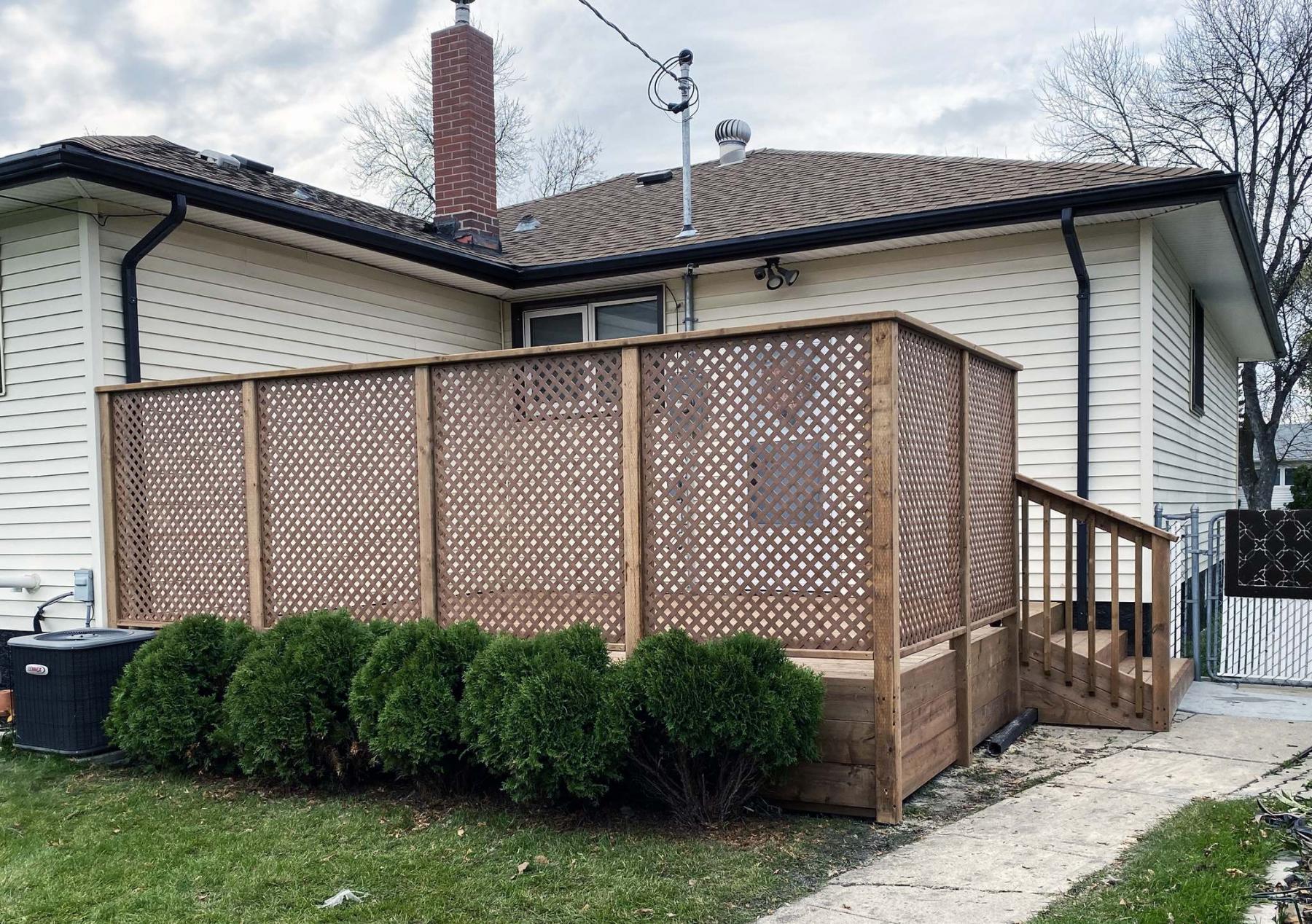
Experiment to see if your deck needs resealing. Pour water onto the surface; if the colour changes to dark and the deck absorbs the water, the deck needs resealing.
This is a great time of year to wash or repaint the exterior of your entrance doors. This is the first impression your guests have when they visit.
Clean out recycling and trash cans before winter. The smell is often unbearable, and they should be kept as clean as possible.
Check out your roof from the ground level. Use binoculars to get a closer look, or if you are able and can do so safely, climb on up for a better view. Look for missing, damaged, or loose shingles. If your roof is flat, you may need to remove leaves and debris.
Trim trees, bushes, shrubs and other plants in your garden. Check them all, and if necessary, trim them back. Look for any trees that may be getting too close to power lines or your roof, which may cause damage.
Have a great suggestion or tip? Please send an email at: reena.ca
Note: Every user assumes all risks of injury or damage resulting from the implementation of any suggestions in this column. Test all products on an inconspicuous area first.
Reena Nerbas is a popular motivational presenter for large and small groups; check out her website: reena.ca.
Renovation & Design
Keep the pipes above zero, especially in winter
Question: I have an alcove in the kitchen that overhangs the outside of the back wall. Ever since I replaced the flow-form countertop with a quartz countertop, I’ve had a problem in the winter with the dishwasher water-supply line freezing. I was wondering, would putting styrofoam insulation under the overhang solve the problem? Thanks.
— Claude Lambkin
Answer: The freezing of water lines installed in unheated spaces, like your cantilevered floor, is often a problem in our climate. Reinsulating the area is the likely solution, but your proposed method may not prevent a reoccurrence. Opening up the area will be required to diagnose the issue and allow proper installation of insulation and adequate warm airflow.
Water-supply piping, especially copper pipes like yours, are quite susceptible to freezing in cold areas of our homes. This is often seen in basements, where water pipes may be buried inside insulated walls built up against foundation walls. This can be an issue when basement walls are framed and insulated after possession of the home. Many homeowners don’t know they should not insulate over top of the pipes. Doing so can prevent warm air from the home from warming the cold pipes, while the insulation wrapped around can actually keep the pipes colder for longer periods. This can also be a problem when water pipes are installed inside cantilevered floors, like in your kitchen-overhanging alcove.
Because the cavity in between the floor joists underneath your kitchen cabinets overhangs the foundation, they are exposed to colder winter temperatures from outside the home. To prevent this area from being too cold, it must be insulated to prevent heat loss. Unfortunately, insulating this area is tricky, because of the limited space. To properly protect this cavity, it must have sufficient insulation at the bottom, sides and end of the cavity, while maintaining the continuous air/vapour barrier from the basement insulated walls below and the exterior wall above.
The only practical way to achieve this is by using rigid extruded polystyrene insulation and sealing the corners and joints, or installing sprayed-on high-density polyurethane foam insulation. Because your home is older, the cavity may be partially stuffed with fibreglass batts, which does not maintain the air/vapour barrier, but improperly fills the cavity top to bottom. Because of this, some warm air may infiltrate this cavity, but it will lose its heat energy as it makes its way into the fibreglass insulation. If it is really cold outside, this can cause condensation and ice formation. If it is relatively well air-sealed, condensation and moisture will not be an issue, but not enough warm air will penetrate the overhanging area to prevent frozen water supply pipes from occurring.
Installing a sheet of extruded polystyrene on the underside of the overhang may not be a bad idea, but will not be a complete solution. While this is one proper area for this good product, it will not provide total insulation coverage, or improve the air-sealing issue. More importantly, it will not help warm the cavity, but may only serve to prevent very minor heat loss. To properly achieve this, the cavity will have to be opened. This could be done from the exterior, by removing the covering and sheathing under the cantilever, or from the basement below. It may even be possible to evaluate and remediate the problem by partial removal of the kitchen cabinet bottoms, but that may be more difficult to fix afterward.
Once the area is opened up, the location of the problematic water pipes can be seen and any or all of the existing insulation removed. At that point, it can be determined whether rigid foam or spray-on foam is the most practical solution, or if the pipes may need modifications to allow for its installation. The inside perimeter of the cavity can then be properly insulated and air-sealed and the pipes installed in the open space between. It may be best to do this work from the basement, as the existing ceiling adjacent to the area will have to be opened anyway to allow warm air from the basement to infiltrate the newly insulated cavity, to prevent further frozen pipes.
You should know energy flows from an area of high energy to one of lower energy, so heat is escaping the floor structure to the colder exterior, not cold entering from outside. So, rather than trying to fix the problem from the exterior with a single sheet of extruded polystyrene, the focus should be on a better repair, allowing heat from the home in to warm the cantilevered area. Maintaining good airflow and a temperature at or slightly below the room temperature should ensure the pipes never get cold enough to freeze, even on the coldest days. This can only be accomplished by insulating and air-sealing with foam dense enough to prevent heat loss, while ensuring air leakage is at a minimum, to prevent condensation.
Ari Marantz is the owner of Trained Eye Home Inspection Ltd. and the past president of the Canadian Association of Home & Property Inspectors — Manitoba (cahpi.mb.ca). Questions can be emailed to the address below. Ari can be reached at 204-291-5358 or check out his website at trainedeye.ca.
trainedeye@iname.com

Renovation & Design
Freeze yogurt to make it last longer
Question: Before I go to bed, I like to drink a cup of hot milk. The problem is that when I pour the milk into my stainless-steel pot, it sticks to the bottom and burns immediately. Any tips? — Jacob
Answer: Before pouring milk into the pot, pour in a cup of water and swish it around the sides and bottom of the pot. Pour it out and then pour in the milk. This will create a protective layer on the bottom of the pot and prevent the milk fat from sticking. Make sure not to set the temperature too high, and stir often.
Question: I bought a bulk supply of yogurt and the expiry date is tomorrow. Do you think that the yogurt will taste the same if I freeze it? Will the yogurt still be good?
— Angie
Answer: While the consistency will change after thawing, if you freeze it, it will still taste good. In fact, you can thaw and stir it, add your favourite fruit or eat it frozen.
Question: I can’t seem to solve the problem of gravies and sauces separating after being frozen. I have tried cornstarch as the thickener instead of flour with no luck. Any suggestions?
— Jamie
Answer: Gravy may be frozen for several months. To prevent "skin" from forming on the top, lay a piece of wax paper or plastic wrap directly on the surface of the gravy before covering the container. If you know you will be freezing gravy, try to use as little fat and milk as possible so that it does not separate when thawed. You can reduce the chances of separation greatly if you run the gravy through a blender or food processor before freezing.
Question: I have major allergies and cannot use furniture polish in my home. What can I use to shine up my wooden furniture?
— Wendy
Answer: I love to use plain old olive oil combined with a few drops of lemon essential oil. However, I recently received this recipe from Gail, a regular contributor. She uses this on her wooden furniture: 1/4 cup olive oil, 1/4 cup vinegar and two teaspoons of lemon juice. Mix in a spray bottle. You need a bit of elbow grease to bring up a nice shine, but it’s worth it. Shake it well each time you use it.
Have a great suggestion or tip? Please send an email at: reena.ca. Note: Every user assumes all risks of injury or damage resulting from the implementation of any suggestions in this column. Test all products on an inconspicuous area first. Reena Nerbas is a popular motivational presenter for large and small groups; check out her website: reena.ca.