New Homes
New Homes
Shaping up to be good year for home starts
IT was recently reported the City of Winnipeg experienced a record number of housing starts for the month of May. In fact, no single month had as many starts as May of this year since 1989.
The numbers were somewhat staggering if you deal in percentages. This May represented an 80.7 per cent increase over May of last year. Our year to date starts are 49.7 per cent ahead of last year.
What does this mean? Are we in the middle of a tremendous housing boom beyond anything we imagined or is this just the upswing of a standard good year?
There's no arguing 2012 is setting up to be an exceptional year in residential construction. New-home starts are on a pace significantly ahead of 2011, which was also a very good year. Renovation work is also extremely busy as people fix their current homes, either to remain there or improve appearances to maximize its resale point.
Manitoba's economy is good: unemployment is low; interest rates are fantastic with no major increases in sight; Winnipeg's new-home costs are lower compared to much of Canada; immigration is a major boost to our province; and bargain resale homes are very difficult to find.
However, remember that last year at this time we were fighting a flood and much of our efforts went into preventing a disaster. Once that was done, building picked up considerably. This year, we got off to a very fast start with excellent March and April weather. The Spring Parade of Homes was in perfect weather and consumers responded accordingly.
We should also note multi-family starts (condos, town homes, row houses, apartments) more than doubled this year over last. We are all aware of our low vacancy rate in apartments, so any multi-unit construction is going to contribute to a huge demand, not create a surplus. Single-family detached starts are up 20 per cent, a much more reasonable figure.
Therefore, before anyone panics about a housing bubble or crisis by analyzing our numbers, we can see 2012 is going to be a very good year for new-home starts but not beyond anything conceivable.
Things have a way of balancing in Manitoba and our consumers have a very good handle on their spending. An existing need is being filled and will continue to be filled by new-home builders.
Mike Moore is president of the Manitoba Home Builders' Association.

New Homes
Cautious optimism continues in housing market
I recently attended meetings of the Canadian Home Builders' Association and listened to two economists predict not only Canada's economic future but also that of most of the rest of the world.
Of course, what interested most of the room was how this was going to affect the housing market. The usual clichés were used. "Cautiously optimistic," and "long-term slow growth" were popular phrases. Naturally, the world situation started with Europe, where a slow recovery was projected to be experienced just before another recession lasting until 2014. The Asian economy could experience a slowdown, too.
How does that impact Canadian housing? If Canada loses two major trade partners for our natural resources and manufactured goods, we experience an export problem that hurts our economy, which slows down our confidence in buying larger-ticket items.
On the plus side, they called for the U.S. economy to turn the corner, expand by 2.5 per cent this year, implement spending cuts and get rid of previous incentives and tax cuts. Manufacturing and housing in the U.S. are showing signs of improvement. This will strengthen the American dollar and probably decrease the overvalued Canadian dollar, which will in turn help our ability to export and trade worldwide.
Canada has posted strong job gains in the private sector and there is a call for plus two per cent GDP growth for each of 2012, 2013, and 2014. There was some concern about increasing household debt but consensus that it had not reached a crisis situation. It was acknowledged that the centre of balance for Canada had shifted to the west as energy, rather than manufacturing, was leading the way. All four western provinces were projected to have the highest growth rates.
As for the residential construction industry, they made it very clear that there was no bubble, no oversupply and that new home prices would continue to increase by reasonable and healthy margins as opposed to erratic jumps.
The construction industry as a whole is at its peak level of activity. Canadians continue to spend on renovations at an ever-increasing pace with Manitoba leading the way.
Finally, and most importantly to the room, they agreed that mortgage and interest rates were not going up any time soon. It would be several years before any kind of slight adjustment might be made. This was good news to all.
Mike Moore is president of the Manitoba Home Builders' Association.


New Homes
Building a better construction industry by improving workers' skills
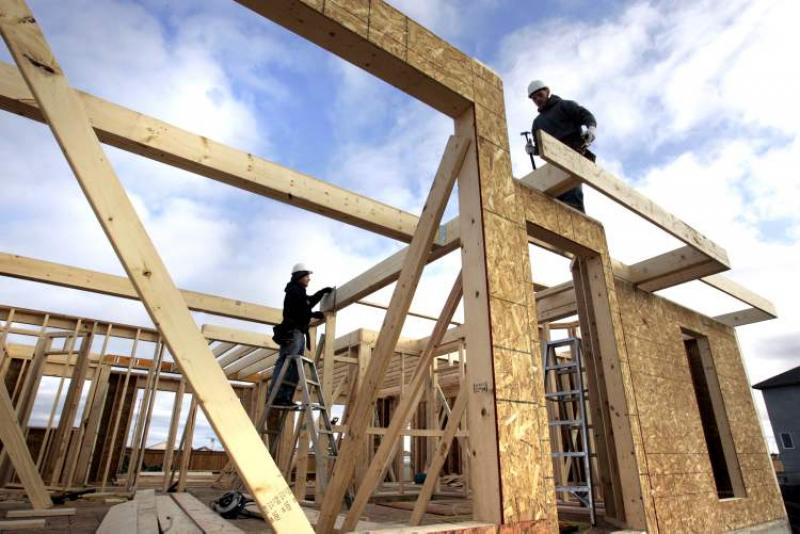
In January 2009, five partners with a commitment to strengthen the skills of the province's construction-sector workforce joined together to form the Manitoba Construction Sector Council.
With funding from the governments of Manitoba and Canada, the MCSC's mandate is to address the human resource needs of Manitoba's construction industry. The council exists to promote the benefits of working in construction and to provide opportunities throughout the industry to upgrade skills.
The MCSC's founding members are some heavy-hitters in the industry. The Manitoba Home Builders' Association, the Winnipeg Construction Association, the Manitoba Building and Construction Trades Council, the Construction Association of Rural Manitoba and the Manitoba Heavy Construction Association represent upwards of 1,600 member companies and 14 building trades unions representing more than 5,000 members.
Ensuring the industry's workforce keeps up with Manitoba's huge skills and labour demands requires a multi-faceted strategy. The MCSC has a three-pronged approach to labour-force development: a focus on professional skills development for the industry's current workforce; outreach into the community through high schools and career expos to promote the industry to the workforce of tomorrow; and through projects designed to link under-represented groups to employment in the industry.
MCSC offers a range of training to construction workers. One program in particular, Building Supervisors for Tomorrow, helps prepare future leaders. This program trains individuals who want to advance to supervisory positions and manage a safe and productive construction worksite. In 2011-2012, the MCSC provided training to more than 680 individuals.
Right now, the construction industry in Manitoba is full of opportunity, with plenty of well-paying jobs, and this trend will continue well into the future. The MCSC wants young people to make construction their career of choice.
This is the message the MCSC takes to many high schools visited each year. Whether through post-secondary education, apprenticeship or on-the-job training, the doors to a successful career in the industry are wide open.
Like Manitoba itself, the construction industry is embracing diversity. Its profile is changing to include more women, aboriginals and immigrants. Breaking down the old industry stereotypes is an important part of the work of the MCSC.
From the people who build the houses, buildings, roads and bridges to the engineers and architects who envision and design them, the construction industry presents great opportunity for a fulfilling career.
Mike Moore is president of the Manitoba Home Builders' Association.