Renovation & Design

Renovation & Design
Rust-stained rug just needs a little scrub
QUESTION: I own a wool rug with a floral pastel design. The rug has rust stains from the feet of a metal coffee table. How do you suggest I clean this? Gail, Winnipeg
ANSWER: Here are a few options for you, Gail. Into a mixing bowl combine: 3 tbsp. dish soap, 2 tbsp. white vinegar and half cup water. Beat until foamy. Using a white cloth, wipe the rust stains with the foam. Cover the area with plastic wrap and place a heavy book on top. Leave for 12 hours, give it one more scrub and air-dry. Or scrub the rust with Head and Shoulders dandruff shampoo or shaving cream, and rinse with water.
QUESTION: What is the fastest way to peel a kiwi? Leon (Ashern)
ANSWER: Here are two great tricks for peeling a kiwi quickly. Slice a half-inch off of both ends of the kiwi. Insert a tablespoon inside the kiwi between the flesh and the fruit. With the concave side facing the peel, move the spoon around the kiwi to loosen the fruit. Let the kiwi drop out of its peel. An even faster option is to slice the kiwi in half lengthwise. Using a glass cup, hold the bottom of the kiwi onto the edge of the cup (the fruit should be facing inward). Push the fruit downward and use the edge of the cup to force the kiwi to slide off of its peel and into the glass.
QUESTION: I would like to make a static dryer ball. You call it a "wool" static ball. Does that mean you must use wool and not yarn? Faye (Winnipeg)
ANSWERS: You can use either 100 per cent wool or wool yarn to make felted dryer balls. These are great because they reduce drying time, soften clothes and reduce static cling. Wrap wool or wool yarn tightly to make a ball, a little larger than a pool ball. Tuck the loose strand inside the ball. Fill a sink with hot water and dish soap. Soak the ball in water and remove. Cover the ball with a thin layer of your favourite laundry detergent. Wash the ball and rinse with water. Allow the wool to dry. To add fragrance to dryer balls, add a few drops of your favourite essential oils to the wool balls. Put five or more dryer balls in your dryer at the same time. Another option is to make several tight balls of wool. Place all of the balls inside a pair of panty hose. Use rubber bands to secure and separate each ball in place. Wash the nylons (which now look like a caterpillar) in the washing machine and toss in the dryer, they are now felted. Separate and use.
Feedback from Manitoban who Cares
Re: How to organize photos so that they take up less space
Dear Reena,
This is in regard to your article in the Dec. 20 issue of the Free Press. We are senior citizens in Manitoba who have taken up a hobby preserving and restoring old and new photos. Most of our work involves people who are downsizing and want to have a more compact presentation of their photos.What started out as a hobby has been keeping us in demand for our services.If you would have Mary (or any of your readers) contact us we can discuss this further. Thanking you in advance. Fran (f.murray.mtp@outlook.com)
Fantastic Household Tips of the Week
A fast way to hull strawberries is to push a straw from the bottom to the top through the center. Submitted by: Jackson
After the core is removed from strawberries, use an egg slicer to quickly cut them into pieces. Make sure the strawberries are room temperature before you chop. Submitted by: Jackson
I enjoy your questions and tips, keep them coming. Need a presenter on the topic: Effective Speaking or The Power of Words? Check out: Reena.ca
Renovation & Design
Best methods for sealing plumbing stack
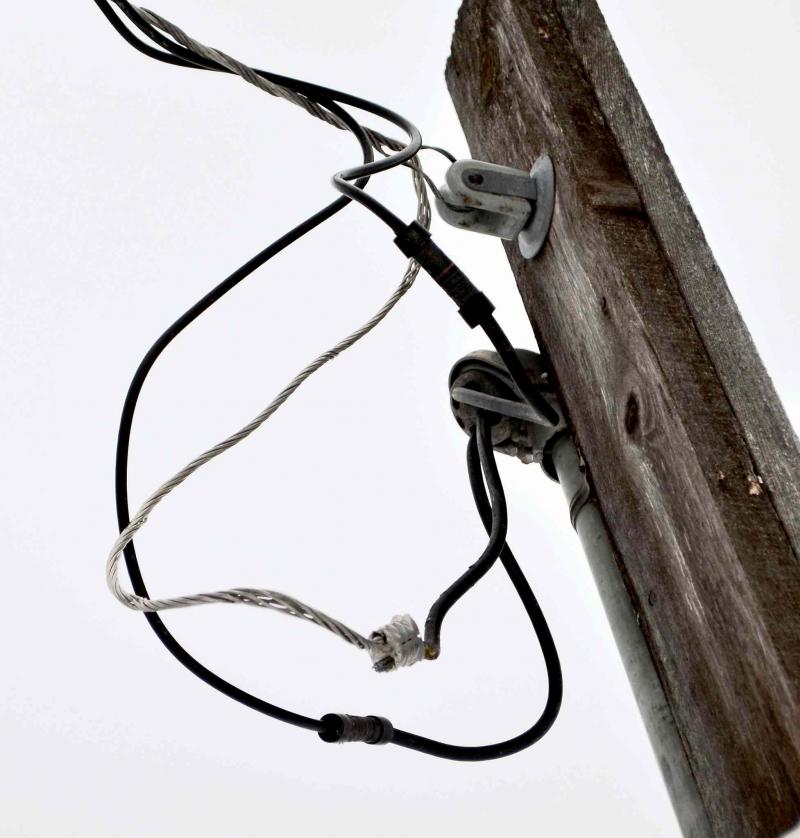
Q: I am sealing the plumbing stack at the attic floor and replacing the flashing with EPDM. I have seen two different methods. The first method is to use a poly boot with clamp around the three-inch ABS pipe and acoustic seal on the attic floor. The second method is simply to use spray foam in a can. I understand the need for expansion, and the poly wrap boot is good, but difficult to get in and around the wall cavity joists. The spray foam would be more thorough, but stick to the ABS pipe and inhibit pipe expansion. How about wrapping the ABS pipe in poly, as a sleeve, using tape to secure it but allow it to slip through when spray-foamed around? Also, my house is 1974, in the St. Amant area and has wood shavings in good condition under blown-in cellulose. Should I just leave them?
Thanks, Jean-Guy Cadieux
A: There may be several methods to properly seal a plumbing stack as it enters the attic through the ceiling. I will provide you with the merits and disadvantages of your suggestions and you can decide on which method suits you best.
It is a very good idea to make an attempt to air-seal anything that penetrates the attic floor from the home. Successfully accomplishing this task will help prevent warm-air intrusion into the attic, which can lead to frost and moisture issues in our brutal winters. You must remember sealing this area will only stop a portion of the air leakage into your attic, so it may be a good idea to address other areas at the same time. One of these areas I frequently see improperly insulated, and poorly sealed, is the attic access hatch. It is true quite a bit of air leakage could be attributed to the gap around your main stack, but the attic hatch is often the worst area for air leakage from the home into the attic. Since you have to remove the hatch to access the attic for stack-sealing repairs, it makes perfect sense to fix it then.
Many homes like yours have attic hatches that may be constructed from plywood or some form of particleboard. Plywood hatches are ideal, as they are somewhat moisture-resistant and the large amount of adhesives provides a reasonable air/vapour barrier, especially when painted. Particleboard, on the other side of the scale, is a poor choice for this use, as it tends to swell and deteriorate if it gets wet, especially at the edges. This can even cause them to jam against the sides of the attic hatch, making removal quite difficult. If you have a hatch cover constructed of this material, or other sheathing affected by moisture such as drywall, replacing it with G1S plywood sheathing will be a major improvement.
Once you have your nicely fitted plywood hatch cover, supported by secure wooden cleats at the bottom of the hatch, the next thing to address is the insulation. Most hatches I see, regardless of the age of home, are normally insulated with fibreglass insulation on top. This may vary from a batt or two of fibreglass fit roughly to the size of the attic opening, to loose, blown-in material contained in a box constructed as the hatch cover. The problem with those installations is fibreglass is good thermal insulation, but a lousy air barrier, so any air that does leak around or through the hatch cover will easily make its way into the attic. Worse yet, it may cool considerably as it travels through the fibreglass, reaching its dew point and condensing inside the insulation. That will lead to frost and water damage to the hatch, and sometimes even dripping from the hatch itself.
The simplest solution to this problem is to install extruded polystyrene on top of the attic hatch cover, instead of fibreglass. This material comes in large sheets, which can be easily cut with a utility knife and secured to the hatch with special adhesive. It is very light, so laminating a few layers of this insulation on top of the hatch will provide good thermal protection and an excellent air/vapour barrier. The final step is to install a good-quality weatherstrip on the top or sides of the cleats holding the plywood in place to prevent air leakage around your nice new attic hatch cover.
The same approach can be taken with air-sealing your ABS plumbing stack. While the cellulose fibre insulation may be a good air/vapour barrier if enough thickness is present, it is doubtful that will be the current situation around the stack. Securing polyethylene sheathing around the stack will be effective in minimizing air leakage, but it can be very difficult to accomplish a good seal with this semi-rigid material. Even with liberally applied acoustical sealant, it can be quite tricky to get a good seal between the tubular stack and the attic floor. For that reason, foam insulation may be a better bet. This can be most easily done with a can or two of blown-in polyurethane foam, but that material is only a moderately good air/vapour barrier, unless applied in several layers.
One possible air-sealing method you have not mentioned is to cut a small piece of rigid extruded polystyrene slightly larger than the opening around the stack. This can then be cut in half, with two semicircles, fit to the size of the stack, carved to make a tight fit when joined together. This collar can then be fitted and sealed tight to the attic floor and caulked around the stack from above. It may also be possible to blow a small amount of foam underneath and above this rigid collar, to seal this area even better.
There may be several ways to air-seal the attic floor around your plumbing stack, but there are other areas to consider improving at the same time. Using various types of foam insulation, rigid or blown in from a can, should give you the best job with the least amount of effort.
Ari Marantz is the owner of Trained Eye Home Inspection Ltd. and the past president of the Canadian Association of Home & Property Inspectors -- Manitoba (cahpi.mb.ca). Questions can be emailed to the address below. Ari can be reached at 204-291-5358 or check out his website at trainedeye.ca.
trainedeye@iname.com


Renovation & Design
Follow simple principle on heating systems
Question: I have read a lot of your articles, and have found them to be very informative. I was wondering if you could help me out with a little dilemma.
I am presently finishing the 1,000-square-foot basement in my 16-year-old home. It measures 20-by-50 feet with the high efficiency furnace roughly in the middle, to one side. There are presently fourfour-by-10-inch registers, roughly equally distributed, at ceiling height, all fed off the main supply through six inch round ductwork. Also, through a six-inch duct is a cold air return down to floor level, using an interior two-by-six-inch wall frame with a 10-by-16-inch grill. The basement is basically all open, except I have constructed a 14-by-20-foot room at one end, making it roughly 15 feet from the furnace.
Is the one previously mentioned return enough to suffice the whole basement?
Thanks, Paul Amo
Answer: All of your questions are slightly different, but relate to the common theme of adequacy of heat and return air registers in your basement. They can easily be addressed together, within the confines of a general discussion of heating basements.
While it is not normally a home inspector's job to determine adequacy of a system, such as the heating and cooling systems, the approach to answering your queries is fairly simple. There are specific methods and calculations to determine the amount of heating capacity required for buildings. There are also criteria for the number and location of heating registers for the individual rooms within those buildings. These items can accurately be determined, but that will require a fair degree of education and experience. Heat load calculations, determination of the level of insulation in the walls and attics, and air tightness of the windows and building envelope should also be taken into consideration. All or some of these techniques may be employed during installation of the furnace and ducts, but only by a licensed heating, ventilation, and air conditioning (HVAC) technician.
If you were asking your questions before or during the construction of your home, I would completely defer the answers to your HVAC contractor. Since these presumably have already been taken into consideration when installing this system, I can rely on a simple rule of thumb for my reply. Each individual room within your home should have one or more heating registers and one return air register. Exceptions are bathrooms and kitchens, which don't normally have return air registers. That is because we don't necessarily want the extra water vapour and indoor pollutants created from cooking and washing to circulate back through the furnace. The size and location of these registers may vary, depending on the factors above.
In modern homes, heat registers should be located near exterior walls and under windows. This is done to help warm the coldest surfaces and prevent condensation on windows. Conversely, the return air registers should be located on or near interior walls, preferably at the opposite end of the room from the warm air source. On the main and upper storeys in the home, both the heat and return air registers are located near the floor. While that may also be preferable in your basement, it is often impractical to put the heat register near floor level. That is primarily due to the extra air pressure required to blow warm air downward through ductwork, since it is normally located in the basement ceilings. It is much simpler to put the registers at the ceiling height. This will allow the warm air to naturally drop to the basement floor, as it cools. There, it can be drawn into the return air registers and ducts, automatically circulating it back to the furnace for reheating.
The key to determining if an additional return air register is needed in the new room you built, is whether it is closed or open to the rest of the basement. If the room has a door, or is not substantially open to the rest of the basement, a register should be installed. If the room is only divided by a partial barrier, and the return air register in the main basement is not that far away, additional ones may not be needed. It should not be too difficult to install the return air ducting unless the walls are all enclosed, in which case partial removal of wall coverings and framing will be necessary to complete the installation.
While normally the domain of qualified HVAC technicians, determining where and if heating and return air registers are necessary when developing your unfinished basement may be accomplished by remembering one simple principle: Every individual room should have a heat source and all spaces partitioned by operating doors, except bathrooms and kitchens, should have return air registers and ducting.
Ari Marantz is the owner of Trained Eye Home Inspection Ltd. and the past president of the Canadian Association of Home & Property Inspectors -- Manitoba (cahpi.mb.ca). Questions can be emailed to the address below. Ari can be reached at 204-291-5358 or check out his website at trainedeye.ca.
trainedeye@iname.com
Renovation & Design
Backup generator can be a valuable asset for your home
Q: With the latest winter storm, I found myself in line again at the gas station waiting to fill my portable generator gas cans. Earlier this year you wrote an article about standby home generators that operate with natural gas or propane. Can you please go over some of that information again? I think I'm now ready to install this type of system.
-- Pat, Rhode Island
A: Investing in a permanently installed standby home generator can really pay off. Not only for the backup power protection, but a professionally installed standby generator system can also be a valuable home asset.
Because standby generators run on natural gas or propane and are hardwired into a home's electrical system, they're always ready to go at a moment's notice. A special transfer switch controls most standby generator systems and automatically turns the generator on when electrical power is lost.
This all sounds good, but keep a few things in mind if you're thinking about installing one.
First, this is not a do-it-yourself project. You need to work with a licensed standby generator dealer/installer with needed permits taken out. Local dealers may be found on standby generator manufacturer websites.
Second, plan to install in spring or summer, because the installation process may take extra time to complete.
Finally, a standby generator can be a high-end system, so make sure you generate a little extra cash and budget the money before you start the job.
Master Contractor/Plumber Ed Del Grande is known internationally as the author of the book "Ed Del Grande's House Call," the host of TV and Internet shows, and a LEED green associate. Visit eddelgrande.com or write eadelg@cs.com. Always consult local contractors and codes.
-- Tribune News Service