
Renovation & Design
Renovation & Design
Is spray foam insulation suitable for stone foundations?
Question: We live in a 110-year-old home in the Wolseley area of Winnipeg. There is a stone foundation and the basement currently has batt insulation. My husband and I are considering spray foam insulation, but have heard many different opinions about whether that’s the way to go, or not. What would you suggest? Thanks, Julia.
Answer: Insulating the inside of a foundation with high density spray-on polyurethane foam may be the best method, regardless of the composition of the walls. While there is still much debate over possible negative outcomes of this construction procedure on stone foundations, only time will tell if those potential issues will come to pass, or if they are purely theoretical.
Right off the bat, replacing batt insulation that is applied to the inside of a foundation in our climate with any type of moisture-resistant materials will be a huge upgrade. This not only applies to concrete foundations, but also to older limestone or rubble ones common in this area. Fibreglass batts, commonly used for this purpose, are a poor choice for two main reasons. First, they are subject to easy absorption of moisture, whether it is wicking it up from a damp basement floor, from melted frost on the inside walls, or from seepage typical of really old stone foundation mortar. Either way, if that type of insulation gets wet it becomes thermally ineffective and subject to mould growth from dirt and other particles suspended in the fibres.
The second reason not to use fibrous batts is due to the lack of resistance to air movement through the insulation. The fibres only slow down air movement, which can lead to a loss of heat energy, increasing the possibility of condensation and frost development. That is why heavy 6MIL polyethylene sheathing is required to be installed on the warm side. This poly air/vapour barrier may only be effective at stopping warm air intrusion into the wall cavity if it is extremely well sealed, especially at the top and bottom. That can be very difficult to achieve in an older basement. So, replacing your older batts with better insulation should always be an improvement.
Any insulation used for this upgrade should be waterproof, easy to apply, and highly resistant to air penetration to be most effective. While rigid extruded polystyrene, or other similar products, easily fit these criteria they have one major detraction for installation inside your stone foundation. They are flat and rigid and will not be able to conform well to the contours of the individual stones and mortar comprising your foundation walls. If a significant number of gaps are left behind even this high-quality insulation, air will be able to sneak in. That will still be a recipe for condensation and frost, which will likely lead to wet floors during the spring thaw.
This leaves us with a dilemma about whether to use the flexible fibreglass or mineral fibre batts, which may be able to fill most of the gaps between the individual stones in your foundation or rigid foam that can’t serve that purpose. The simple answer is to use neither in your pursuit of a totally covered, well insulated and sealed foundation wall with good moisture resistance. The solution is two-part, high density foam that is mixed onsite and applied by spraying on in a liquid form. This material will fill every nook and cranny and forms a hard, crusty surface after the short curing time. A minimum of two inches is required to achieve good air resistance, but more may be desired for a better thermal seal. That can be done by spraying successive layers, normally no thicker than three inches each time, due to the extensive heat-generating properties of the foam as it cures. Otherwise, two to three inches of foam can be installed in a single application, later to be covered with less expensive conventional insulation, to achieve a higher thermal insulating value.
The main concern I have heard with this method, for older stone foundations, is the performance of the foam over time to potential moisture penetration from the stone wall. Will this become wet on the exterior-facing side, creating an environment for mould growth and mortar deterioration? If the foundation is persistently damp, will the foam even stay adhered once the wall is covered up? My expectation is that applying a thick layer of this plastic foam to the inside of the older walls will not only help the structural integrity, but may also prevent moisture intrusion on the inside. Unless the foam is sprayed on a wet wall, or one where the mortar is loose and deteriorated, it should adhere better than almost any other building material I have seen. This should help partially seal the inside of this structural element from periodic seepage, but will also prevent condensation, by not allowing the warm interior air to touch the cold surface of the foundation in the winter.
There are theories about a stone wall performing better if the mortar is slightly damp, rather than dry, but I think that is just speculation. Also, there are opinions that the inside of the stone wall should be completely uncovered, allowing the inside heat to prevent any moisture in the mortar and stones from freezing in the coldest weather. That may be somewhat true, but is an equal risk with the current fibreglass batts, as well. If the wall is going to be insulated from the warmth of the home, much better to do it with poly foam than other poorer quality substitutes.
In my experience, the best way to insulate the interior of an older stone foundation wall is undoubtedly with spray-applied, high density polyurethane foam. This product has only been in common use for this purpose in our area for a little over a decade, and appears to have performed well. The coming years and decades should tell whether its use is a true success or a failure.
Ari Marantz is the owner of Trained Eye Home Inspection Ltd. and a Registered Home Inspector (RHI)(cahpi.ca). Questions can be emailed to the address below. Ari can be reached at 204-291-5358 or check out his website at trainedeye.ca.
trainedeye@iname.com


Renovation & Design
Sunny yellow spaghetti squash is good to GO
Question: How do you know when spaghetti squash is ready to pick? Also, please share good recipes for it? Sera-Lynn
Answer: There are a few cues to look for when it comes to spaghetti squash readiness. First, observe the colour. When the fruit has turned a sunny yellow, it’s ready for picking. If you can’t easily poke the skin with your fingernail, it is not ready.
Spaghetti squash takes a while to bake, so plan your time. Cut the fruit in half, lengthwise and season with oil, salt and pepper. Place on a baking sheet and bake for about 40 minutes at 400 degrees. Add margarine or butter, as desired. Scrape out the squash using a fork. Eat as is, or combine with ingredients such as kale, spinach, or chickpeas. Another option is to top with warm tomato or marinara sauce and add cheese.
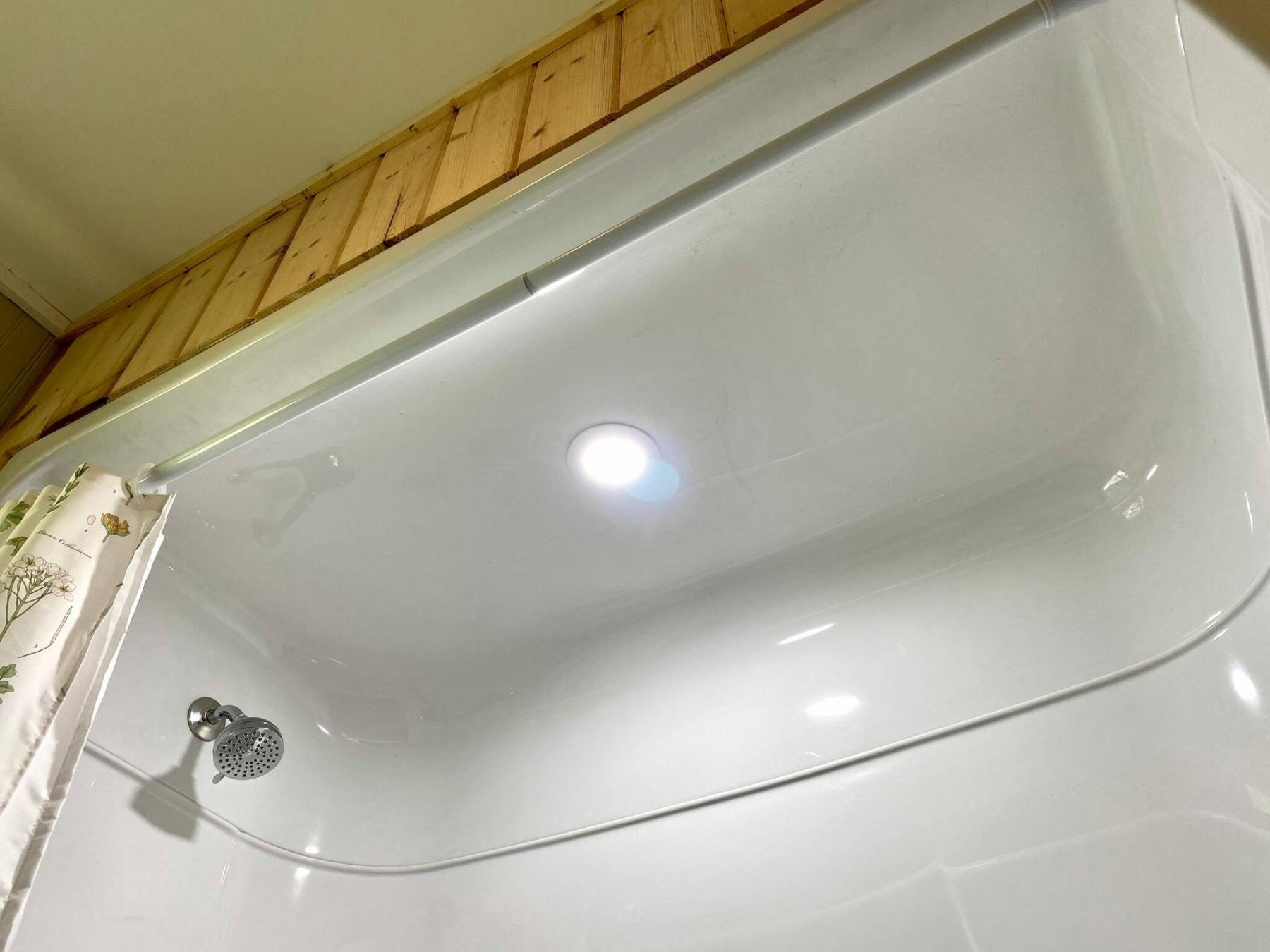
Question: My tub has glass doors with a metal base. The caulking has failed, and I have a crusty, brown deposit on the tub. Any suggestions to remove it? Rose
Answer: Fill the bathtub with hot water and Iron Out. After the water cools, wear gloves and scrub with a green scrubby pad. Other options are to clean with vinegar and baking soda, or hydrogen peroxide. The key is to allow the product to work for at least 30 minutes and then scrub, with a pad, not a washcloth.
Question: How do I make my diamonds sparkle? I recently moved outside of Winnipeg, and we do not have a jewelry store nearby. Xiaosu
Answer: Soak the diamonds in dish soap and water. This is effective because dish soap is formulated as a degreaser. Another option is to clean with window glass cleaner (which is ammonia). Rinse with water.
Question: We have a brand-new upholstered fabric headboard that smells musty. How can we get rid of the odour? Grant
Answer: Assuming the headboard fabric is washable, clean it with one of the following solutions. Into a clean container pour ten drops of tea tree oil and one tsp dish soap. Fill the bucket with warm water. Wipe well and rinse with clean water. Or spray the headboard with shaving cream, scrub with a cloth and rinse with water. Dry with a warm hair dryer. The smell may be coming from the chemicals used in manufacturing the headboard and should disappear over time.
Feedback from clever contributor
Re: Keurig Not Working Properly
‘Burping’ a Keurig is often a fix for a maker that makes noise, but not coffee. Empty the reservoir, blow with a straw through the water intake and then turn it over (over a sink, of course) and ‘burp’ it (bang it on the bottom). Works liked a charm on ours. Kelly
Tips of the Week
• When I’m in a hurry, I make individual meatloaf servings. Use a retractable scoop to fill a muffin tin with the ground-meat mixture. Press each portion with a spoon. Bake the little meatloaf’s for about 20 minutes. Freeze the leftovers. Irene
• Here is an easy and impressive dessert. Melt chocolate in a bowl. Pour into silicone muffin cups, so that the entire muffin cup interior has chocolate in it. Turn the muffin tray upside down over the bowl to pour out excess chocolate. Place the muffin tray in the fridge. After 10 minutes remove from the fridge and pop out the chocolate muffin cups. Fill with whip cream and strawberries, top with shaved chocolate. Reena
• Clean hairspray off bathroom walls by cleaning with hairspray. Alex
Have a great suggestion or tip? Please send an email. Reena Nerbas is a popular motivational presenter for large and small groups; check out her website: reena.ca.
info@reena.ca


Renovation & Design
Leaking foundation a job best left to professionals
There are two related questions this week, so I will try to answer them in one shot.
Question — Since this crazy spring we have had water coming into the basement, but we’re just now really dealing with it, and there is more water than we thought. It looks like there are metal nails coming through the foundation walls, small holes, and inch-long vertical cuts, where water comes through when it rains. Normally we like to try and fix things ourselves, but I don’t love the idea of playing with the foundation, and with a newborn, we’re pretty busy. I’d like to get a professional to come in and fix everything, but not one company has replied to my messages. In the meantime, what can we do to stop/slow the water and if we put some type of product in now, will that make it more difficult for the professionals later?
— K. Cline.
Question — Following the three Colorado Lows we had in a row this spring, when the ground was already saturated, we discovered that we have a hairline crack in the basement wall of our 2002 house. The crack runs vertically under a window, and is about three feet in length. It does not run all the way down to the floor. Water was seeping in through the crack. The basement walls are insulated and there is a vapour barrier, so we have no idea how long the crack has been there.
I would appreciate your advice on how best to repair the crack. Is this something I can handle myself? Would it be best to hire a professional? I believe I can handle the repair myself, once I know the proper approach to take.
Thank you for your help.
— Terry P., Gonor
Answer — Repairs to a leaking concrete foundation are rarely minor in nature and should be done by an experienced professional. Some minor interior repairs may help for an interim time, but exterior excavation and repair may be the only way to stop the water and ensure a dry basement for a long time.
Following almost a decade of very dry to drought-like conditions in our area, this year has been a complete turn around. We have gone from below average precipitation levels, especially in the summer months, to record levels of rainfall for much of the spring and early summer. The above average snow accumulations from last winter helped to initially replenish the moisture in the dry soil, but relentless spring rains caused the over saturated soil to force water through many foundations and flooded fields and yards. So, many homeowners with years of dry basements suddenly were faced with moisture related issues, like both respondents above.
For those homeowners in question, once the clay-based soil outside your foundations becomes so full of water that it can’t absorb anymore, or oversaturated, it may be able to force that water through any openings in the concrete walls. The term hydrostatic pressure is often used to describe this phenomenon, which will take advantage of any cracks, holes, or even areas where the damp-proofing is deteriorated on the exterior. In older homes, the weeping tile system that is designed to collect and re-route this excess moisture may be blocked, damaged, or simply ineffective, making the problem much worse. For all these reasons, the only complete solution is excavation of the soil on the exterior of the foundation, installation of a waterproofing membrane, replacement of the weeping tiles, and backfilling with granular material that will drain better and prevent soil pressure.
There are some interior solutions that may work if there are only a few known areas of leakage through your rusted form ties, or the single vertical crack in the second respondent’s home. Initial patching of the holes or cracks with hydraulic cement can help prevent leakage, but normally for a very limited time. This should not affect any future exterior repairs, as the foundation contractors will rarely bother with any interior patching after the outside work is complete. So, that may be something you can initially attempt, but only if there are obvious holes where the metal form ties have rusted, or very small leaking cracks. These still may have to be chipped or drilled to remove rusted metal, or make openings large enough to hold the concrete patching material.
The most successful interior repair may be injection of epoxy into the cracks or holes to block the pathway for water entry. This method has been used for several decades, with good success, especially on vertical cracks that are not structural in nature. Also, this method may also be employed for the rusted-out form tie holes in the first inquiry, but may be very time consuming and expensive if there are more than a few areas of leakage. All of the cracks or holes have to be drilled to provide a large enough opening to inject the epoxy under pressure, which is labour intensive. While I have seen this done a few times by very resourceful homeowners, it is normally a professional service, which may be almost as costly as excavation, due to the high cost of the epoxy and the time involved. So, epoxy injection is normally only employed where exterior excavation is not easily accessible, or for small areas of leakage.
Drilling small cracks and openings in leaking foundation walls, before filling with concrete patching materials or injecting epoxy, may help temporarily stop seepage during the worst storms. But that may only be a stop-gap measure until you can get a reputable foundation contractor to your home. Exterior excavation, damp-proofing, and weeping tile upgrades (if older), will be the only way to successfully prevent moisture intrusion through the foundation walls for the foreseeable future.
Ari Marantz is the owner of Trained Eye Home Inspection Ltd. and a Registered Home Inspector (RHI)(cahpi.ca). Questions can be emailed to the address below. Ari can be reached at 204-291-5358 or check out his website at trainedeye.ca.
trainedeye@iname.com
Renovation & Design
There’s a reason cactus grows well in the desert
Question — I am determined to keep my brand-new cactus alive. How often should I water it? I think every day and my husband thinks once a week, should do the trick. Thank you, Renata
Answer — Water the cactus every 10 or 11 days. Feel the soil, to make sure it is dry before watering. Overwatering is the fastest way to kill this desert delight.
Question — Can you tell me how to bake a single pie crust so that it doesn’t shrink down in the pie plate while baking? Cindy
Answer — Some people freeze pie crusts before putting them into the oven, but here is an easy alternative. Place your dough into the pie plate and trim away the excess. Line the pie dough with foil and fill the plate with dried beans or rice to weigh down the crust and keep it from shrinking.
Bake 10 minutes, or until the crust is firm. Lift the pie to the counter, and gently remove foil, taking care not to tear the crust. Prick crust with a fork, brush with egg white and bake another five minutes, or until pale gold. Cool. Or put another pie plate the same size on top of the dough in your pie plate. Bake for a few minutes until the dough holds its shape and then remove the second plate.
Question — My Keurig suddenly stopped working. It makes a sound, but the water does not run out. Any suggestions? Clayton
Answer — The easiest process for descaling the machine is to run straight, vinegar through the machine a few times. Follow that process with water. If this does not fix the challenge, the machine may have a problem with the pump valve, which might need replacing.
Feedback from Contributor
Re: Allowing Pets to Eat Off People Dishes
The question about whether it’s safe to allow a dog to lick dirty plates before they are washed in the dishwasher is about whether this is sanitary. Dogs have bacteria in their mouths that could make a human sick (how could they not when they lick themselves?) The concern: is the water in the dishwasher hot enough and the soap used strong enough to kill the bacteria? Anonymous
Response: Great point, and what a hugely controversial topic! Various factors such as water temperature, and detergent will affect whether a dishwasher destroys bacteria; many experts agree that the dishwasher water and detergent are not sufficient in cleaning dishes licked by animals. According to Team Dogs, “plates licked by dogs can harbor hidden bacteria such as salmonella which cannot be destroyed by dishwashing.” (Country Living, Joyner, 2021). Also, in 2021 a restaurant in the U.S. received a warning when a customer was seen allowing a dog to eat off of a restaurant dish. The health inspector said that sharing utensils with pets is a violation, as the behavior is non-hygienic. (Kiro 7, 2021).
Tips of the Week
When cooking fried rice, cook the rice and place it into the fridge. When you stir fry it, the rice won’t stick together. Brittany
To speed up the healing time of a bruise, hold an ice pack on the surface for 10 minutes. Cornie
Keep homemade cookies fresh by storing an apple in the cookie container. Sheldon
If your cellphone gets caught in a rainstorm, place it in a container of rice for a couple of days to absorb the moisture and dry it out. Sheldon
Prevent mascara from clumping by putting a tiny bit of petroleum jelly (Vaseline) on your finger. Brush onto your eyelashes, and then apply the mascara. Alex
Have a great suggestion or tip? Please send an email at: info@reena.ca. Reena Nerbas is a popular motivational presenter for large and small groups; check out her website: reena.ca.