Renovation & Design
Renovation & Design
Call of the jungle
There is a scene in The Wizard of Oz where Dorothy surveys her new and colourful surroundings and says to her dog, "Toto, I have a feeling we’re not in Kansas anymore." Lynne Mellow, a Winnipeg resident, also recalls feeling out of her element when she pulled up to a gas station in Maui and was greeted by the sight of exotic hibiscus in full, radiant flower, palm trees waving in the background. Travellers often encounter scenes and exotic vegetation quite unlike anything back home. Our experiences away from home, near or far, introduce new ideas and make plant hunters of all of us.
Whether you are radiating a certain post-vacation glow or not, bring the tropics to your outdoor space this summer with plants that have unusual textures, dramatic shapes and sizes and bold exotic colours. While not hardy to our winters, there are many unique tropical varieties available that will transform your patio into a lush oasis. Lady Palm, for example, with its dark, glossy green palmate (fan-shaped) leaves would be stunning in a medium-light location or grace your patio with tall Adonidia Palm with its central crown of arching fronds and grey-brown trunk that has a slightly swollen bulb-like base.
Shade selections such as the ZZ plant (Zamioculcas Zamifolia) add interest and intrigue to the darker corners of the landscape with its upright vase shape and glossy, oval-shaped leaves.
If the broad upright foliage and cinnamon-gold colouring of the red banana plant is a staple in your summer garden together with durable canna lily varieties such as Canna Cannova, consider fascinating your visitors with the spectacular Bird of Paradise. With a crown of sepals that has an almost aerodynamic shape and colour like that of orange sherbet, including three highly modified petals in inky blue-sapphire, Bird of Paradise will bring beauty and drama to any part-shade location.
All of these tropicals and many more can be found at Shelmerdine Garden Centre this spring. While a good selection of tropical plants can be found at a number of local retail outlets, Shelmerdine has taken an extra step with its purchase last fall of Southern Tropic of Plants, an interior landscape specialist company. Nicole Bent and Chad Labbe, co-owners of Shelmerdine, are excited about this new acquisition which moved last fall to Shelmerdine’s location on Roblin Boulevard. In addition to a range of tropical plants suited to the indoors, there are many varieties that thrive outdoors in summer conditions.
Labbe says Majesty Palm reigns as the most successful and durable palm for outdoor use in our summers, adapting easily to full sun if it is first acclimatized. Another popular selection for outdoor containers is Red Banana (Ensete maurelii), which has strongly upright broad leaves on long stems, its delicious cinnamon colour taking on a golden cast when the sun shines through its leaves. Once in the landscape, the leaves can take on a ripped appearance from the effects of wind. Deanne Cram, greenhouse manager at Shelmerdine, says Bird of Paradise is surprisingly easy to maintain outdoors but recommends a protected location to prevent the wind from shearing the leathery, spear-shaped foliage.
For those wanting the impact of a large-sized New Zealand flax but not the price tag, Cram says Cordyline fruticosa or ti plant is an inexpensive way to achieve interesting texture. Cordyline fruticosa looks stunning in tropical containers in a part-shade location, says Cram, and has broad, colourful foliage that won’t rip in the wind. A variety of evergreen tropical shrub that is native to southeast Asia and parts of Australia, the different foliage patterns and colours of varieties such as Black Magic, Florida, Hot Pepper and Red Sister range from pink through deep burgundy.
Labbe says it is important when buying tropicals for your summer patio to buy the size you want. "Don’t expect a tropical plant to grow at the rate of an annual in a single season." If you are looking for drama, choose tropicals that are already a significant size at the time of purchase. A rule of thumb is to transplant a tropical into a container that is one size larger, however, if you are transplanting into a much larger container, underplant with smaller foliage plants or flowering annuals that will help to take up the extra moisture.
Labbe says using only soilless mix is an essential requirement and provides you with much more control of the wet-dry cycle for plants grown in a container. In order for the soil to retain oxygen around the roots of the plants, particularly during wet, rainy periods, moisture must be allowed to drain freely. Soilless mix accomplishes this more easily than a mixture that contains the larger soil particles typically found in soil that is more suited to flower beds.
When downtown containers in the area of Portage and Main sported tropical plants such as croton in full sun containers, it turned many heads. Last summer, containers on Portage Avenue’s centre median featured the unique combination of sansevieria, normally a plant that thrives indoors in low light, drought-tolerant conditions, with yellow-flowered Canna Cannova. Their successful marriage sustained itself right through to late fall. David Domke, manager of the city’s parks and open space division, says this summer the city’s gardeners will be planting ornamental banana plants into some containers and underplanting with annuals such as Dichondra Silver Falls, salvia and sweet potato vine.
Cram says these displays have inspired many Winnipeggers to include more tropicals in their own container designs. Croton, for example, provides gardeners with interesting alternatives to popular annuals such as coleus. While even sun-tolerant coleus may sometimes wilt, Cram says varieties such as Freckles, Mammy Yellow, Petra, and Pie Crust are ideal for continuous, vivid colour in full-sun locations right up until the first frost in fall.
For full shade where it is not always easy to create a full, lush display, Kimberley Queen fern can’t be beat. A plant in a 25-cm container grows to a massive size during the summer and provides a satisfying display up until frost.
Shelmerdine plans to carry exotic flowering tropicals such as Duranta Sapphire Showers Bush, which I first saw and admired in Jan Pedersen’s backyard. Duranta’s exquisite, slightly ruffled purplish-blue blooms are edged in white, the dainty petals appearing as if they have been sprinkled with sugar.
Who doesn’t come to a standstill at the sight of passion flower (passiflora)? This strange, otherworldly flower with its distinctive central crown of purplish-pink filaments and prominent central antenna consisting of five stamens and three stigmas is a lesson in floral biology all its own. Never mind that the colourful blooms of passion flower are not always as prolific as its twining leaves that scramble up trellises — even a single bloom is enough to mesmerize. Many gardeners who bring passiflora indoors in the fall for overwintering say the plant produces more and more blooms in successive seasons.
Shelmerdine is carrying several varieties of passiflora on trellises including Incarnata, Lady Lavender, Lady Margaret and Red Scarlet.
Showy hibiscus blooms, of course, always excite with their large size and candy-like colours. This season in addition to standards, look for potted HibisQs in table-top sizes. Sun-loving, they have been bred to have longer lasting flowers and will be available in a range of colours at many locations.
Gardeners have been growing tropical-inspired plants in their gardens for some time such as King Tut papyrus, sweetly fragrant gardenia standards or mandevilla. Dipladenia is in the mandevilla family but has a distinctly different form. The leaves of dipladenia are smaller and glossier and while the sun-loving blooms are smaller than those of mandevilla, this is a must-have plant in any garden. Quickly embraced by anyone who grows it, dipladenia blooms and grows vigorously all season long. New dipladenia varieties such as Red Riding Hood Pink and Rio White are beautiful planted alone or can be paired with other sun-loving plants such as chartreuse ipomoea.
To complement your tropical oasis, consider adding the sound of water with a fountain or table-top bubbler and don’t forget to accessorize. Should you add a massive cast stone lion to sit among your plants for a jungle effect or perhaps search for a tiki mask and some pink flamingos? Floral-themed cushions work just as well.
colleenizacharias@gmail.com
Renovation & Design
Vinegar: not just for french fries anymore
Question: I want to put my winter boots away (optimistic, I am sure); however, I see there are salt stains on the leather. What suggestions do you have for getting the stains off? Janet
Answer: As in many cases, vinegar is the answer that you are searching for. Using a good quality microfibre cloth, wipe the boots with plain old vinegar. Not only will this remove salt stains, but it will condition the leather at the same time.
Question: I am hoping you can help me. I have glue on the front passenger seat of my car. It’s a black cloth seat. The glue is IPEX brand PVC Conduit Solvent Cement. This is used with rigid PVC conduit to cement pipes together (used to run electrical wires through). The glue was drizzled accidentally on the seat, so it’s not a concentrated blob, but rather several streaks. It is dried on now and can’t be scraped off with anything. Any suggestions would be much appreciated. Thanks, Kathy
Answer: I have not heard of any water-based solvent that will remove PVC Conduit Solvent Cement. The most effective solution is acetone. However, the risk with acetone is that it is flammable and has the potential to remove colour from upholstery. An alternative option is to spray the area with WD-40, and after 10 minutes, gently scrape with a razor blade. Next clean with dish soap and water to reduce the chemical smell.
Question: Many of my recipes call for unsalted butter, but often when I am at the grocery store, I notice only salted butter is available in no name brands, and therefore less expensive. What is the difference between using salted and unsalted butter in cookie recipes? Delores
Answer: Many people would not recognize the difference between cookies baked with salted vs. unsalted butter. Salt is added to butter to extend its shelf life, and therefore stores tend to carry a larger variety of salted butter. If you decide to use salted butter when baking cookies, simply skip the salt called for in the recipe. Unsalted butter is typically listed in cookie recipes so that the baker can control the amount of salt going into the cookie.
Extra Tip: If you ever notice your home-baked cookies (baked with butter) flatten and spread way too much while baking, consider using half butter and half margarine in the recipe instead of all butter, this will give you a really nice texture and cut down on some of the cholesterol. Experiment to find the best non-hydrogenated margarine for your recipes.
Feedback from readers
Dear Reena,
I am writing to give you an extra tip on removing oil stains from leather. Start with cornstarch and gently rub it into the stain. Then cover with a soft cloth and iron the cloth with a warm iron, not hot. The cloth will absorb the oil. It works like magic. I find your hints very useful.
—Margaret
Dear Reena,
I recently read the article about the husband who accidently left a pack of ground beef in the fridge of their motor home. A while back, unbeknownst to me, my freezer quit and everything melted for a couple of days. Needless to say the smell was not pretty. A friend of mine told me about an easy fix to get rid of the smell: simply soak a cotton ball with artificial vanilla extract and swab the sides of the fridge or freezer and dry. Then soak another cotton ball with the vanilla extract and leave it in the bottom for a refreshing smell all the time. It works great and the cotton ball can be replaced as needed.
— Shirley
Tips of the week:
Soothe a burnt tongue with white sugar. Just a few grains will relieve the pain.
Keep your brown sugar from hardening by storing it in a sealed container in the fridge.
Put sugar cubes in the bottom of your biscuit container. The sugar absorbs the moisture and keeps biscuits fresh longer.
Mix handfuls of sugar into the soil of unhealthy plants. If your outdoor plants have lumps on the roots they may have a nematode infection caused by little worms (often found in carrots and potatoes). Adding sugar to soil increases the bacteria count that helps fight the invasion.
Note: Every user assumes all risks of injury or damage resulting from the implementation of any suggestions in this column. Test all products on an inconspicuous area first.
I enjoy your questions and tips, keep them coming. Need a presenter on the topic: Effective Speaking or The Power of Words? Check out: Reena.ca
Renovation & Design
Decorating with yellow is anything but mellow
Our third lesson in colour is about the final primary colour; yellow. This sunny colour evokes good feelings and provides a cheerful decor. Yellow has a warming affect so you’ll feel warmer in a yellow room.
My husband and I have a lovely shade of yellow in the living room, dining room and kitchen of our condo. When the sun is shining into the space it brings about strong feelings of wellness and cheer. We love our yellow walls. Even on a gloomy day this wall colour brightens the spirits and the decor. To infuse vibrancy in your decor add a little sunny yellow.
Yellow is the brightest colour in the wavelength and is topping the trend charts. This colour represents sunshine, lemons, bananas and flowers. From runways to home accessories to paint, this hue is popping up everywhere. Benjamin Moore’s Banana Yellow 2022-40 is a bright, sunny shade and part of the Colour Trends 2016 palette. When applied as an accent wall in an all white kitchen or painted in high-gloss on a shapely piece of furniture, it makes an impressive style statement.
If you love yellow but are hoping for something a bit more subdued, consider a softer, paler yellow such as Lemonade 2024-60. These paler yellows are soft and subtle and can work well in the bedroom, nursery or home office.
Medium-toned yellow/gold hues that have a red undertone are earthy and work well when paired with white trim and mouldings. Think of butternut squash or the green-yellow of pistachio or honeydew melon. All of these more earthy tones work well in main living areas, such as the living room, dining room or den. Throw in a few black accessories, like black framed photos, shelving or a small furniture item, to make the wall colour really pop.
Accessories
When using yellow accents in a room, stay with the same shade of yellow to provide a cohesive space. Toss cushions, furniture throws and other accessories are all fair game. Yellows with a hint of blue are cooler and work well as accents to provide pops of fresh colour. Use very bright yellow as accents in the decor. A bowl of Golden Delicious apples will brighten up a kitchen table. Yellow flowers will make any room more cheerful.
Yellow in a drapery design or upholstery can be quite lovely and will cheer up your space. I’m envisioning a soft yellow-and-white trellis-styled fabric on draperies or something small like an ottoman. An accent chair in a yellow and white check could be quite scrumptious as well.
If you’re not afraid of colour, you might paint a wooden accent chair, wicker plant stand or some other unique piece of furniture in a bright yellow shade to add a bit of zing to a room. Add in a few yellow accents sprinkled around the room for a cohesive look. Dining chairs recovered with a yellow patterned fabric can brighten up a heavy wooden dining set. Place a bowl of lemons on the table for added pizzazz. Bright primary colours can be fun in a child’s room in furniture and fabrics, but stay away from bright yellow on the walls, as it can be unsettling. Use bright yellow in the accessories to add some fun. What child wouldn’t love a room that included fuzzy ducklings or Big Bird? Use pale yellow on the walls to provide a calming space.
Accent colours
You can pair yellow with just about any colour. I opted for turquoise, brown and yellow in the main living area of our condo. I just happened to have found some lovely wallpaper that incorporates all of those colours that I used on a focal wall. Wallpaper or fabric might be your inspiration for a yellow colour scheme. Keep your eyes open for inspiration.
You can combine yellow with green, certain greys, blue, purple and brown; of course, white and black should be part of the equation. Be careful with very bright or citrus or canary yellows, as they can be overpowering and unsettling when used in large doses. If you like these livelier colours, then use them on an accent wall or in accessories. Opt for calming yellows like butter that will endure for years to come.
Yellow can be a great addition to the decor, whether it’s with bright accessories or soft yellow walls. Yellow is often overlooked as a decor colour and needs to be given consideration for its room-brightening and cheerfulness factors.
Connieoliver2016@gmail.com
Renovation & Design
Minute makeovers
Very few of us ever feel like our homes are done — even those who’ve hired an interior designer. And even then, it’s easy to tire of that look you once loved. Thankfully, giving your home a little refresh, or even a dramatic transformation, can be as simple as changing one element in the space. Which element, you ask? Well, that’s up to you. Read on to learn about the most transformative changes to any room.
LAYOUT
Changing the layout of a room in your home is usually the most affordable change you can make. Move the head of your bed to face the windows, and instantly you might find yourself looking at the stars at night. Creating room for traffic flow is always a good idea: look around and see if you can make it easier to get from one door the next by moving seating or tables. If your space feels cluttered with chairs, replace a sofa and a couple of armchairs with a sectional; it will require a little bit of investment but can make your room feel dramatically bigger and more streamlined.
PAINT
Paint is probably the second most affordable change you can make in any room. Paint is inexpensive and you have every colour in the rainbow to choose from. Deep, dark walls can create a cavernous, cosy vibe. A soft lilac can give a room a bit more of a feminine feeling. And vivid red can instantly create excitement — bright, rich walls in general are great for entertaining spaces.
WINDOW TREATMENTS
Window treatments are an expense — even if you’re buying them readymade, you can easily spend $300 on a couple of curtain panels. But they can also completely change the personality of a room. A set of solid white drapes that brush the floor can create a more intimate vibe in a minimal space. A pair of bright, patterned Roman shades can be total statement makers. And floor-to-ceiling curtains on hospital tracking can create an enveloping, womb-like feel that makes it easier to sleep.
UPHOLSTERY
We wouldn’t recommend reupholstering just any old chair, but if you have a piece you love that looks out of place or has a little too much wear and tear, a new fabric might be the perfect finishing touch. A few yards of patterned fabric can give an antique settee a youthful, modern look. A purple velvet slipcover for an armchair can be the perfect burst of colour in a neutral space. And tasseled trim on a sofa can instill just the right amount of formality.
RUGS
It’s so easy to go so wrong with a rug. One of the biggest mistakes we see is a rug that’s too small for a space or that’s improperly placed. Upgrading to a larger size can make your room feel dramatically more expansive, and making sure it’s placed under the legs of your furniture will give it a clean, centred look. You can also get playful with rugs. Layering rugs on top of each other is a fun way to introduce pattern and dimension. Can’t afford a large-scale rug? Purchase two smaller ones and set them side by side, or even on an angle for an element of surprise.
LIGHTING
Every room should have three sources of light: ambient lighting, task lighting and accent lighting. Make sure you’ve checked those boxes so that, functionally, your rooms are set up for success. Beyond that, lighting can be one of the most gorgeous statements in a room. We always love a dining room with an oversize chandelier as a focal point. A crystal chandelier can create a layer of luxury in practically any space. And a pair of architectural sconces in an entry can say welcome in the chicest way.
— Clique Media Inc.
Renovation & Design
Painting stucco a job for pros
Question: I have been hearing good and bad things about elastomeric paint for stucco. I was almost sure of using it until someone said it might be too waterproof and then stop moisture that gets behind it from evaporating and causing problems. Are there other issues to be concerned about? What are your feelings on it, and would you recommend it?
Thank you, Unni Nair.
Answer: It is very prudent to find out as much information on a building product that is not most frequently used, to see if it is appropriate for your home. While your concerns over trapping moisture in stucco after painting may be legitimate, there should be less chance of that issue with elastomeric paint than with standard latex paint. I will not only answer your question, but provide other suggestions for ensuring a proper paint job on the exterior of your home.
Before spending serious money for something like a total paint job on the exterior of your home, ensuring a few criteria are in order may help prevent severe disappointment on your part. First, make sure the painters of your home are experienced, especially with stucco. There are more and more "college"-style painting companies turning up every year. While some of these have experienced supervisors, many hire rookie teenagers, often students needing summer employment. While it may appear any able-bodied person can slop paint on the outside of a home, proper materials and preparation are essential. The difference between a job that may last a decade or more and one that will start to deteriorate in a year or two is often nothing more than attention to a few details.
Choice of the type of finish may also depend on the current condition of your exterior walls. Is the stucco original without any additional paint, or does it have a few old coats already? Is the painted surface in sound condition, or are there large areas where it has peeled, flaked, chalked or faded? If the surface is unpainted, or the paint is simply dull and not badly deteriorated, painting may be straightforward. If there is existing paint, pressure-washing the entire surface prior to repainting is essential. This will not only get rid of excessive dirt that may prevent proper adhesion of the new paint, it should get rid of most loose or damaged existing paint. Use of a scraper or wire brush for more difficult areas should ensure the prep job is thorough. Priming any bare spots before the finish coats should complete the preparations.
Older, cement-based stucco will often have numerous cracks in the surface and around doors and windows. If these are hairline, nothing may have to be done before painting with an elastomeric finish. One of the major benefits of elastomeric paint is it does bridge these small cracks very well, preventing them from getting worse. If the cracks are larger than a couple of millimeters wide, filling them prior to painting is advisable. Ensuring your painter uses caulking that will be compatible with the finish coat, and has high flexibility, will ensure the cracks are sealed for years to come.
Poor advice
I regularly get inquiries like yours where some unknown friend or source has made suggestions about a particular building product or practice. Some of that information may be valuable, but it definitely depends on the knowledge and experience of the source. Also, there is almost as much poor advice on the Internet as there is good methodology, at least when it comes to home repair. Take all of this information in with some doubt, but look for trends when doing your research. Compare the advice from different sources so you come up with two or three common approaches. Look to see which of these similar recommendations have credible sources. If one of these approaches has been recommended by multiple sources, but they have little to back up their credibility, rule it out. You will normally find the best advice comes from the most reliable sources, who have either experience or science-based results for their conclusions.
Elastomeric paint is an excellent product that not only achieves a long-lasting exterior finish for stucco and other components, but it actually allows has higher vapour permeability than most standard paint finishes. While it looks like a thicker, more flexible, rubber-like coating than regular paint after application, it is actually allows the stucco to "breathe" better. I have no idea about the scientific or technical reasons for this feature, but that combined with the durability makes it vastly superior for stucco finishes. I was also sceptical about this material when it started to come into regular use a few decades ago, but saw the benefits first-hand. Family members had it applied to their stucco home a long time ago, and I saw it last for many years with minimal deterioration. It even bridged a large crack between the main home and addition for almost a decade, before allowing the opening to become visible. Previously, this crack would open and close annually. After seeing the elastomeric finish in that instance, and since on numerous other properties, I am a strong proponent of its use for older stucco homes. It is well worth the additional expense, if you just ignore the claims of some companies that it provides additional insulation value to the walls, which is pure hogwash.
You are to be commended, not only for your skepticism in using a higher-cost product for your home that purports to be superior, but for your exploration of experienced sources of knowledge on that subject. Listen to your source that cautions about the use of elastomeric paint for your stucco, but weigh that against the positive information you find, and you will get your answer. This product is a superior one for painting older stucco homes and should trap less moisture in the stucco relative to standard paint, not more.
Ari Marantz is the owner of Trained Eye Home Inspection Ltd. and the past president of the Canadian Association of Home & Property Inspectors — Manitoba (cahpi.mb.ca). Questions can be emailed to the address below. Ari can be reached at 204-291-5358 or check out his website at trainedeye.ca.
trainedeye@iname.com
Renovation & Design
Gimme SHELTER
Enough with the view from indoors. It’s time to step outside onto our patios, decks, balconies, or terraces and embrace the changing season. To really get the most out of the three seasons that are ahead of us, consider redefining the outdoor space where you enjoy relaxing and entertaining.
How well does your outdoor garden room work for you? Does it, for example, provide you with an area that protects you from spring showers or pesky mosquitoes? Are you driven indoors when the weather turns chilly or by extreme heat in summer? Put the emphasis on comfort this year with smart solutions that provide shelter, create intimacy and promote a level of privacy.
Last summer Winnipegger Gladys Lovallo decided to install a patio cover that would shade her deck. In addition to providing her pool guests with a comfortable area where they could escape from the sun, Lovallo wanted a space in her full sun backyard which would allow her the chance to display her collection of tropical plants and grow shade-loving annuals and perennials.
Too often, says Lovallo, her property’s full sun exposure has taken its toll on some of her more tender plants, burning their leaves to a crisp. Lovallo decided to have a patio cover installed over her deck and contacted Lumon Canada. Available in glass or shatter-resistant acrylic, Lumon’s unique cover can be mounted by installers on a roof, fascia, or outside wall. Support posts are secured firmly to a patio or deck. Lovallo chose a patio cover with shatter-resistant acrylic sheets that block up to 75 percent of the sun’s heat while still letting in natural light.
Last fall Lovallo discovered some additional benefits of her new patio cover. When the first frost of the season was forecast, she moved all of her potted tender bulbs and warm season annuals such as Popcorn Cassia (Cassia didymobotrya) onto her deck beneath the patio cover. None of the plants suffered injury and Lovallo was able to enjoy them right up until the first hard frost. This spring Lovallo is looking forward to bringing her indoor tropical plants outside onto her deck under the protection of her new patio cover without the worry of having to move potted plants to various locations in her yard as the sun’s direction changes.
It will be easier, too, says Lovallo, to gradually acclimatize new plant purchases this spring to the bright sun. The acrylic patio cover allows enough light for healthy growth and also provides protection from heavy downpours. In the past Lovallo has been restricted to growing only sun-loving plants. She’s excited now to have the opportunity to experiment with shade loving plants such as the new White Feather Hosta which she plans to grow on her deck.
Kazwel Levandoski, a sales representative with Lumon, says that all of Lumon’s patio covers are designed to be fully or partially enclosed as a sunroom, solarium, or three-season room at a later date should the homeowner desire. Levandoski says that demand is growing for enclosures that minimize the effects of weather while creating a garden room of one’s own that is intimate and comfortable but also low-maintenance. "The trend we’re seeing is towards enhancing your home," says Levandoski, "with a sleek, modern structure that blends seamlessly."
Today’s smaller living spaces can be expanded exponentially with the addition of an outdoor garden room but only if you actually use it. Levandoski admits that he rarely used his deck during the hottest days of summer when the full, unrelenting sun made even walking on it uncomfortable. Now, with a patio cover, his young children play outside on the deck longer and without risk of sunburn.
Often, says Levandoski, when a customer opts for a full enclosure such as a sunroom, it becomes another room of the house, increasing the feeling of available square footage. A Lumon product that is widely used in countries such as Finland but only beginning to make inroads into Manitoba is frameless retractable balcony glass for condos. Typically, says Levandoski, the balcony glass that is used is the exact same glass that comprises the sunroom wall systems of a residential home. For condo owners it extends the use of their balcony, keeping out debris as well as wind and rain. Another benefit is acoustical privacy.
"What people miss most when they sell their home and move into a condo," says Levandosky, "is their outdoor space." The addition of a balcony enclosure, however, would be subject to approval by a condo board or building owner. Levandoski says that all of the structures that Lumon provides are designed to support the weight of winter snow.
Shawn Graydon’s large deck on the back of his house in Morris, Manitoba is roomy enough to include a screened room that is 2.1 meters deep and 8 meters long. Accessed from inside his house as well as from the outdoors, the screened room doubles as an outdoor living room complete with furniture and a barbeque. An installation by Quality Concepts, Graydon loves the fact that his screened room is ready to use in spring with no clean up or maintenance necessary.
Quality Concepts is a family owned business based in Morris that specializes in custom screened enclosures. Travis Dreger, Sales and Marketing, says that Quality Concepts’ product line was inspired by visits to his parents’ vacation home in Florida which has a screened area that includes a hot tub, swimming pool, and barbeque. Indeed, says Dreger, it is very common for most Florida homeowners to have screened rooms directly adjacent to their homes.
Dreger says that in the example of a home that has a walk-out basement, it is very simple and cost-effective to screen spaces either above or below decks so that homeowners can enjoy a comfortable area that is bug-free.
In addition to installing permanent three-season screened rooms, Quality Concepts offers an extruded, powder-coated aluminum framed gazebo-like structure that can be anchored to a deck, patio, or ground surface. TuffScreen, a highly durable fibreglass mesh screen that is pet resistant and tear and puncture resistant, is stretched tightly between the support posts for a smooth finish. There is an option for a screen top that allows full view of the sky or a rainproof vinyl top.
What’s really unique about the enclosure is that it has been designed by Quality Concepts to include a roll-up feature which allows the screen to be rolled up and secured for the winter.
Quality Concepts also offers fixed and retractable motorized screens for garages to convert them into dual purpose spaces. The motorized garage screen is a permanent installation that is mounted on the exterior of the house above the garage doors and is remote operated from your vehicle. Dreger says that the retractable screen does not interfere with the operation of the garage door. In addition, motorized screens are designed as screening solutions for pergolas, covered porches, balconies, terraces, or wherever there is a large opening.
Dreger’s company also offers Eze--Breeze windows. Three-season windows that are custom built to fit your porch, the Eze-Breeze sliding panel system consists of four sliding vents that nest up or down or can be cascaded into one. The vinyl-glazed panels have the transparency of glass but without the cost or weight. The beauty of the product, says Dreger, is that it allows protection from wind, rain and dust, enhancing enjoyment of your porch in a debris-free, pest-free environment that also extends the life of your outdoor furnishings.
Suppose you prefer the open beams and open sides of a pergola? Dreger has that covered as well. Constructed from heavy duty aluminum with a powder coat finish that is available in a range of colours, Quality Concepts’ pergola design pergola includes round pillars and an open beam ceiling with a distinctively modern flair. Dreger says that the advantage of aluminum over wood is that it is virtually maintenance-free. Deck surfaces must be level and structurally sound, says Dreger, prior to installing a pergola, gazebo or screened room. If installation is on a patio or lawn, piles are first screwed into the ground.
Planning to add more liveability to your outdoor garden room this year? Drop by Gardening Saturday today at the Victoria Inn and talk to Kazwel Levandoski at the Lumon display. Look for Travis Dreger at Quality Concepts’ booth at the Winnipeg Home and Garden Show, April 1 – 3, at the RBC Convention Centre. Lumon plans to be at the Home Show as well.
colleenizacharias@gmail.com
NOTICE
The Manitoba Orchid Society’s 2016 Spring Show & Sale is on today and tomorrow at the Assiniboine Park Conservatory, 9 a.m. to 4:20 pm. Admission is $7. Children 14 and under free. For more details visit www.manitobaorchidsociety.ca.
Renovation & Design
Great home and garden tips from resourceful Manitobans
I collect colanders at garage sales and use them as planters. I have the most colourful collection of planters on my block. This year I am giving a colourful colander and fresh herb plant to my mother and mother in-law for Mother’s Day.
— Blanca
I save tall mason jars and store colourful muffin liners in them. This way they never become crumpled or squished and they look nice on my kitchen counter.
— Evelyn
I use my vegetable peeler to shave chocolate ribbons for the tops of cakes and cupcakes.
— Jaclyn
I took my old guitar case and cut off the lid. I then hung the open case on the wall and hung wooden shelving inside. Now I have a really cool guitar display case for my stuff.
— Randy
After I ran out of long matches one day, I discovered that I can light a spaghetti noodle with a lighter and then light my wood stove without burning myself.
— Lawrence
I am an artist and have found that whenever markers dry up, I dip them in acetone and they begin to write again.
— Charles
I have a large belly and my buttons tended to pop open during the day. My wife replaced the button thread and used elastic to sew the buttons on my shirts, and now my buttons stay closed.
— Hans
My new kitchen appliances were delivered with permanent marker on the sides. I wiped the writing with rubbing alcohol and it disappeared immediately.
— Sharajeet
I used to have a problem with soggy salads. Now I place an upside down plate on the bottom of my salad bowl. The excess dressing runs off of the plate and the lettuce leaves remain crispy.
— Candace
Note: Every user assumes all risks of injury or damage resulting from the implementation of any suggestions in this column. Test all products on an inconspicuous area first.
I enjoy your questions and tips, keep them coming. Need a Presenter on the topic: Effective Speaking or The Power of Words? Check out: Reena.ca
Renovation & Design
Properly seal unused chimney to prevent moisture issues
Question: I am trying to help a friend with a leaky chimney, which is allowing spring run-off water into their basement. The house is about 50 years old and the masonry chimney is outside the main concrete foundation wall, which is about eight inches thick. The chimney has a metal liner with two, five inch capped clean-outs about three feet below grade level. The chimney is not being used because they have a new high efficiency furnace and a new electric hot water tank. The lower clean-out was leaking about 20 litres of water per day when we had the spring thaw last year. It has since stopped leaking because of the dry weather we are having. The owners say it has leaked ever since they had the furnace installed about five years ago, but only in the spring or when we have a heavy downpour of rain.
What would be the best way to seal this from the inside without removing the chimney? On the outside, there is a deck built right up to the chimney and around it on all sides. I have noticed they make a watertight roll-on paint along with using hydraulic cement. Would this work if we removed the lower pipe, or both pipes, sealed it with cement, and painted the inside wall with the watertight paint? Other suggestions would be helpful. Trying to contact foundation specialists has not worked to date.
Thank you, Robert Paluch
Question: About a year ago I had a new high efficiency furnace and rental water heater installed and both were vented to the outside through the basement wall and the chimney became unused. The top rain cap is the one originally installed many years ago, raised a few inches above the inner liner so it would block off rain that fell vertically, but I’m not sure if it completely blocks off any rain that is blown off the vertical plane by the wind. The entry to the chimney from inside was capped.
So, now when it rains I get some water leaking in from behind the water heater/furnace, which I can’t get at because of those two appliances. There seems to be some kind of opening in the wall behind the furnace/water heater which is capped off by a metal covering that is awfully rusty. I was wondering if during a rain storm whether water was entering the chimney at the top and dribbling down to the rusty cover plate and then seeping onto the floor? Could there be a pool of water at the bottom of the chimney, and when it rains this pool is elevated to reach the bottom of this covering, then onto the basement floor? There is no leakage unless it rains and the chimney is outside the house.
Can I drill a couple of holes into the masonry between the chimney bricks at the bottom, just above the foundation where the brick chimney starts? If there is a pool of water at the bottom of the chimney would it then drain to the outside and not rise up inside the chimney? The chimney is not used, so leaving these drill holes untended should not cause a problem, should it? I would appreciate your comments and your expertise as to whether I am off base.
Thank you, Arne Suutari
Answer: The similarities between these two questions will allow me to address them together and provide a solution that will suit both your homes. Unfortunately, simple solutions like those proposed will do little to stop the seepage and professional excavation and repairs below grade will be required to completely stop the water.
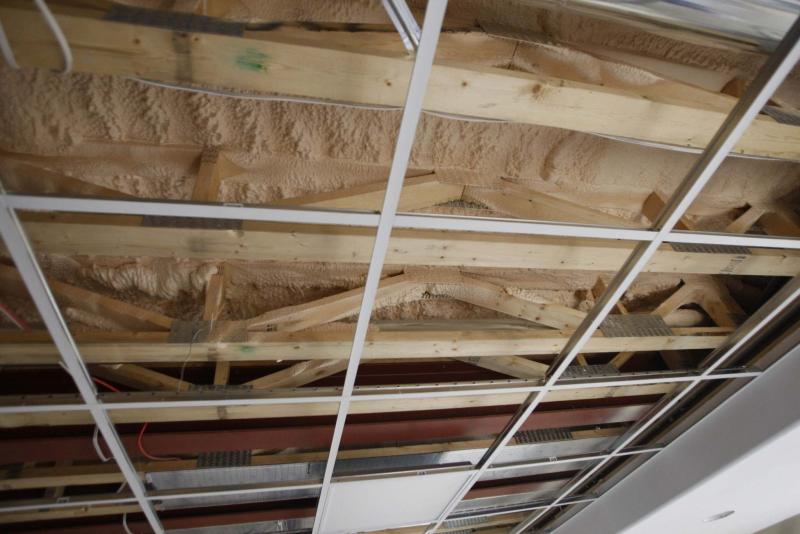
There are several concerns with older chimneys when they become redundant with the upgrades to high efficiency furnaces and water heaters. Because these components have a large hollow section running through the middle, air, pests, and moisture intrusion are a strong possibility. The moisture can often come in the top during wind-driven rain or snow, but that can be easily solved by replacing the older rain cap with a solid, sealed cap on the metal liner. This will keep out precipitation, but insulating the top of the chimney before capping may also help prevent cold air intrusion, as well. This same method should also be used to insulate and seal the bottom clean-outs inside the basement. Sealing both these areas with a can or two of blow-in foam and proper caps should prevent any moisture issues from condensation, inside the unused flues.
Once the proper sealing is complete, if water still comes in the basement periodically, it may have little to do with either condensation or blowing rain. In that case, the water is coming in from the soil around the portion of the chimney and foundation below grade. This appears to be happening in both homes. Whether the water is entering your homes through the older rusted clean-out cover, or simply through the foundation walls, the solution is the same.
All concrete and masonry structures in our homes that are below grade must be damp-proofed to prevent absorption of water. Especially clay brick chimneys, which are very porous, but concrete foundation walls will also suck up water from the surrounding soil. This may only be seen during heavy rains, or when the ground thaws and the snow melts in the spring, as in both your homes. The solution is simple, but may be somewhat difficult to achieve due to the deck in the first home. Digging down to the base of these areas to expose the entire surface below ground will allow for proper repairs. This may include patching any damaged bricks or filling any cracks or holes in the concrete, but the key is to replace the worn out damp-proofing. Sealing these leaky surfaces with a waterproofing membrane will stop the water from entering the basement.
Band-aid measures like drilling holes into masonry chimneys or spraying gunk on the inside of the foundation will not solve seepage issues from older chimneys, because the answer is further down.
Waterproofing the area below grade is the only permanent solution and calling a reputable foundation contractor to excavate and install a good quality membrane is the next step.
Ari Marantz is the owner of Trained Eye Home Inspection Ltd. and the past president of the Canadian Association of Home & Property Inspectors — Manitoba (cahpi.mb.ca). Questions can be emailed to the address below. Ari can be reached at 204-291-5358 or check out his website at trainedeye.ca.
trainedeye@iname.com
Renovation & Design
Blue is cheerful, calming and versatile
Last week, we looked at adding red to your decor. This week, we’ll look at another popular primary colour: blue.
We have a medium sky blue wall colour in our bedroom and absolutely love it.
It’s cheerful and airy during the day but calming at the same time. The crispness of it against white trim, bedding and curtains makes for a great palette. We brought the white ceiling colour down onto the walls a few inches for a crown moulding effect and I absolutely love the way it looks. White closet slider doors and white bedroom door finish off the look. A light, sandy-coloured laminate flooring offers a beach feel to the space.
Blue can come in so many lovely shades. Think airy skies and misty oceans, cheerful shades of blue that emit a sense of serenity and calmness. Darker blues, such as navy, offer drama while pale blue offers a dreamy, watercolour feeling to a room.
"While blue is known to be the most popular colour in the world, when it comes to home decor, many Canadians shy away from infusing it into their homes, opting for neutral colour schemes instead," said Martin Tustin-Fuchs, brand manager for Dulux Paints. "Yet, blue is a wonderful, versatile complement to any decor."
Not surprisingly, Dulux Paints has chosen an ethereal blue called Bear Run (10BG 46/112) — as its colour of the year for 2016.
(Our feature photo boasts this colour, which can work in any room in the home.)
Want to make a splash in your home with this year’s hottest colour? Dulux offers these suggestions to incorporate blue into your decor:
Warm things up
Combining blue walls with warm, paler colours — such as sandy brown, creamy grey or this year’s popular golden yellow creates a cozy feel in a room. For a calming, monochromatic look, pair different shades of blue in a space — altering the tone on walls, trim, doors and even ceilings. Warm up blue walls even more and create an inviting beach-house feel with wood flooring underfoot.
Pair with white
If traditional is your style, complement blue walls with white trim for a timeless decor. For a more modern look, paint walls white and make them pop with open bookcases revealing a painted backdrop of vibrant blue. Prefer a coastal feel? Complement a blue and white palette with striped fabrics and natural textures, such as grass cloth and jute. No matter what your style, add touches of blue accents around the room to bring it all together.
Make it work
Known to stimulate the mind, encourage focus and help increase productivity, blue is a good choice for a home office. Adding one or two other hues to the workspace will complete the look and create a sense of balance. Good colour complements to Dulux Paints’ popular Bear Run (10BG 46/112) blue are Newborn (35YY 78/269) yellow and Coral Flower (21YR 57/250) orange. To keep the space light and bright, opt for white or pale office furniture.
Soak it in
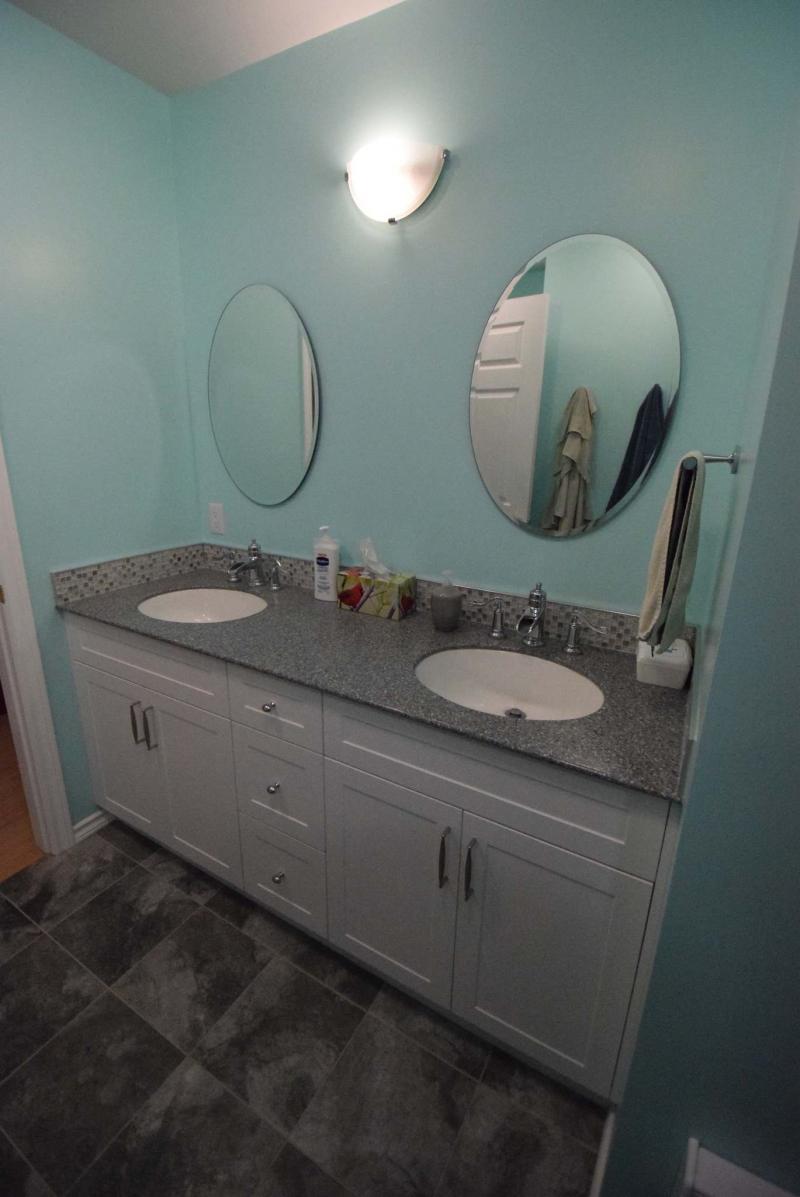
Soothing blue is a natural fit for a bathroom, regardless of the shade. Combined with pastel accents of off-white, light grey or tan — such as Dulux Paints’ Song Porcelain (00NN 83/000) white, Silver Trophy (30BB 53/012) grey or Brown Bag (10YY 35/196) tan — a blue bathroom can take on a relaxing, spa-like feel. For an ultimate spa effect, paint the ceiling an airy shade of light blue to mimic the sky and create the appearance of added height.
All of these colours can be found online at www.dulux.ca if you want to check them out. You can paint a room online to see how the colours work for you.
Connieoliver2016@gmail.com