
Renovation & Design
Renovation & Design
Remove ticks with liquid hand soap and a cotton ball
QUESTION: What is the easiest way to remove ticks from skin? Helen, Winnipeg
ANSWER: To remove ticks apply a glob of liquid hand soap to a cotton ball. Cover the tick for 20 seconds and apparently the tick sticks to the cotton ball. If however you do have to remove the tick, turn it counterclockwise.
QUESTION: Any suggestions for getting rid of woodpeckers? They are very noisy and wake us up early in the morning. Thanks, Jan, Brandon
ANSWER: The sooner you can act the better before woodpeckers make your home, their home. Their mission? To find food. Begin by having your roof inspected for infestations of bugs. Next close any holes on the roof. Place aluminum flashing over the areas where the woodpeckers are pecking. Woodpeckers won't like the new sound or the shiny metal. If this is not an option hang something shiny in the area such as aluminum pie plates, old compact disks or Mylar balloons or tape.
QUESTION: I am making a large batch of egg salad. What is the easiest way to remove the peel from hard boiled eggs? Sam, Winnipeg
ANSWER: After eggs are boiled set them into a bowl of cold water and remove the peel while the eggs are submersed.
QUESTION: Is there a quick and easy way to clean hard water deposits on a double stainless steel sink? I guess I have been so busy I didn't realize until now how bad it looks. If I can get it cleaned up, in the future I will have to make a habit of wiping it dry each night to prevent this from reoccurring. Thanks so much for your help. Melvin, Winnipeg
ANSWER: Thoroughly clean the sink using an abrasive pad, dish soap and water. Wipe the inside with olive oil to leave your sink looking like new.
QUESTION: I wonder if I can use Resolve in my dishwasher to combat glasses from getting foggy. I use it in the clothes washer to keep the drains clean. Nancy, Gladstone
ANSWER: I have never used Resolve in the dishwasher to reduce etching. Typically etching or fogginess occurs from too much detergent, lack of rinse aid, an overloaded dishwasher, water temperature too hot, lack of water softener on hard water systems or when the detergent is not compatible with the machine.
To remove mild etching, head to the nearest pharmacy and ask for citric acid. Put cups into the dishwasher and add citric acid to the soap dispenser. Run the cycle as usual and if the etching stays it is likely permanent. You can also soak cups in vinegar and rub them with fine steel wool. Don't get too excited if at first the glasses look brand new because the etching may return when the glasses dry. From people with etching challenges, I have heard positive results regarding phosphate-free Palmolive Gel Dishwasher Detergent (lemon splash scent). However, you may need to experiment with a few different brands. Norwex sells a green ball that sits on the top rack of dishwashers, which is made to reduce etching on dishes.
Note: Every user assumes all risks of injury or damage resulting from the implementation of any suggestions in this column. Test all products on an inconspicuous area first.
I enjoy your questions and tips, keep them coming. Need a Presenter on the topic: Effective Speaking or The Power of Words? Check out: Reena.ca







Renovation & Design
Summer's not just for major renovations -- sweat the small stuff, too
Summertime is the best time for building projects and renovations, such as refinishing the deck, putting up a fence or painting outdoors. Mother Nature is on our side, in terms of weather (for the most part), so we can really dig in and get our hands dirty to get that project done and checked off the list before fall.
But sometimes people forget about simple home maintenance that we should also be checking off our list, to help keep our homes safe and healthy.
1. Change your furnace filter
You should change it every at least every three months minimum (so, at the start of every season).
Everyone remembers to change their furnace filter in the winter, because when we think winter we think heating and the furnace. But for some reason, we forget that we use our furnaces over summer, too.
Every time we use the A/C (central air, not the window units), we're using the furnace. That means many furnaces might be working overtime this summer, so change your filter. It's a simple way to help keep the air in your home healthy and clean, and it also helps reduce allergies.
2. Stop pests
Summertime is when most insects make their way indoors, looking for cooler homes. Go around the exterior of your home and look for any potential entry points, such as around window and door framing, venting, tears in window screens and door screens, and cracks in the foundation, especially below windows and doorsteps.
I've seen swarms of bees and wasps find their way into homes through the tiniest cracks and openings. One house had a massive swarm of bees that made a home behind the kitchen cabinets (which were along an exterior wall). In another home, wasps found a tiny crack in the foundation below the front door steps that led directly into the cold room.
Also, watch for insect wings. If you see a bunch of wings around the exterior of your home, there's a good chance you have termites. (Termites have wings, and once they find a new home they drop them.)
Gaps around window and door frames, as well as any venting, should be sealed with rubberized exterior caulking. Any cracks wider than a half-inch (1.3 centimetres) should be filled with expanding foam -- there are special low-expanding foams that don't put too much pressure on framing. Small foundation cracks can also be filled with an expandable foam or epoxy injection.
Torn window screens should also be replaced, and refill any gaps in your mortar (also known as tuck-pointing).
3. Be green to save green
During summer, we water our lawns, wash the deck, wash our cars, etc. Don't use clean water that you pay for. Instead, talk to a pro about installing a grey-water reuse system that collects the rainwater that comes off your roof. Not only is it environmentally friendly, it also helps protect your home. Rather than flowing down your eavestroughs to the side of your home and possibly flooding your basement, you can use that water the next time you water your lawn or wash your car. It's free and you help the environment.
Also, think about switching to LEDs outside your home and using solar exterior lights.
Another trick to help you save is reversing ceiling fans. During winter, ceiling fans should turn clockwise -- this helps circulate warm air trapped along the ceiling. But in the summer, if the fan works in reverse (so, counter-clockwise), it can help create a breeze.
4. Check for mould
That musty smell in your basement, crawl space or attic is mould. In fact, that smell is mould "digesting." Address the problem by taking care of any moisture issues.
If you find surface mould and it's less than three square metres, you can clean it yourself using proper safety gear (i.e., respirator and gloves) and a safe and effective product (like Concrobium). Do not use bleach! If you have a big mould issue, you will need to call a pro.
5. Enjoy the summer!
Summer lasts only three months of the year, so make the most of it and make it right!
Watch Mike Holmes on Holmes Makes It Right on HGTV. For more information, visit makeitright.ca.
Renovation & Design
Use baking soda to clean concrete driveway stains
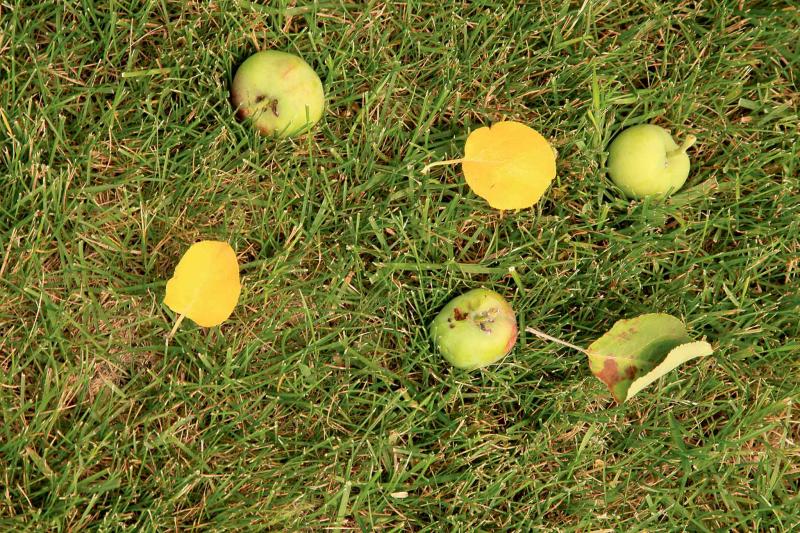
QUESTION: My friend had a new driveway poured, he also had an apple tree nearby that dropped those little apples on the driveway with a splat and left dark brown marks. What would you suggest he use to remove those marks? Elvira, Winnipeg
ANSWER: Sprinkle the driveway with a box of baking soda. Use a stiff brush dampened with water and scrub the area until the stains are gone. If the stains remain, scrub the driveway with one of the following: laundry detergent and water or TSP (trisodium phosphate) and water or washing soda and water. Rinse. As a last resort, combat tough spills with muriatic acid and a pressure washer. Apply the acid following the manufacturer's directions, and let it soak for several seconds. Keep in mind that muriatic acid is a dangerous product; if you use it, wear rubber or latex gloves, safety goggles and protective clothing, and never wash it down storm drains. Test all solutions on an inconspicuous area first.
QUESTION: Can you please tell me how to clean wood-finish cupboards? Also, what is a great recipe for Monster Cookies? Sincerely, Lorraine, Arborg
ANSWER: Mild dish soap and water is all that is recommended for cleaning the grease off of kitchen cupboards (just a damp clean cloth or mildly abrasive cloth and no excess water, dry immediately). This is very effective, since dish soap is created as a grease cutter.
Here is a wonderful recipe that makes six dozen Best Monster Cookies. In a bowl combine one cup butter, 1 1/2 cups peanut butter (if you don't like peanut butter, substitute one cup margarine for peanut butter), two cups brown sugar and two cups white granulated sugar. Add four eggs and one tablespoon vanilla and beat until smooth. To the batter add three cups flour, five cups rolled oats, two teaspoons baking soda, one tsp. baking powder and one tsp. salt. Mix until combined. Stir in two cups chocolate chips and one cup M & M's. Drop tablespoons onto greased cookie sheets and bake at 350 F (176 C) for 10 minutes or until edges start to turn light brown. Freeze leftovers. Extra tip: you can substitute some of the candy for the same amount of peanuts or walnuts.
QUESTION: I own a water cooler that is about 10 years old. I have misplaced the directions for cleaning the inside of my cooler. I seem to remember using a bleach solution to clean the reservoir. Can you give me suggestions please? Thank you in advance, Inez
ANSWER: Health Canada recommends that you clean your cooler system after every bottle change. Begin by disconnecting the unit from the wall. Remove the bottle from the cooler unit. Drain the water through the blue faucet into a bucket. Disconnect any removable parts from the unit. Wash parts thoroughly with dish soap and water. Rinse. If you have a hot and cold dispenser, plug the hot dispenser off using a cork or plug. Doing this prevents sanitizer from getting into the hot tank. Combine four litres of water and one tbsp. vinegar. With this solution, clean all of the interior surfaces of the reservoir. Let the solution sit for seven minutes. Fill reservoir full of fresh bottled water and drain the water through the cold faucet. Repeat three times. Remove cork from the hot tank and replace all parts. Plug unit into wall. You can use one tsp. bleach instead of one tbsp. vinegar, however I prefer vinegar since it is safe for consumption.
Fabulous Tip of the Week
I recently read an article about rabbits in the yard eating things we do not want them to eat. I found an excellent inexpensive, environmentally friendly and easy solution. Grate Irish Spring bar soap just like cheese and sprinkle it around problem areas (or around perimeter of property) to keep rabbits away. Submitted by Mel.
Note: every user assumes all risks of injury or damage resulting from the implementation of any suggestions in this column. Test all products on an inconspicuous area first.
I enjoy your questions and tips, keep them coming. Need a Presenter on the topic: Effective Speaking or The Power of Words? Check out: Reena.ca