



Renovation & Design

Renovation & Design

Resurrection of the lily

By Colleen Zacharias
July 25

Renovation & Design

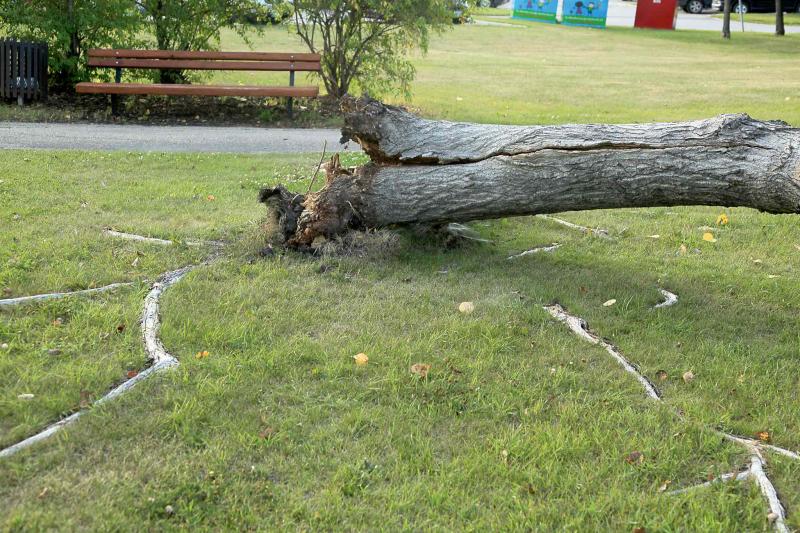
Why is the poplar tree so unpopular?

I have written a great deal about the problems with poplar trees, especially the Swedish aspen and Tower poplar -- two of the most commonly planted trees in the poplar tree family. There are larger poplar trees than these two which also can be of great concern for people who own these trees.

I devote much space about poplar tree problems in my book Dr. Tree's Guide to the Common Diseases of Urban Prairie Diseases. There are numerous illustrations of the problems poplars can experience. The poplars I am referring to are the very tall and massive hybrid poplars. These trees have been around for more than 50 years, but are usually hybrids between the native giant cottonwoods growing near river banks and the native balsam poplars that thrive in slightly seasonal low lying areas. Tree breeders have also combined these trees with European poplars to form even more variety of poplars for use as shelter belts in prairie fields.

There is no question some people admire the imposing size of mature hybrid poplars, especially the northwest poplar hybrid. A mature native plains cottonwood can live more than 200 years. Hybrid poplars are lucky to reach 60 years. Although these poplars were destined to be planted as shelter belts and for shade around home and farm buildings, a very large number of them have been planted in urban yards. The hazards of falling dead branches from a giant hybrid poplar in a populated area are obvious. These trees were simply not meant to be planted in city yards. Some people are concerned with the height of these giant trees and have them 'topped' by someone in the tree business. Topped trees will usually produce new shoots at the cut locations. The thickness of the new shoots (referred to as "suckering shoots") is smaller than the stem or branch they originated from. The new shoots in these circumstances may or may not be strong enough to grow very large and long branches. Invariably, the branch falls away from the tree at the former cut location.

A few weeks ago I wrote about hazardous trees. When you see the condition of these structurally unsound trees it is easy to see they are no longer an amenity for the yard. Untreatable poplar diseases easily enter all poplar trees as they have very little natural resistance to these disease. A typical common poplar disease is called Hypoxylon. This disease spreads quickly though the tree resulting in the death of branches at first followed by the whole tree. My advice; be very wary about planting these trees in small residential lots.

Michael Allen M.Sc.F., RPF (ret'd) is a consulting urban forester, tree diagnostician and certified arborist.

viburnumtrees@shaw.ca

By Michael Allen
July 25

Advertisement

Renovation & Design

Filling voids part of maintenance

Question: I was moving some plants in a front flower bed recently and while digging next to my concrete steps I realized there was about an eight-inch (20-centimetre) void between the base of my steps and the soil beneath. The steps have been re-capped recently but retain what I think is the original base. I know we had some red squirrel issues a few years ago, but haven't seen any recent activity, so I'm not sure they're the reason for the void or if it's just a natural occurrence with settling over a number of years.

Should I be concerned about the steps being unsupported? I don't want to lose the investment of recently repaired stairs. Would it be of any use to try and backfill under the stairs with crushed limestone? And, if the squirrels are the root of the problem, how best to keep them out from under the steps?

Thanks for your time.

Regards, Perry Favoni


Answer:

Filling in voids under steps, overhangs, or other areas around homes is part of typical maintenance. There are a few reasons to keep these areas from becoming problematic, not the least of which is prevention of pests nesting in these areas.

Trying to determine the cause of the void under your front steps may be fruitless, but successfully filling it in will likely leave you pest-free. It would be unusual for red squirrels, which normally make their homes in trees, to build a nest under your steps but other ground squirrels, chipmunks, and rabbits may find the area ideal. Also, bees, wasps, hornets, and other stinging insects like protected, damp locations like that for their hives. Keeping the area filled in, especially with sharp edged stone, will prevent these critters from getting too comfortable under your stairs. While that may seem like the primary reason for your efforts, other considerations may be just as important.

When soil settles or erodes near your foundation, especially under steps, additions, or other overhangs, there is much more chance of water pooling from rain and snow melt. When water pools against a foundation wall, it is only a matter of time before it will find a small crack, hole or defect in the damp proofing to leak through. Because the soil in the void is below the level of the surrounding earth it will tend to collect more than in other areas.

As far as structural concerns with the disappearing soil, that may not be as much of a problem as you might suspect. Most concrete stairs may appear to be solid, but in reality are hollow and relatively thin. If they were constructed of solid concrete they would be so heavy that movement would be a more likely outcome. Also, many stairs appear to be supported by the soil alone, but may have more stable supports at the front and rear. Sometimes, deep concrete piers, or piles will be installed at the front corners of the stair landing to support the entire assembly. Other times, larger concrete footings are poured for the same purpose. Alternatively, many other sets are attached or connected to the foundation of the home to prevent movement. Losing some soil to normal forces of nature should not cause the steps to become unstable.

The next of your questions to address is the proper material to use for filling in the space in question. I often get this question during the course of regular inspections and my reply is that any type of fill that can be easily shovelled or poured into this tight area is acceptable. Soil, sand or smooth stone will fit in this category, but crushed limestone may be the best choice for a couple of reasons. The sharp edges of the stone may make excavation by invading animals more difficult, while it will be relatively easy to shovel into this tight area. It also compacts well, especially if it is quarter or three-quarter down material, which contains stones of various sizes combined with sand and other particles smaller than the screen size it is named after. Those properties, as well as the fact that it will become fairly solid if wetted down, make it an ideal substrate for your purpose.

Preventing moisture from permeating into the foundation of a house should be a primary goal of any homeowner. Filling in any large voids, like that under your front stairs, will go a long way in achieving that goal. An additional bonus will be preventing pests such as rabbits, wasps, or squirrels from taking residence in the protected space. Ensuring that this is taken care of, on a regular basis, will help alleviate these concerns even if structural considerations are not much of an issue.


Ari Marantz is the owner of Trained Eye Home Inspection Ltd. He can be reached at 204-291-5358 or check out his website at trainedeye.ca.

trainedeye@iname.com

By Ari Marantz
July 18

Renovation & Design

Remembering Winnipeg's Pan American Games

We're at the mid-point of the 2015 Pan American Games and by all accounts the games are proceeding successfully and Canada is performing very well. There has been a lot of preparation for these games both in terms of athletes and facilities and the end results could lead to something much bigger.

It was only 16 years ago when Winnipeg hosted the 1999 Pan Am Games; up until now we are the only Canadian city to host these games twice (we also hosted the games in 1967.) There was tremendous excitement and energy throughout Winnipeg in 1999 and this town was alive with Pan Am fever. I have no doubt that Toronto is experiencing their share of excitement too; however, there is no way that this event takes over such a large metropolitan area like it did here in 1999. For Winnipeg, the Pan Am Games were our Olympics. We hosted more athletes and sports than any other event outside the summer Olympics, more than the winter and games and considerably more than the Commonwealth Games. Toronto, I suspect, is going through the same exercise that Rio de Janeiro did in 2007; prove yourself by hosting the Pan Ams before we can consider you for the Olympics. It worked for Rio who won the 2016 bid. I have no doubt it will work for Toronto too.

This year's games in Toronto have an operating cost approximately 20 times the cost for the Winnipeg games. There will no doubt be a tremendous sport legacy, however this column is typically about housing. How did the 1999 Pan American Games impact housing in Winnipeg and the surrounding area?

For one, we were a bit of an unknown commodity in Central and South America. Our games kick-started the Provincial Nominee Program, provided an impetus for north-south trade corridors and encouraged people to move here, thereby requiring more housing.

Neighbourhoods improved via new athletic facilities. The new baseball stadium invigorated downtown Winnipeg and brought thousands of people to the area in the evenings and weekends, not only then but for years afterwards for Goldeyes games.

The easiest move would have been to put artificial turf for a hockey field at the University of Manitoba. However, by locating it by Kildonan East Collegiate, minor football and myriad of other activities rejuvenated the area.

An expanded pool in River Heights, archery in Tuxedo, water-skiing in Transcona, cycling in Bird's Hill, rowing in Minnedosa, sailing in Gimli, cycling and equestrian at the Red River Ex, five sports in Fort Richmond and five more in the heart of downtown all brought heightened attention to where we live.

As I said earlier, I have no doubt Toronto will do an excellent job with this year's games, but in 1999, Winnipeg was the centre of the universe.


Mike Moore is president of the Manitoba Home Builders' Association

By Mike Moore
July 18

Renovation & Design

Summer tips for your home, lawn and garden

It's finally time for sun and fun so get ready to soak up these easy summer-loving hints!

  • Clean up the grill with citrus. Heat up the grill and slice an orange in half. Take the sliced orange and rub on grill racks.
  • Brush grill after each use with a stiff brush or steel wool and coat the cooled grill with oil to prevent future rust. Aluminium foil can also be used to keep your grill shiny. Gently rub the grill with a crumpled-up ball of aluminium foil. You will notice the grime and build-up disappear. If you are desperate, clean the grill with half a cup of washing soda and enough hot water to cover the grills. Leave overnight. In the morning rinse and scrub with water and wipe with vinegar, or apply oven cleaner, but be sure to refer to the instructions in the manufacturer's manual.
  • To remove rust on bike chrome wet a crumpled-up ball of aluminium foil, then rub it across the frame. Cleans well, without scratching.
  • Make your own rain gauge from a flat-bottomed plastic bottle. Cut off the top of a plastic two-litre bottle and place it upside down inside the bottle. Measure the bottle in inches or centimetres. Mark the outside of the bottle with a permanent marker. Fill the bottom of the bottle with water to the point where the measure starts. Set the bottle outside where it can catch the rain when it falls.
  • You can't go wrong with the purchase of a sprinkler timer to water your yard. Set the timer to water between midnight and sunrise from May to October to minimize water lost to evaporation. Tip: Adjust your automatic timer to coincide with weather changes. Don't set it once and then leave it for the entire watering season.
  • Grass is a fast-growing, high-maintenance ground cover that "browns off" quickly in dry weather. Ground covers such as clover and other spreading plants require less maintenance and are more drought-resistant. Your local garden centre can advise you on alternatives that will thrive in your area. Examples of ground covers include anemone, clematis, hops, lady's mantle, creeping Jenny, Solomon's seal and elephant ears.
  • Don't overwater. Excess watering means that fertilizers and pesticides will move out of the root zone of the plant, rendering them ineffective. Those toxins can penetrate into the groundwater, impacting water quality and increasing the environmental burden.
  • Mulch It! A good, thick layer of mulch cools flower beds, inhibits weed growth, and slows the evaporation of water from the soil. Place mulch around the bases of trees, shrubs and flowers to reduce evaporation.
  • Mulch warning! While mulch does carry many benefits, there are all kinds of fungi that tend to grow in mulches, one in particular is called "shotgun fungus". These tiny little brown specks will fly as high as three metres into the air, and once they stick to the house or windows, they stick like glue. Do your best to prevent this fungus from growing. Keep the mulch loose so air can circulate. Don't add layer after layer of mulch around your house. Skip at least every other year and loosen the mulch you already have. Loosen at least once a year and rake flat to make it look like the yard was recently mulched.
  • Nothing says summer like a gorgeous watermelon cavity filled with delicious fresh fruit. To begin, take a sharp knife and slice a small thin piece off the bottom of the watermelon (so that the finished basket sits flat on a plate). Next, take the tip of your knife or garnishing tool and score the watermelon in half, horizontally. Then mark a strip of about one and a half to two inches wide that will form the handle of your basket. Using a small knife, cut around the melon on the lines. The garnishing tool naturally makes V shaped cuts, which makes the job very easy. Separate the cut sides from the body of the watermelon. If you used a marking pen and there are any residual marks left, a handy way to get rid of them is to use a new emery board and gently sand them off. Take a melon baller and hollow out the inside of the watermelon. After removing all the edible parts, take a large spoon and gently scrape out the sides. Be careful not to scrape too thinly on the handle, as you want it to be stable. Mix the watermelon balls with other ripe fresh fruits. To make the handle garnish, use a toothpick to affix it to the watermelon. Tip: To prevent liquid from the fruit from filling the basket, put drainage holes in the bottom of the watermelon after hollowing it.


Note: Every user assumes all risks of injury or damage resulting from the implementation of any suggestions in this column. Test all products on an inconspicuous area first.


I enjoy your questions and tips, keep them coming. Need a Presenter on the topic: Effective Speaking or The Power of Words? Check out: Reena.ca

By Reena Nerbis
July 18

Renovation & Design

Older furnace doesn't necessarily require replacement

QUESTION: I recently had a problem with my furnace that turned out to be a worn out sensor. While the man from the heating company was here he noted because my furnace is 15 years old I should seriously be thinking about replacing it, soon. The furnace is a Rheem Criterion two, mid efficiency gas furnace, in a typical 50's bungalow. It is serviced and cleaned regularly and the filter is changed every couple of months. The only other issue with the furnace was a wire which needed replacing a few years ago. I called Manitoba Hydro to see if they could do an unbiased inspection and let me know the condition of the furnace. They said I would have to call a heating or electrical place, but they all sell furnaces. Is the fact that a furnace is 15 years old grounds for considering replacing it? Also, are there any Winnipeg companies that do furnace audits and don't sell furnaces?

Thanks so much.

Sincerely, Mindy B

Answer: Upgrading a furnace to a newer, high efficiency unit will depend on several factors, with age being one of those criteria, but not the only one to rely upon. Other items that must be taken into account are recent home upgrades, furnace location and condition, and economic considerations. We will explore these and others, while discussing your specific situation.

While not the most critical of all the factors to be considered while deciding on whether to upgrade your older furnace, age is certainly important. Even more critical than knowing the age of the current heater, is determining the normal life expectancy. For some older, standard efficiency furnaces with cast iron burners and high quality heat exchangers, that could be in the 30 year plus range. For some lower quality units, 15 years may be nearing the end of the road, but most of those furnaces would be long gone by now. For your mid-efficiency unit, 25 years is a reasonable time frame to expect the furnace to operate properly and safely, if well maintained. That is not to say it won't last 30 years, or develop a damaged heat exchanger and need to be junked before the 20 year mark, but planning for an upgrade in that range would be practical.

Another factor in deciding whether to buy a new gas-fired furnace is efficiency. Many older models, built in the early 1980's or earlier, had efficiency rates in the 60 per cent range. That means that 40 per cent of the fuel input is wasted, mainly from exhaust going up the chimney with dilution air from the basement. Mid-efficient units like yours are often 80 per cent efficient, or slightly higher, so are a considerable improvement over the older ones. New furnaces, which are all high efficiency models, have ratings of 90 per cent or higher and waste very little energy by venting mainly water vapour through PVC pipes to the exterior. To upgrade from a standard model to a new High-E furnace makes sense regardless of condition, because fuel savings would be considerable. That's not the case with your mid-efficiency unit, as the extra 10 per cent or so would not be a sufficient economic inducement to replace a furnace in good condition.

Evaluating recent home improvements or upgrades is the next step in deciding whether to make the switch to a newer gas-fired furnace. If you have recently taken advantage of various government incentives and recommendations, you may have newer windows and insulation in your home. Not only would those upgrades have improved the energy efficiency of your home, and made it more comfortable, they would also have tightened up the building envelope. That will prevent air leakage and normally create a more humid environment inside your house. Upgrading from a mid-efficiency furnace, which vents through a traditional chimney, will further increase the relative humidity in the home by removing that natural vent to the exterior. If you do decide to change your furnace, upgrading or adding bathroom and kitchen exhaust fans, or installing a ventilation system (HRV), may be needed to take care of that extra moisture.

A less critical, but often overlooked, area to explore is the location of the furnace for venting of the new High-E model. Since the new furnace is normally vented horizontally through the top of the foundation wall, location can be important to prevent the need for other modifications. If the furnace is beside a foundation wall where the exterior is too close to tall fences, neighbour's homes, garages, sheds, or thick vegetation, installation of the vent may be tricky. If the furnace is near the centre of your home, with drywall ceilings and finished basement walls surrounding it, other renovations may be required to install the vent pipes in a proper location.

The final item to address is your question about locating an impartial entity to determine if your furnace is truly in need of replacement. You have already discovered Manitoba Hydro is reluctant to inspect furnaces to see if an upgrade is required. However, they may come and evaluate the safety of a unit, if a contractor has suggested a damaged heat exchanger, or other defect, has made the unit unsafe for operation.

You are correct to assume that some HVAC contractors will give you a biased evaluation because they may benefit in recommending upgrades, but not all. I suggest calling two or three contractors, preferably small independent ones not tied to larger franchise operations, to check your furnace. Trust technicians who evaluate other criteria, and not simply age, in determining the need for a change. Just because a furnace is 15 years old should not imply it needs to be upgraded, if it is in good working order and well maintained. Finding an HVAC contractor that takes this approach may not only answer your questions, but provide a more reliable company to do your furnace maintenance in the future.

Ari Marantz is the owner of Trained Eye Home Inspection Ltd. and the past president of the Canadian Association of Home & Property Inspectors -- Manitoba (cahpi.mb.ca). Questions can be emailed to the address below. Ari can be reached at 204-291-5358 or check out his website at trainedeye.ca.

trainedeye@iname.com

By Ari Marantz
July 11

Renovation & Design

TURF MANAGEMENT

By Colleen Zacharias
July 11

Renovation & Design

Remove ticks with liquid hand soap and a cotton ball

QUESTION: What is the easiest way to remove ticks from skin? Helen, Winnipeg

ANSWER: To remove ticks apply a glob of liquid hand soap to a cotton ball. Cover the tick for 20 seconds and apparently the tick sticks to the cotton ball. If however you do have to remove the tick, turn it counterclockwise.

QUESTION: Any suggestions for getting rid of woodpeckers? They are very noisy and wake us up early in the morning. Thanks, Jan, Brandon

ANSWER: The sooner you can act the better before woodpeckers make your home, their home. Their mission? To find food. Begin by having your roof inspected for infestations of bugs. Next close any holes on the roof. Place aluminum flashing over the areas where the woodpeckers are pecking. Woodpeckers won't like the new sound or the shiny metal. If this is not an option hang something shiny in the area such as aluminum pie plates, old compact disks or Mylar balloons or tape.

QUESTION: I am making a large batch of egg salad. What is the easiest way to remove the peel from hard boiled eggs? Sam, Winnipeg

ANSWER: After eggs are boiled set them into a bowl of cold water and remove the peel while the eggs are submersed.

QUESTION: Is there a quick and easy way to clean hard water deposits on a double stainless steel sink? I guess I have been so busy I didn't realize until now how bad it looks. If I can get it cleaned up, in the future I will have to make a habit of wiping it dry each night to prevent this from reoccurring. Thanks so much for your help. Melvin, Winnipeg

ANSWER: Thoroughly clean the sink using an abrasive pad, dish soap and water. Wipe the inside with olive oil to leave your sink looking like new.

QUESTION: I wonder if I can use Resolve in my dishwasher to combat glasses from getting foggy. I use it in the clothes washer to keep the drains clean. Nancy, Gladstone

ANSWER: I have never used Resolve in the dishwasher to reduce etching. Typically etching or fogginess occurs from too much detergent, lack of rinse aid, an overloaded dishwasher, water temperature too hot, lack of water softener on hard water systems or when the detergent is not compatible with the machine.

To remove mild etching, head to the nearest pharmacy and ask for citric acid. Put cups into the dishwasher and add citric acid to the soap dispenser. Run the cycle as usual and if the etching stays it is likely permanent. You can also soak cups in vinegar and rub them with fine steel wool. Don't get too excited if at first the glasses look brand new because the etching may return when the glasses dry. From people with etching challenges, I have heard positive results regarding phosphate-free Palmolive Gel Dishwasher Detergent (lemon splash scent). However, you may need to experiment with a few different brands. Norwex sells a green ball that sits on the top rack of dishwashers, which is made to reduce etching on dishes.

Note: Every user assumes all risks of injury or damage resulting from the implementation of any suggestions in this column. Test all products on an inconspicuous area first.

I enjoy your questions and tips, keep them coming. Need a Presenter on the topic: Effective Speaking or The Power of Words? Check out: Reena.ca

By Reena Nerbas
July 11

Browse Homes

Browse by Building Type