


Renovation & Design

Advertisement

Renovation & Design

SOLUTIONS: Make your garage sale a standout success

QUESTION: I am in the process of organizing a garage sale. Do you have any last-minute advice or tips for a successful event? Candice, Winnipeg

ANSWER: Since Winnipeg has a reputation of being the "Garage Sale Capital," you will want to make your event live up to this honourable reputation.

Begin by advertising. Stick up several EASY TO READ signs near your home. Make sure to include the phrase "no early birds" or you'll have people camping out in your front yard. Take time before the sale to collect a "float" so you will be able to quickly make change for your customers.

Mark everything. Many people walk past items without a clear price. The price should be on top of each item, not on the bottom. Tip: As a general rule of thumb, price items about a quarter or third of what they would cost new. When selling books and CDs, arrange them in a box so the titles can be easily read by customers. If you visit garage sales where items look like the owner takes care of his/her stuff, you will likely sell more.

Encourage both men and women to stop at your sale by putting items that would be of interest to men near the front of the sale so that they are both likely to stop. Golf clubs, tools, hammocks -- you know, the old flies-to-honey theory.

If your sale is on a hot day, you may want to have a large tub filled with ice and cans of pop for sale. Have proper lighting; be sure that it isn't too dark in your garage. Clean everything that you are planning to sell. If you don't have enough tables to display items, lay things out individually on clean blankets or sheets. Don't bury anything in boxes -- the more items displayed, the easier it is for someone to spot a much-needed treasure and purchase it.

Have pleasant easy listening music playing in the background; shoppers will linger longer. Do not use a cash box unless you have someone watching it at all times. It may be easier just to carry your money on you at all times. When you set your stuff out for display, make sure it is displayed neatly.

If you are selling clothes, they will sell better if you find a way to hang them up. At the very least, fold them neatly, and separate them by sizes.

Many people will not come to a garage sale prepared with a bag. You should save your grocery bags in the weeks leading up to your sale so you can offer them to your shoppers. If you see a shopper holding a few things, ask if they'd like a bag. The more people can hold, the more they will buy!

"You spend the first 50 years of your life collecting stuff, and the next 50 years trying to get rid of it." Quote by: My mom

QUESTION: I hope you can help me with this problem. I have a small wool rug and a fringe at each end. I had it professionally cleaned but the fringe looks grey and dirty. Is there a way to clean the fringe at home? Thanks for your help. Nell, Winnipeg

ANSWER: Begin by following care label instructions to see how the manufacturer intended for the carpet to be cleaned, you may want to contact a professional cleaner once again. If you decide that you want to clean the carpet yourself, use shaving cream and rub the fibres briskly with your fingers to clean the fringe. Rinse with water. Or make a paste of Oxy Clean and water and wash the fringe thoroughly before rinsing.

QUESTION: I desperately need your help. I had the misfortune -- no, stupidity on my part, plain and simple -- of overcooking popcorn in my microwave several days ago, and the house still reeks. I had one of those pre-packaged popcorn bags and put it in the microwave on the "popcorn" setting. From past experience with that setting there were usually several kernels of corn that had not popped. I selected the popcorn setting and retired to the living room to watch the news.

Well, the next thing I knew the smoke alarm in the hallway to the bedrooms was shrieking and when I looked around I could hardly see the hallway and smoke was coming out of the kitchen.

My immediate thought was to call 911 but then realized my stupid mistake. I retrieved the popcorn bag from the microwave somehow, through all the overpowering smoke in the kitchen. Needless to say the popcorn was black as coal and was discarded. I opened several windows and turned on fans for airflow. The inside of the microwave had what seemed like a tar-like substance on the surfaces and I cleaned that up as best I could.

I have since cleaned around, under and behind the microwave and removed what evidence there was of the incident. However, in spite of airing out the house generally and the kitchen area in particular, the burnt smell is still very much in evidence. Opening the microwave door adds another dimension to the smell -- not good!

I have company coming for Folklorama this year and I'm hoping somehow to eradicate this foul burnt odour before their arrival. Would you have any suggestions for my dilemma? On the positive side, my smoke alarm does work! Enjoy your newspaper articles. Thank you in advance for any help you can possibly muster up. Hartley, Winnipeg

ANSWER: Don't worry, you are not alone; this happens all the time! Your best bet is to overpower the burnt smell with a pleasant aroma. In a microwave-safe bowl combine water and a few teaspoons of vanilla for baking. The more vanilla, the stronger the smell. Put the bowl inside the microwave and set the microwave to cook until the vanilla boils over and flows into the cracks and corners of the microwave (where the foul odour is coming from). When the microwave has stopped, let sit for a few hours. Wipe the microwave out with a generous amount of vinegar and a few drops of lemon juice. Dry the microwave and unplug it.

Stuff the microwave with LOTS of crumpled up newspaper. The ink in newspaper will absorb the remaining odour. Leave newspaper for at least a few days. Remove the newspaper. Store a bowl of baking soda in your microwave when not in use.

Reena Nerbas is the author of the national bestselling Household Solutions series. Her website is www.householdsolutions.org. You can contact her at Box 429, Blumenort, MB., ROA 0C0.

Reena Nerbas
June 5

Renovation & Design

ASK THE INSPECTOR: Ventilation needed to cure damp smell

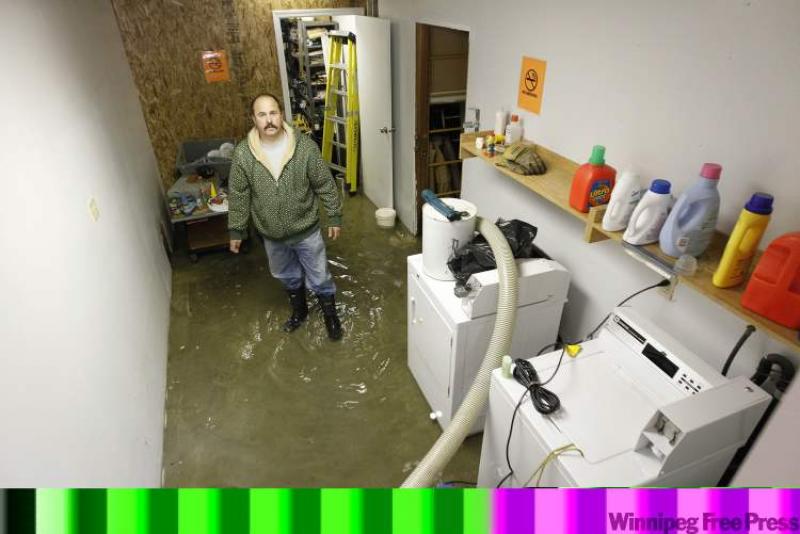
QUESTION: Fifteen years ago we added a bedroom and family room to our 540-square-foot home. The addition is set on piles. The crawl space was insulated with Styrofoam and poly and the floor was covered with poly and sand. All of my downspouts have extenders. The only access to the crawl space is through two old basement window openings to facilitate air movement.

Over time we have noticed dampness and a musty smell emanating from the crawl space. Last winter we closed over the window openings and diverted a heat duct into the area from the furnace that has the fan running continuously. The thinking was this would dry out the sand base and eliminate any mustiness, but it still prevails.

Should we be installing venting in the outer walls for summer airing and continue with the heating in winter? I assume any venting would have to be closed off to eliminate cold air over the winter. -- Jim Rodgers

ANSWER: Damp-smelling crawl spaces are one of the most common issues homeowners face, no matter what age or location of the home. This can range from standing water to simple odours similar to what you are experiencing. Measures to prevent this from occurring range from major excavation to proper ventilation, but your situation seems to be more related to the latter.

No matter how well built or sealed a crawl space is, moisture intrusion is always a possibility. You have already addressed several of the most common causes of the dampness, but that may not be a complete remedy. The reason that many crawl spaces have moisture issues is simply the design. These areas are typically constructed with a short perimeter concrete grade beam that is the only barrier to moisture from the surrounding soil entering the crawl space below grade. As in your case, this grade beam is supported by deep concrete piers that will resist vertical movement, but they provide little additional protection from the moisture in the surrounding soil.

Due to normal erosion and soil wetting and drying, water may be able to seep underneath the grade beam and enter the crawl space. The polyethylene air/vapour barrier you have installed may prevent most of this moisture from entering the living space of your home, but it is never perfect. Also, it can trap moisture in the soil, allowing it to remain damp, which may be the major source of the smells you are experiencing.

While you have taken measures to minimize moisture intrusion by good grading and water management on the exterior of your home, and have added heat from your forced air furnace, you may be missing one important component from the crawl space. A sump pit and pump, possibly connected to a perimeter drainage system, is an important part of most dry crawl spaces. This pit should be located near the centre of the crawl space, preferably at a low point in the sloping soil. This will collect excess moisture in the soil and the pump will discharge it to the exterior. If you don't have a properly installed sump pit and pump in an addition of your age, one should be relatively easy to install. Even without a perimeter drainage system, this may help to collect enough excess moisture to prevent the damp-smell in your crawl space.

To more directly answer your question, adding summer vents in the perimeter grade beam is a very good idea. The warm, fresh air that will enter the crawl space through these vents will help eliminate the moisture and the offensive odour. These vents may be difficult to install, requiring cutting or drilling through the concrete grade beam, but may be well worth the effort and cost. You should ensure that you have at least one vent on opposite sides of the foundation to allow a good cross draft to develop. Also, these vents must be screened to prevent inspects and other pests from entering the crawl space. Finally, winter covers will be critical, but these may be insulated with rigid foam, similar to the other insulation already in place.

The last issue to address is the heating and ventilation of the crawl space in the heating season. You have taken exactly the right steps by installing a warm-air duct from the furnace and running the fan continuously, but you have erred by closing the access hatches. The two openings into your basement are the only means of ventilation of the damp crawl space in the winter, so they should remain open. Pumping warm air into this area will help dry out the moisture by simple circulation, but much of this damp air may remain trapped without any means to escape. Closing these access hatches may prevent the musty smell from entering the basement, but will only make this issue worse when they are opened.

To sum up this discussion, moisture prevention for crawl spaces has two main areas to address. Firstly, prevention of water entering this area by good exterior grading and water management is very important. Secondly, when water does penetrate this area, despite your best attempts to minimize it, it must be eliminated. This can best be achieved by a combination of a properly installed and maintained sump pit and pump and good ventilation.

If all of these components are in place, the moisture, along with the offensive smell, should disappear.

Ari Marantz is the owner of Trained Eye Home Inspection Ltd. and president of the Canadian Association of Home & Property Inspectors -- Manitoba (www.cahpi.mb.ca). Questions can be emailed to the address below. Ari can be reached at (204) 291-5358 or check out his website at www.trainedeye.ca.

trainedeye@iname.com

Ari Marantz
May 29

Renovation & Design

SOLUTIONS: Clear windows invite bird fatalities

QUESTION: I am in desperate need of your help! For the past month, a bird (robin) has been flying into our patio-door window. I am assuming he sees his shadow and thinks it is another bird. All this starts at 5:45 a.m. Not only are we awake for the rest of the day, but we also have a messy window and bird "poop" all over the deck. I have tried putting paper over the window, hanging wind chimes and also foil plates on a string hanging the length of the window. Nothing is working! Hoping you have a solution to this annoying problem. Thanks, Jane, Winnipeg

ANSWER: The problem is that you are too good at cleaning your windows. Next time your windows are dirty, just smear instead of polishing them. One of the leading causes of death for wild birds is flying into glass windows. An estimated 97 million birds die each year in North America as a result of collisions with windows. Your windows act like mirrors when your house is dark. Therefore, begin by turning on lights inside your house. Otherwise, they will only see their own reflection or the reflection of the trees behind them. Altering drapes or blinds may also help reduce the reflection. Adding curtains to windows on the other side of the room removes the "tunnel" birds see when looking straight through your house.

You can also reduce collisions by placing screen, netting or strips of cloth outside your windows as a warning. Hawk decals will work, but only if you use LOTS of them as a way to turn an invisible window into a "solid wall." Actually, any decal or paper cut-out works. One or two big hawk decals are useless. You can hang lace curtains or lean several old CDs against the window ledge. If you're really desperate, create patterns with tape. Tempura paint is readily available and inexpensive to purchase in most craft and hobby stores. The paint can be applied in many ways, from brushing to stencils to sponges. Tempura will withstand rain and is completely non-toxic. To remove, wipe with a damp sponge or rag and then wash the window normally.

QUESTION: I always read your household solutions to all the various things that are likely to happen around the house and appreciate how you use natural remedies to get fabulous results. I inherited a piece of leather furniture that I cherish. I tried to buy leather conditioner to preserve its beauty, but to my surprise, it was so expensive. As a student, I usually like to go with the most reasonable and safest option. I will really appreciate if you could find a natural solution for me. Thanks for your good work. Regards, Pat (Steinbach, MB)

ANSWER: An inexpensive way to soften and condition leather is to use either cold cream or petroleum jelly. Rub one or the other onto leather and wipe away excess cream with a towel. Be sure to test on an inconspicuous area first. For general cleaning or water spots, wipe furniture with vinegar or beeswax, or vinegar combined with linseed oil. When you find a stain mark on a leather garment, use the inside cuff of the leather piece to rub against the stain. Taken from Household Solutions 1 with Substitutions.

Fabulous tips of the week

-- Keep flies away with fly traps. There are many products on the market such as sticky strips and fly traps that catch flies and prevent them from getting into the house. There are even some non-toxic traps on the market.

-- Hang one roll of bubble wrap above each exterior doorway or entrance to the house. It can be taped with double stick tape right where the door meets the upper jam.

www.householdsolutions.com

Reena Nerbas
May 29

Browse Homes

Browse by Building Type