
Renovation & Design
Renovation & Design
CONNIE OLIVER: Don't sweat the small stuff -- change it up
Small projects can have a big impact on your décor and your outlook. With our busy lives we don't always have time for a huge redecorating commitment so we get overwhelmed and don't do anything at all. If you're at the point where your room needs help but you can't make a huge investment in time or money, start small. One or two weekend projects might be all you need to keep your décor appealing until such time as you can delve into a bigger redecoration project. Who knows, these small updates might be all you really needed in the first place. Sometimes, a small investment in your home will make you appreciate what you have and make you realize that you have is pretty great; it just needs a little tweaking.
Keeping in mind that we're all busy, I've compiled 12 quick and easy décor projects using items you most likely have on hand.
In most cases, you won't even have to go shopping for supplies. Look around the house for items that can be used for the projects below.
I'm sure you'll find enough stuff to complete at least one of the projects listed below.
-- Update your lamp shades. I know you've heard this one before but have you actually tried it? Simple craft paint can be used to either change the entire colour of the shade (black is stunning) or to add a design to it. Use a hole punch to create a line of holes along the top or bottom (or both) of a shade and string decorative ribbon, leather ties or what have you, through the holes to create a decorative border. Simple beaded bathtub chain can be hot-glued onto a lamp shade to create an interesting border or design as can vintage necklaces, beads, buttons and so on.
-- Rearrange the furniture. You may have done this several times but did you consider switching items from other rooms? If you have, consider placing your furniture on an angle for a new look.
-- Open shelving or cabinets can be transformed by treating the back of the open shelf with wallpaper, paint or even mirrored tiles. Use a bright colour to give your space oomph, then arrange items on the shelves in a pleasing display.
-- Create a photo or plate shelf using a length of crown moulding (at least four inches deep) and installing it at the head of the bed or in a hallway. You can create a tower of shelves by varying the lengths to create a triangle display of three shelves or more. Paint the shelves in a complimentary colour. You may have to glue a small plate stop to the top of the shelf to keep the plates from slipping off. A simple piece of wooden dowel and a little hot glue will do the trick. If you don't have a piece of dowel, just run a thick bead of hot glue along the top of the shelf to act as a plate stopper. Once it dries, it will do the trick. You can even paint over the hot glue when painting the shelf to make it less noticeable.
-- Rearrange table top displays. Get rid of the clutter and use height and scale to create drama.
-- Remove upper cabinet doors in the kitchen to create open shelving. Consider painting the backs of the open shelves with a vibrant colour that will make your display really pop.
-- Paint small furniture items to give them new life. New paint and new seat fabric on dated dining room chairs can transform them into something beautiful. If you don't have enough fabric remnants to match, use co-ordinating remnants to create an eclectic look.
-- Gather all of the framed family photos scattered about the house and create one large display as a focal wall. This will have much more impact. The frames don't have to match. Play with the various shapes and sizes on the floor until you come up with a great layout then transfer that to a focal wall.
-- Paint the inside of a dark entry door and frame in white to brighten up the foyer and give it new life. Painting the inside of closet doors can brighten a gloomy closet as well.
-- Re-hang your artwork to create a fresh new display. Bring in items from other rooms and mix things up a bit. Paint or replace dated frames.
-- Make decorative containers from old cardboard gift boxes by covering them in fabric or wallpaper. Use them on top of the dresser or in the bathroom to create hidden storage for small items.
-- Use leftover wallpaper to create large cut-outs for a nursery wall or child's room. Geometric shapes, cartoon characters or large letters can be cut out of wallpaper and easily applied (and removed down the road) to create a cheerful space.
Sometimes a change is a good as a rest. Check around your home for small items that could offer a big change for your décor.
connieoliver@shaw.ca
Renovation & Design
Tips to make your home look bigger
Want to make that small home feel bigger? Try landscape paintings.
Landscapes that draw the eye deep into the picture give you a feeling of spaciousness. You can even hang large pieces in a small area. Just remember that blues and greens, both 'receding' colours, should predominate in the art; reds and yellows, not so much.
Here are other small-space tips:
1. Buy multi-functional furniture: beds with built-in storage, drop-leaf tables and footstools that double as storage areas.
2. Entry tables and the like chew up a lot of floor space; try shelves instead.
3. Pick furniture with clean lines and solid colours; you can add patterns, but small ones only, with throw cushions.
4. Create visual flow by using just one type of flooring throughout (the bathroom can be the exception).
5. Painting an end wall darker gives the room focus and pushes the adjoining, lighter walls out. Paint the foyer, often shoebox-sized in a small home, a light colour to create an immediate sense of space on entering.
6. Mirrors, glass, chrome and high-gloss paint reflect light, opening up the space.
7. Buy dimmers for your lamps: adjusting the dimmers can showcase areas of the room, making the overall space appear larger.
8. See if you can install your home theatre or stereo speakers in the ceiling.
9. Develop clutter phobia. That includes a healthy fear of too much furniture. The more stuff, the smaller a space feels.
-- Canwest News Service



Renovation & Design
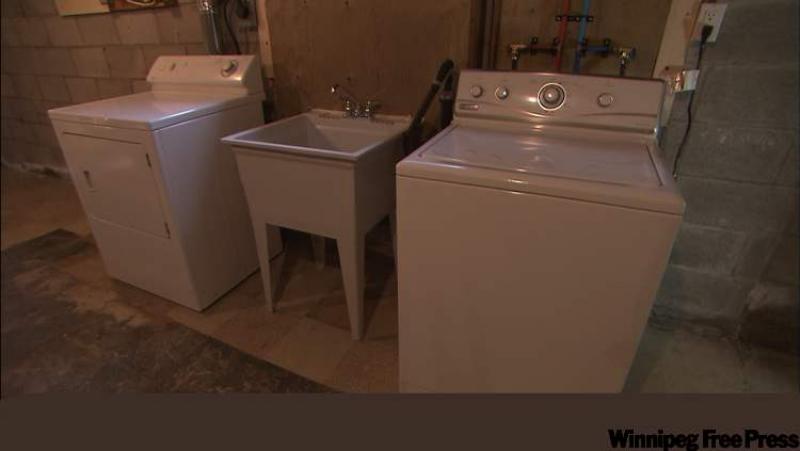
SOLUTIONS: Scents often remain on fabrics after washing
QUESTION: I have a daughter with extreme scent allergies. Accordingly, we use all fragrance-free soaps, cleansers, cosmetics, etc.
One of the most frustrating problems we encounter is when we purchase new clothing. Even though we couldn't smell it in the store, upon returning home we find that it is scented either from being previously tried on by another customer who was wearing fragrance or has been handled by a salesperson with scented lotion on her hands, etc. We avoid purchasing clothing from stores that sell perfumed products or scented candles (which, in itself, has become challenging because even uniform shops seem to stock perfumed candles even though the hospitals and medical facilities where they are worn are scent-free institutions).
I have tried soaking and washing these scented clothes in Nellie's Washing Soda, baking soda, vinegar and even lemon juice, airing them out for an extended period of time in fresh air, and packaging them up with Deoderoc blocks, newspapers or coffee grounds, but nothing seems to remove the smell. Could you advise me on how to eliminate the scent? Thank you so much for your help. I really need it. -- Ann, Winnipeg
ANSWER: You are doing everything right and tackling fabric odours with the best ammunition available. Is it possible that your daughter is one of the many people battling multiple chemical sensitivity? Also known as MCS syndrome or simply MCS, this is a disorder in which a person develops symptoms from exposure to chemicals in the environment.
As you have experienced, scents often remain on fabrics even after washing and pre-soaking; this is due to chemical treatments for stains, flame retardency and wrinkles as well as dyes used in manufacturing. These treatments often cause fabrics to smell permanently.
Always purchase natural fibres or fabrics like cotton, linen and silk. Whenever possible, look for organic clothing and use organic cotton bedding. Pesticides and insecticides are used to grow regular cotton, chlorine is used to bleach it, and arsenic is used for fabric treatment.
Some people recommend the use of an ozone machine for removing odours in fabrics, but this option is highly debated and many experts claim that ozone machines are unsafe for health purposes.
Lastly, when you do use products such as vinegar and washing soda, be sure to use the hottest water that the fabric will accept. I often boil fabrics in a pot on the stove to remove stains and odours. Since perfume smells bother your daughter, be sure to ask salespeople if they have any more of the clothing that you want to buy in their storeroom.
QUESTION: I love all of your household hints and look forward to your suggestions each week. My problem is this: We have a very heavy coffee table in our living room and, after redecorating, we moved the table and now have indents in the carpet where it sat. We tried the ice-cube trick but the dents still remain. Are they permanent or can they be removed? -- Alexandra, New Bothwell, Man.
ANSWER: I would call this an interesting challenge, not a problem. Here is the solution: Spray the carpet dents with a spray bottle filled with water. Hold a hair dryer over the area and place on HIGH setting. Comb the fibres up using your fingers. Works fast and effectively.
QUESTION: Could you please give me a suggestion for removing red wine stains from a light-red leather couch? I would appreciate any help you could offer. Thanks. -- Barney, Winnipeg
ANSWER: What makes this stain one of the most difficult to remove is that red wine is a dye and therefore the spill is not sitting on top of the fibres (as most spills do). The wine has now become part of the leather. There are commercial leather cleaners on the market, or you can tackle the job yourself. Act quickly. Some people have had great results by dabbing the area with lemon juice and blotting with dish soap and water. Another solution: dab the area with a fair amount of white wine and blot. Do not rub the area; doing so will only spread the stain. Repeat until stain is gone. Test on an inconspicuous area first.
Ordering wine in a restaurant:
-- Do not be afraid to ask the serving personnel which wines are their bestsellers and which wines go best with the meal you've chosen. Check out the price before you make your decision.
-- If you're dining with a group of people, get their opinions as to which wines they prefer -- white or red, sweet or dry -- and what types of food people will be ordering. If there are votes for both whites and reds, compromise by leaning towards a heavy white like an oak-filled Chardonnay or a lighter red, a Pinot Noir or even a light-bodied Merlot.
-- Forget about smelling the wine, but do check out the cork to see that it's not dried out or cracked.
-- When the server brings you your bottle, note the wine's colour and clarity. Is it cloudy or brownish in colour? Only very old selections should have this appearance.
-- Smell the cork to see if it smells like vinegar. This is a sign of oxidation or a faulty cork.
-- Taste the sample and, if it is to your liking, give the server the thumbs-up to pour the wine.
I enjoy your questions and tips, keep them coming.
Reena Nerbas is the author of the national bestselling Household Solutions series. Her website is www.householdsolutions.org. You can contact her at Box 429, Blumenort, Man., ROA 0C0.