Renovation & Design
Renovation & Design
Back to school means return to organization
Yes, it's that time of year again when kids will soon go back to school and your home becomes a drop zone for books and backpacks. Maybe this should be the year that you plan ahead to keep your home more organized throughout the coming school session. A little planning will go a long way to keeping your home organized and free of clutter.
Drop zone
Whether it is in the front hallway or on the dining room table, kids tend to drop what's in their hands the minute they get home from school. To keep your home from becoming a drop zone for the next 10 months, you must plan ahead. Children and teens are more apt to keep their stuff organized if they are each given their own space in which to keep their school items. Just as a locker at school helps keeps kids organized a storage cubby, closet or even a locker at home can have the same outcome. If you have the space, say in a mudroom for example, build an open locker for each child with hooks for backpacks and coats, cubby holes for shoes and boots and shelves for school books. A simple locker-style cabinet is all you need. Paint each locker the favourite colour of each child to personalize their space. If space is at a premium in your house then designate an area for school items and provide each child with their own coat hook and shoe shelf where their items can be stored as soon as they walk in the door. A small frame with each child's name on it hanging above the coat hook will make them feel that this is their special area of the home. You could install these items in the front hall walk-in closet, in an open foyer or even at the bottom of the basement stairs. Make the area inviting so the children will be drawn to use it.
Sports stuff
Larger items, such as hockey bags, need special attention. A large storage trunk (with venting for air circulation) placed in the basement might work, as would a large coat rack or series of hooks where each piece of equipment could hang and air out. A rack to hold hockey sticks will keep them from being underfoot and is a simple item to build. A couple of wooden pegs hung horizontally on a wall where the stick can be placed is all you really need. If you are dealing with several hockey sticks then a large umbrella stand style of container will do the trick. If you have it in your budget to purchase special storage items, you might consider a hockey equipment tree that is made especially to store hockey equipment in an open setting so that it will dry out.
Study time
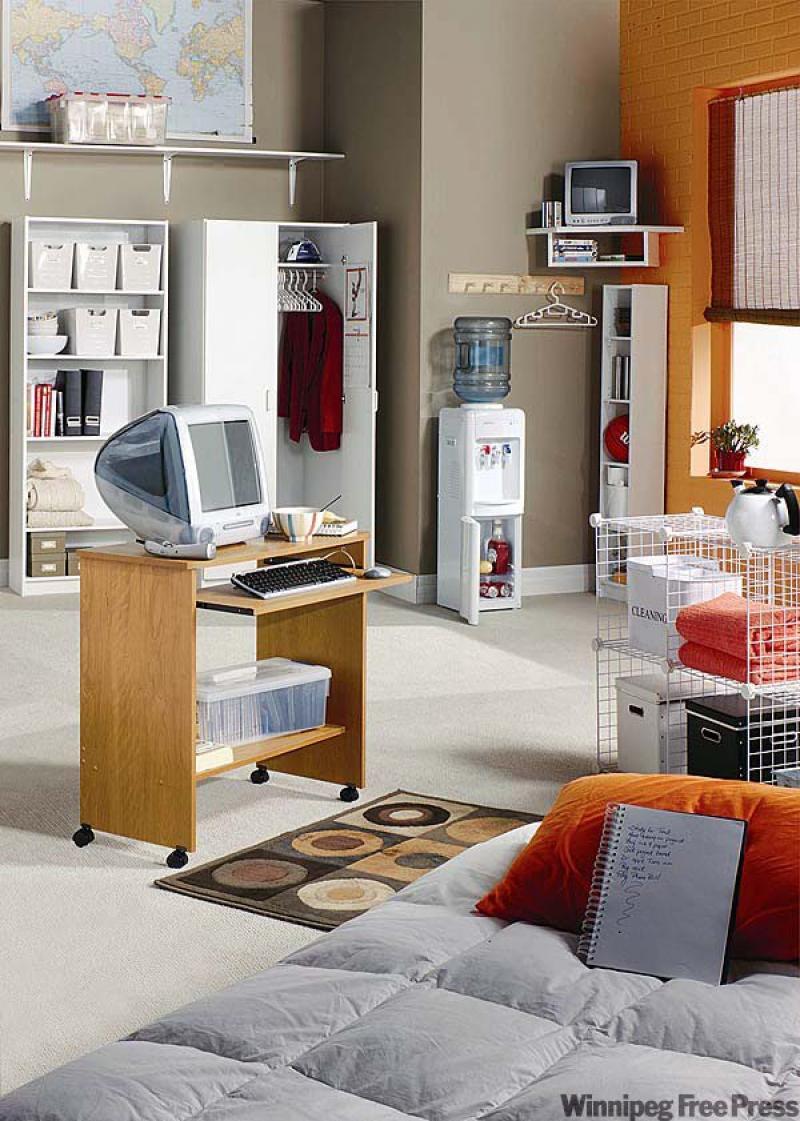
If your kitchen or dining room table is always covered with school books then you need to consider creating a proper study space for your kids. Many children will study in their bedroom -- fine if you have a proper work station and lighting. You must consider distractions in the bedroom like music, television and computers that might not be conducive to study time. Another option is to create a study area in your home office. Many children will feel special to be in the grown-up space and you can keep an eye on them or help them if you're working at your home computer while they study. This is a 'no fooling around' zone in which study is the focus. If children understand this rule then they are more apt to study.
A large table in the rec room where the kids can study together might be another option. If they don't have to study alone, they'll be more apt to enjoy the experience and assist each other (if they are close in age). Essentially, you're creating a study group that might be helpful depending upon your children's ages. Make it comfortable and well-lit and they just might enjoy spending time there. This idea is also a good solution to help keep school books and paraphernalia in one area of the home. Fill the table with items like calculators, pens, pencils, marker and note paper to help the children in their studies.
Make packing school lunches easier
Packing lunches for hungry kids every day is not an easy task. For the older children, designate a lunch bag for each child and teach them to clean them out and place them on a designated area on the kitchen counter each day so that it's ready in the morning. While you might make the kids sandwiches each day, they can be involved in packing their own fruit, beverage and snacks. Have a bowl of fruit ready on the counter at the beginning of the week that they can choose from, lots of individual juice containers in the fridge and a snack cupboard for snacks such as puddings, fruit cups, dried fruit and nut mixes and so on. While you make sandwiches each child can take their lunch bag and fill it with a juice from the fridge, a piece of fruit and a snack from the snack cupboard. By allowing them some choices, it will make it more likely that they'll actually eat all of the chosen items and will feel somewhat empowered. I know that packing lunches has nothing to do with decorating but it's part of the overall idea of making children responsible.
A little routine and a few ground rules will help everyone feel more organized and less harried during the school year. Get them involved in a positive way and they'll be more apt to help keep your home free of clutter.
Renovation & Design
Style may be eclectic, but there are still rules
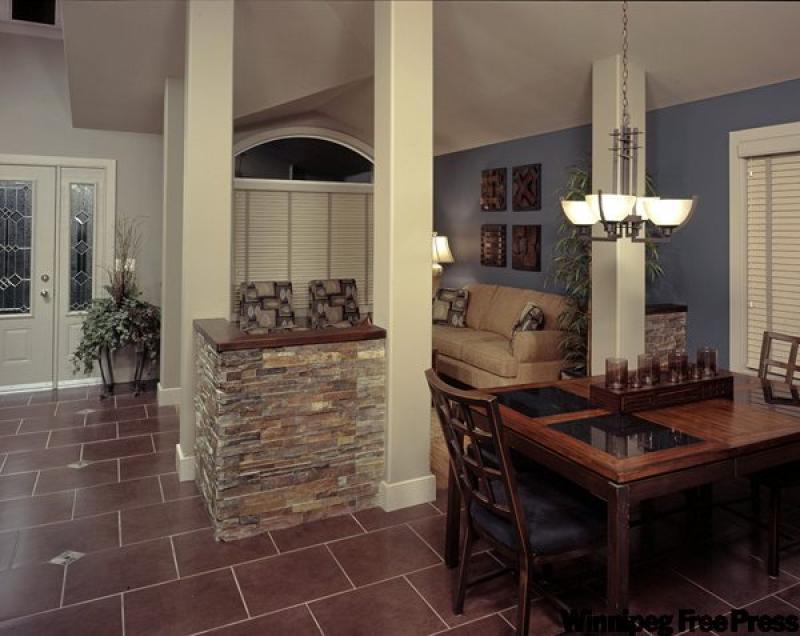
Dear Leanne: I have just acquired two Parisian accent chairs from an antique store and would like to incorporate it into my living room. I want to pair them with a cream, contemporary-style sofa. The chairs need to be refinished and reupholstered. I know you can mix modern and traditional looks, but how do you do it so that it looks right?
A: You definitely have the beginnings of a stylish room, but before you decide on what to do with your chairs, you need to envision this room when it is completed.
The basic rules for creating a beautiful eclectic space are no different than those used to create any other room. Scale, colour and balance will need to be considered when selecting your room's furnishings.
You can certainly have fun with your new purchases and have them work with your contemporary sofa, by refinishing the wood in a contemporary colour as opposed to their traditional stain.
Logically, you will be placing your sofa on one side of your room and the two chairs will likely be placed opposite. While you plan this placement (in your mind) look at the items as they relate to each other.
The mass of your sofa is greater than the two chairs, so the colour and fabric for the chairs will need to balance the space. This can be handled in a number of ways.
One suggestion would be to finish the wood in glossy black and upholster the chairs in a complementary cream fabric. Place a faux zebra print area rug on the floor between the sofa and chairs. A glass-top coffee table, on black legs, would add a clear note of sophistication, with black accessories presenting an illusionary effect, as if floating above the carpet.
Reintroduce traditional elements in the room by placing black Chinoiserie end tables on one end of the sofa and another between the two chairs. Chinoiserie is an ancient oriental treatment applied to furniture and accessories. It offers a black background with hand-painted motifs often depicting rural Asian life. Ethan Allen Home Interiors (780-444-8855) offers a selection of this functional art form.
For lighting, consider a lamp with a white porcelain base that would be elegant on a black end table. This could be topped with either a white or black shade. If you're interested in the black shade, ensure the shade has a metallic liner for best illumination.
A floor lamp with a black base and a white shade would complement the room's decor while offering task lighting to the space. Standing elegantly on the alternate side of the sofa will keep the black and white balance.
Keep your window coverings simple and elegant in a cream tone and voila, you will have a stunning contemporary space offering fresh sophistication.
If black and white were not what you had in mind, follow the steps outlined here and add colour and pattern in your chairs. Remember to carry the aspects of the colour and pattern to the other side of the room.
For example, cream-coloured wood with periwinkle purple upholstery can be balanced with periwinkle accent pillows on the sofa. It is all a balancing act. Step back and adjust as you go. Make this space yours and infuse it with your style and personality.
Dear Leanne: We are living in a house with pale yellow siding, terra cotta brick work and all white trim. I'd like to paint the front door to make it stand out. Do you recommend this, and what colour do you suggest? Do we match it to a colour that we have already or go with a completely different colour?
A: Make your entrance a focal point and add a new colour to your home. Depending on your home's style and your taste, there are several wonderful selections that co-ordinate with yellow and terracotta brick.
Black is one door colour that has been used effectively to create a dramatic and elegant entrance. A beautiful contrast to terra cotta brick and yellow, black has been used in Georgian home designs.
Add a shiny brass kickplate, new brass handles and a brass knocker, and your home will be ready to receive any guest. If you have space on your front porch, add a spiralling topiary in a terracotta planter.
Another colour that offers a pleasant contrast to your current colours is a soft green such as Benjamin Moore HC 123 Kennebunkport Green. These earth tones evoke the calm image of a cottage nestled in a forest.
Canwest News Service
Leanne Brownoff is an interior design consultant who welcomes your questions at www.leannebrownoff.com.
Renovation & Design
House of the Week:
This classic-looking home, Plan SDS-4001, by Home Plans LLC, offers attractive European country styling, with rustic stone, exposed timbers and a cosy front porch. A sidelighted entrance ushers guests into the home.
To the left, the formal dining room features an elegant stepped ceiling, plus corner art niches. The living room is expansive, and the raised kitchen area is bright and cheerful, with a bayed breakfast nook, lots of counter space and a relaxing hearth room.
An alternate kitchen layout incorporates a handy island workstation. You'll love the deluxe master suite, which hosts dual sinks, a private toilet, a garden spa tub, a separate shower and a large walk-in closet. Two secondary bedrooms are located on the other side of the home for privacy and share a full hall bath.
SDS-4001 DETAILS:
Bedrooms: 3
Baths: 2
Living Area
Main floor: 2,402 sq. ft.
Total Living Area: 2,402 sq. ft.
Garage: 777 sq. ft.
Exterior Wall Framing: 2x4
Foundation Options: Slab
A downloadable study plan of this house is available at www.houseoftheweek.com. To order by phone, call 866-772-1013. Quote the plan number.