Renovation & Design

Renovation & Design
MIKE HOLMES: How your house may be killing you
Every day, we are exposed to thousands of chemicals and toxic elements — in our homes. We’re not sure of the long-term health impacts of all of them, but some are very clear:
Lead
In many municipalities, lead is still found in drinking water. This is usually found in houses built before 1950 when lead was used in plumbing supply lines, or in the solder used to connect copper pipes.
There is no safe exposure for lead, which can cause serious damage, especially to developing children. Lead is more easily absorbed into growing bodies, therefore, infants, children and pregnant women are more vulnerable to lead exposure.
If you suspect you have lead water lines, you need to have your water tested. Call your municipality. The pipes will need to be replaced — you’ll be responsible for the part that is on your property, between the property line and your meter. The city has to cover the property line to the street service lines.
Until you are able to get your lead pipes replaced, flush the standing water out before you drink it. Run the water for at least five minutes — that will remove the stale water that’s been sitting in the pipes. But remember, it’s not a permanent fix.
Lead is also found in oil-based paint. If your house has paint from around the 1960s or before, there’s a good chance there is lead in it.
Lead can enter the air in a house when surfaces covered with lead-based paint are scraped, sanded or heated with an open flame during paint-stripping procedures. Once it’s in the air, it can be easily inhaled. Lead particles freed in fine dust or vapour can also settle into carpet fibres and fabrics, then can be re-circulated by normal household cleaning such as sweeping and dusting.
You can buy test kits for lead paint at most building supply stores.
If you suspect you have lead-based paint it’s best to leave it undisturbed if it’s in good condition, and there’s little possibility that it will be eaten by children. Otherwise, you should replace the painted surface. It’s better to tear out wood trim than risk releasing that lead into the indoor air.
Asbestos
At one time, asbestos was thought to be a near-perfect building material. It’s common — a fibrous material found in rocks and soil all over the world — strong, durable, a good insulator, and it’s fire-resistant. Also, it’s versatile. Combined with other materials, asbestos was used in floors, walls, ceiling tiles, exterior cladding and fire-retardant materials for heating and electrical systems.
In the middle part of the last century, asbestos was widely used. More recently it has been linked with cancer.
Once inhaled, asbestos fibres lodge in the lungs. Because the material is durable, it persists in the tissue and concentrates with repeated exposure.
The fibres can cling to clothing, tools and exposed flesh.
Asbestos can be found in older homes in many places: around pipes and furnaces as insulating jackets, some vinyl flooring material, ceiling tiles, exterior roofing, shingles, siding, some wallboards and even drywall compound. It might be mixed in with other materials and trowelled or sprayed around pipes, ducts and beams. It also can be found in patching compounds or gaskets in stoves, furnaces and ovens.
When remodelling an older home, activities such as hammering, drilling, sawing, sanding, vacuuming, scraping or scrubbing can dislodge small asbestos fibres. Extreme care should be exercised in handling, cleaning or working with material suspected of containing asbestos.
If you suspect you have asbestos in your home, call a qualified professional. You need to have it tested, and professionally removed. That is not just common sense, it’s the law.
Formaldehyde
More recently, formaldehyde has come under question. This is a colourless gas that is emitted by many construction materials and consumer products. It’s common in a lot of bindings — glues and resins — and it’s also found in preservatives. Formaldehyde was also an ingredient in a foam insulation that was very popular for home insulation in the 1960s.
When people started to retrofit their houses to make them more energy-efficient, many used something called urea formaldehyde foam insulation (UFFI). Because it was a spray foam, it was easy to insulate an existing building and UFFI became popular. There were even government grants available to help pay for UFFI insulation. Formaldehyde has been found in another spray insulation product: RetroFoam.
Above-normal levels of formaldehyde in the home atmosphere can trigger asthma attacks in people who have this condition. Other health hazards linked to formaldehyde include skin rashes, watery eyes, and a burning sensation in the eyes, throat and nasal passages.
Materials containing formaldehyde were widely used in the construction of prefabricated and manufactured homes. It was especially prevalent in the manufacture of furniture and cabinets.
Regulators are aware of the dangers of formaldehyde and some places have strict regulations governing how much formaldehyde can be “off-gassed” by building materials.
Unlike lead and asbestos, formaldehyde sources reduce with age. The highest levels of formaldehyde happen during the first two years the construction material has been exposed to the air. This means the danger is greatest in new homes, and with new furniture. Most builders will be able to provide you with information about formaldehyde use in specific products.
— Canwest News Service
Catch Mike in his new series, Holmes Inspection, airing Thursdays at 8 p.m. ET/PT on HGTV. For more information visit www.hgtv.ca.
Do you have a question about home renovations? Email mikemakeitright.ca.


Renovation & Design
ASK THE INSPECTOR: Let's address some fireplace safety issues
QUESTION: Yesterday, I burned some wood in our fireplace. At bedtime, I left the flue open because there were still some hot embers in the hearth. I covered the fireplace opening with a blanket to keep the cold air from coming in. At 1:30 a.m. I awoke to the smell of smoke throughout the house.
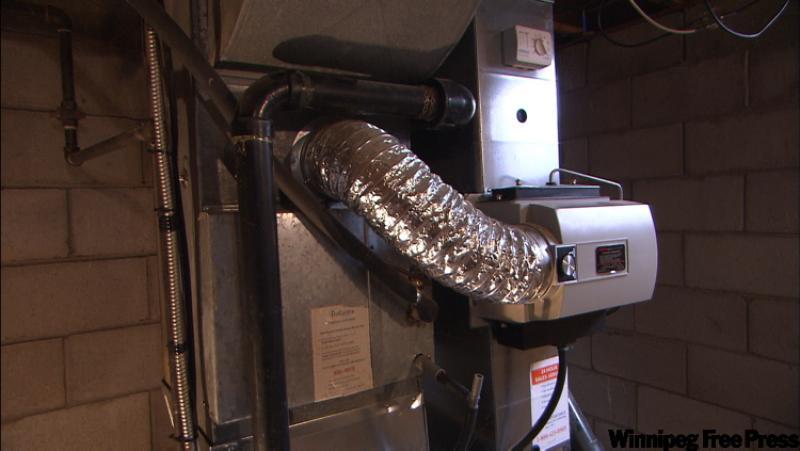
We have a Flair compact 350 HRV in the house. This is the first house we have owned with an HRV. We have been setting the control according to the daytime outside temperature. Our next-door neighbour heats with wood and is located on the same side as the inlet/outlet for the HRV. These vents are located about six inches above the ground on the west side of the house. I have no idea if it was installed properly because the previous owner was a contractor and built the house himself and took shortcuts. There are no controls for it in the bathroom or kitchen.
The house is heated with electric forced air. The house is 16 years old but we replaced an old furnace two years ago. We have a setback thermostat, which goes down to 17 C at bedtime.
Would the smoke have come from the fireplace or is it coming in through the HRV? Is there anything we can do to prevent this from happening again? Is there some kind of filter we can put on the furnace/HRV to remove smoke from the air? I would appreciate any information you may offer.
Thanks, Cathy Coss, Warren, MB
ANSWER: The first item I must address is the safety aspect of going to sleep with a smouldering fire or embers still burning in your fireplace. While this may be of minimal concern with a proper spark screen or glass doors covering the opening of the hearth, it does not appear either of these were in place in your home. I am quite shocked by your admission of placing a blanket over the hearth opening with burning embers inside. You are lucky you woke up only to smoke and not a raging fire caused by a burning blanket! If the blanket was charred, that may be the source of the smoke, but I doubt that was the case. In future, you should either put the fire completely out and close the damper if you don't want cold air coming down the chimney or buy some ceramic glass doors for your fireplace. I am surprised you understand that as the fire dwindles and the draft subsides, cold air may come down the chimney, but not that it may blow a hot ember against a highly combustible blanket placed across the opening. In fact, the air restrictive properties of the blanket may cause the draft to end abruptly, causing a sudden back-draft. This alone could be the cause of major smoke intrusion into the home if the fire was still smoking.
The next concern I have is about smoke detectors. If you have enough smoke to alert your senses while sleeping, why were the smoke alarms not blaring? You should have a minimum of one smoke detector on each floor of the house and these should be checked regularly to ensure the batteries or power supply is working.
As for the cause of the smoke, it may be due to one or more factors. The last few days, we have been experiencing very strong winds, blowing snow and a dramatic change in weather. The change in weather may include a significant change in barometric pressure, which combined with the high winds, may have caused your chimney to back-draft and blow smoke into your home. Also, the wind may have blown snow over the HRV intake or exhaust hood due to the proximity to the ground. If either were blocked, the HRV would not operate properly, possibly causing negative pressure in your home relative to the outside. If so, back-drafting of the chimney is almost a certainty as the home tries to draw air inside from any possible opening in the building envelope. That is almost certainly where the smoke is coming from.
No safety issue is more serious than smoke and fire safety in a home. Wood fires should always be contained within certified fireplaces or wood stoves, installed with the proper clearances to combustibles. That includes anything placed near the hearth that may catch fire, even if the fire is almost out. Always extinguish the fire before leaving it unattended, unless you have proper glass or other doors completely covering the front of the unit. If you are concerned about cold air coming down your chimney, extinguish the remaining embers with water and close the flue, before retiring to bed. That way you will not only ensure you won't wake up smelling smoke, but also that you will wake up!
Ari Marantz is the owner of Trained Eye Home Inspection Ltd. and the President of the Canadian Association of Home & Property Inspectors - Manitoba (www.cahpi.mb.ca). Questions can be e-mailed to the address below. Ari can be reached at (204) 291-5358 or check out his website at www.trainedeye.ca.
trainedeye@iname.com
Renovation & Design
SOLUTIONS: Dandruff shampoo tackles tricky stain
QUESTION: A red candle dripped on my 40-year-old white linen tablecloth and stuck to the table pad underneath. I have tried freezing the wax pad. What can I do to remove the wax without leaving any redness?
Jeannette, Selkirk
ANSWER: Some messes are more difficult to clean than others. White wax is easy to clean but coloured wax is tricky; smear the area with Head and Shoulders dandruff shampoo before freezing. After fabric is frozen use a plastic putty knife to scrape away the wax. Next spray the area with fabric spot remover before washing (according to the directions). If the stain remains, pour lemon juice onto the area and sprinkle it with cream of tartar. Leave in the sun for a day and rewash. Repeat until stain is gone. Or use RIT dye remover according to the directions on the box to whiten the tablecloth.
QUESTION: I have an old torchiere floor lamp which I really like, but it uses a tri-light bulb with a large base. Since the new spiral bulbs came on the market I cannot find tri-light bulbs to replace the burnt-out one. I phoned Manitoba Hydro and was told they no longer make largebase bulbs. Do you have any ideas? Should I hang onto my "antique" torchiere lamp with hopes of someday getting a bulb? The way it is now, there's no use in donating it to anyone as it is worthless without a bulb. Thank-you.
Anne, Winnipeg
ANSWER: Although I think donating the lamp is a nice idea, you are right, the lamp needs a bulb. In many cases, you can convert torchiere floor lamps to use a more energy-efficient compact fluorescent bulb. Using a 30- to 60-watt fluorescent bulb is safer and more energy-efficient. For this project you may feel more comfortable hiring an experienced handy person to help you. You will need basic tools such as: screwdrivers, needle-nose pliers, wire cutters, wire strippers, electrical tape, wire nuts, and a drill (for drilling new holes if the existing ones are not ideally located). The parts you need should be available from your local hardware store. You can buy an energy-efficient compact fluorescent bulb with the attached adapter, rated at 30 watts with a light output of 2,000 lumens, a shallow conventional porcelain bulb socket, and a rotary on-off switch. The total cost is about $20.00 plus labour. Lamp adapters are often sold as kits; if possible take the lamp into the hardware store when you go.
QUESTION: I read your column in the Winnipeg Free Press every time it is published. I, being a practical person, find your solutions and remedies very knowledgeable to read and pass on. First of all, I would like to know where to purchase your books. Secondly, can you tell me how to get barn smell out of coveralls? I have tried washing them in cold water, soap and salt (and vinegar). I never put them in the dryer but instead hang them on the line.
Samantha, Winnipeg
ANSWER: My favourite remedy for zapping foul odours from fabrics is washing soda and hot water. It is true that cold water is a smart choice for laundry. However, for tough smells and stains nothing beats the added power of heat. Hot water itself adds to the cleaning power without the addition of extra detergents or chemicals. Hot water once in a while also keeps the washing-machine interior clean and reduces buildup of mould, mildew and odour. For tough smells and stains, boil machine-washable fabrics in a stainless-steel pot on the stove with water and washing soda. My three books are difficult to find in stores. They can be ordered online.
www.householdsolutions.org