Renovation & Design



Renovation & Design
ASK THE INSPECTOR: To paint or to varnish: that is the real question
QUESTION: Our home was built in 1975. The kitchen cabinets are filled, stained and varnished mahogany veneer. They are very basic in style but very solid and functional. We have touched up the rubbed areas around the handles with stain occasionally, and revarnished them once or twice. When I discuss redoing the cabinets with friends and family, some think we should definitely paint them and others advise never to paint wood. After all, mahogany is becoming scarce! I could live with either choice. Which do you advise?
-- Ellen Friesen, Roblin, MB
ANSWER: While the role of the home inspector is rarely to comment on issues in the home that are primarily cosmetic, I couldn't resist your question due to recent a renovation in my own home. I also have older veneer plywood cabinets, although the wood is oak rather than mahogany. I chose to refinish the cabinets rather than change them or paint them.
The primary concern in making your decision about stain vs. paint should be the overall condition of the cabinets and doors. Many kitchen cabinets of that vintage or older were built on-site in the home by a skilled finishing carpenter. The cabinets and doors were typically made of high-quality plywood with nice-looking veneers.
For mahogany doors, there may be a wide range of woods used for veneers in different cuts. Many are not even true mahogany, but may have a similar grain and colour and may refinish well. Others may be lower-quality "African or Philippine mahogany," which may be difficult to colour-match when restaining. True "Honduran mahogany" plywood was rare and expensive even when your home was built. If you are lucky enough for this to be the case, painting is not an option. Doors made with this rare, exotic wood should be carefully sanded and lovingly refinished.
If we assume that you don't have true "Honduran mahogany" veneer cabinets, then the cut of the grain may help make your decision. If the grain is quite straight and even, or a "ribbon cut," refinishing is a good option. If the grain is very uneven, with round swirling grain, it is likely "rotary cut" and may not finish nearly as well after removal of the old stain and varnish..
There were primarily two core materials used for plywood when your home was built and determining which you have may also weigh in your decision.
True plywood is composed of several layers of wood veneers, roughly two millimetres thick, with grains running in alternate directions. Real plywood tends to warp if exposed to extremes in moisture or heat.
The other type of material used is particle core sheathing. This material may look similar to plywood on the surface, but has a core of particle board, composed primarily of fine wood fibres mixed with glue. It is not as susceptible to warping as plywood, but is much heavier and swells considerably when wet. It is also less costly to produce. Either material may have been used in your home, and the door and cabinet edges may be covered with real wood veneer to hide the core.
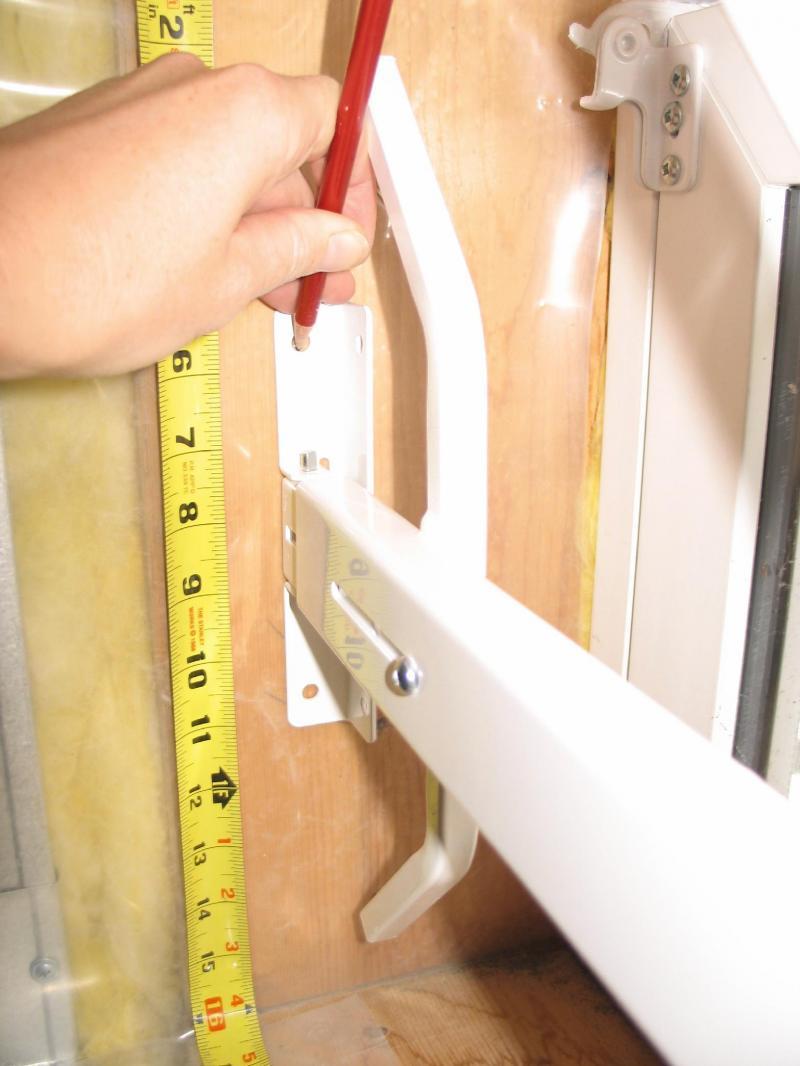
If there are no exposed edges to help determine the core material, removing the individual doors by taking off the hinges should solve the mystery. Plywood doors will be quite light, but particle core materials will be noticeably heavier. If several hinges are damaged or worn out, it may be due to the heavier material having been used. If the cabinets are made from true plywood with a nice grain cut, it makes more sense to put the time and effort into refinishing.
The final criterion for the paint vs. stain question is the overall condition of the cabinets and doors. If the gable ends, cabinet fronts, or door edges are badly chipped, cracked, or missing edging, repairs may be difficult. If the surface veneer on the doors or gable ends is deeply scratched or flaked, then filling and painting might make more sense. If the hinges are worn out or loose, or the drawers not sliding well, new hardware should be installed when these components are removed for renewal. Many older types of hinges are still available at home centres or specialty woodworking stores.
Ari Marantz is the owner of Trained Eye Home Inspection Ltd. and the President of the Canadian Association of Home & Property Inspectors -- Manitoba (www.cahpi.mb.ca). Questions can be e-mailed or sent to: Ask The Inspector, P. O. Box 69021, #110-2025 Corydon Ave., Winnipeg, MB. R3P 2G9. Ari can be reached at (204) 291-5358 or check out his website at www.trainedeye.ca.
trainedeye@iname.com
Renovation & Design
How to hold a great garage sale
Thinking of turning your clutter into extra cash? Here's a primer on holding a garage sale.
Check out applicable bylaws and regulations. Some residents are only allowed to hold two garage sales a year on their property. If you're planning a two-day weekend sale, that's it for the year. Condo rules and apartment leases may restrict or prohibit sales.
Get everyone involved. Multi-generation and neighbourhood sales are fun -- and profitable since they tend to draw larger crowds.
Get the word out. Use paid and free advertising --the Internet, bulletin boards at coffee shops or supermarkets and street signs. Emphasize big-ticket items. Mention tools and men will come running.
Be prepared. Spend a few evenings cleaning and pricing items. Stock up on sawhorses, plywood, shelving, tables, hangers and bags. Your first customers will arrive straight from the ATM which only dispenses $20 bills. Have a supply of change handy.
Safety first. Sports equipment and children's gear are popular, but must have a Canadian Standards Association (CSA) label. Canada Safety Council does not recommend buying or selling used car seats. See safety-council.org/info/child/garage.html for details.
Price it right. Ask yourself what you'd be prepared to pay. Fine art and heirlooms aside (these shouldn't be sold at garage sales anyway), items typically sell for 10 to 20 per cent of their asking price. New or hardly used, still in the original containers with price tags attached, they may garner more. Check classifieds to find out what big items are selling for and offer smaller items for one bargain price. Start a "free" box for miscellaneous stuff.
Expect shoppers to haggle. Dickering at day's end when you're tired and fretting about what to do with the leftover stuff is easier than bargaining with crack-of-dawners. Worried you won't get a better price? Tell the buyer you'll accept his/her low-ball offer if the item is still unsold at say, noon.
Display like with like. Group related articles -- tools, kitchenware, clothes -- together. Cordon off items not for sale.
-- Canwest News Service
Renovation & Design
SOLUTIONS: Are 'green' cleaners healthy choice?
QUESTION: I enjoy your books immensely, but I have an important question. Following a stem-cell transplant, my immune system is compromised. Are commercial "green" products sufficiently strong enough to disinfect thoroughly? Which ingredients are the most effective and what should I be looking for? What about "homemade" products i.e. vinegar solutions?
-- Patty (Winnipeg)
ANSWER: During the past few years there has definitely been a trend toward manufacturing products with labels that sight themselves as being, "green", "non-toxic", "environmentally friendly" etc. Unfortunately there are no legislated guidelines as to what is allowed to be considered "green". In fact, if a manufacturer produces a product in a green bottle he can then label it green. Consumers are "greenwashed" into thinking that they are making healthier choices about cleaning products and some (not all) of the products are actually developed with more toxic chemicals than ever before. Your best bet is to look for genuine independent certification on products. If the item has the Environment Canada's EcoLogo or Energy Star certification that is a good bet that it is a safe choice. You can read more about Greenwashing in my newest book, Household Solutions with Green Alternatives.
As for vinegar, or King Vinegar " as I like to call it, here is some interesting information. In a study by Good Housekeeping, they reported that vinegar kills 99 per cent of bacteria and 82 per cent of mould, while some common products claiming to be disinfectants have proven to be ineffective at cleaning. Now if you take vinegar one step further and add a few drops of essential oils such as the ever popular tea tree oil, your cleaner becomes an even more powerful antiseptic.
Another product that you can use to clean is three per cent hydrogen peroxide. This is a product that has gained in popularity because it is the only germicidal agent composed only of water and oxygen. Like oxygen it kills disease by oxidation and is considered the world's safest sanitizer. Hydrogen peroxide kills microorganisms by oxidizing them.
In the same study by Good Housekeeping, Lysol was one of the products that scored high at killing germs. The question that you want to ask yourself is how much you want to use commercial products in your home, on your counters and throughout the air. In other words some strong commercial cleaners do kill germs but does that really mean that they are the healthiest choice?
Baking soda and borax are great as abrasive cleaners and odour eliminators but not hugely effective at killing germs. A combination of baking soda and vinegar is a powerful choice.
The decision as to what you should use must be yours and remember that just because we see something on TV doesn't make it true. All the best with your recovery!
QUESTION: We have yet to find a phosphate-free, environmentally friendly dishwasher product that does the job as well as regular detergents. Do you have any suggestions?
-- Ólöf (Selkirk)
ANSWER: When it comes to dishwasher detergent, there are a few recipes that you can use and some have shown great results. However, in most cases glasses tend to etch after several uses. Therefore, instead of replacing your commercial dishwasher detergent, pour the regular detergent from the box into a bucket and add one quarter cup borax and one quarter cup baking soda. Mix well and use as normal. Baking soda and borax are inexpensive and work well to save money. Also, replace dishwasher rinse agent with white vinegar and a few drops of your favorite essential oil such as lavender or tea tree oil. Both oils have effective properties that will clean the dishes and the dishwasher.
QUESTION: How do I clean road salt stains from my rubber car mats? I tried vinegar and it doesn't clean very well. I can't find any information about this in your books.
-- Cecilia (Holland, MB)
ANSWER: Begin by beating the mats with a broom to remove most of the loose dirt and dust. Next vacuum the mats until no dirt remains. Using either dish soap or carpet shampoo and water, create lather onto the salt stains and scrub with a stiff brush. Rinse and let air dry.
Fabulous Tips of the Week:
Rubber tends to darken silverware, so never put anything made of rubber in the silver drawers. Use cord or ribbon to hold silver together-not rubber bands.
A tin muffin pan may be painted with bright enamel and used for serving drinks; glasses won't tip over and serving is much easier.
Save all left-over pieces of soap, either hand or laundry soap, and place in a can. Pour a small amount of water over them and place on stove, the soap will melt and form a jelly. This is ideal for hand washing dishes or clothes.
Reena Nerbas is the author of the national best sellers, "Household Solutions 1 with Substitutions", "Household Solutions 2 with Kitchen Secrets" and the soon to be released book "Household Solutions 3 with Green Alternatives" available on-line and in stores across Canada.
I enjoy your questions and tips, keep them coming! Please join me on Saturday May 9 for Gardening Saturday hosted by the Friends of the Assiniboine Park Conservatory, at the Canadian Mennonite University. My topic? Organic Solutions for the Garden.
Check out my web site! www.householdsolutions.org
Renovation & Design
Green -- one step at a time
YOU'VE heard it all before: Recycle your bottles and cans. Change your furnace filter regularly. Turn off the lights when you leave a room.
Chances are, you've made some of those small changes in your home. Why? Because small is not only beautiful, it's manageable and realistic for busy families. When you "act locally," in the comfort of your own abode, you also save money and -- bonus -- a teensy speck of the planet.
"When people take baby steps and see some of the changes, they get empowered," says Ashley Lubyk, the co-ordinator for Healthy Homes Calgary, a program that provides free home visits to help Calgarians create safe homes with small eco-footprints.
This is good news, because it means you needn't rip out your nylon carpets or upgrade every appliance to make a difference.
Think "weekend project," says Anand Mishra, a regional research adviser with the Canada Mortgage and Housing Corporation in Calgary.
Spend a Saturday weatherstripping your windows and doors. Even better, simply change some old habits -- stop it with the 15-minute showers already -- and start reaping the rewards.
We've sussed out a handful of small changes that anyone can make in each room of the house, to start making the green dream a reality.
Kitchen
* Waste not. Organize your fridge to ensure you use up veggies, cheese and yogurt, etc. before they go bad, says Lubyk. Meal planning helps ensure each food has a purpose.
* Use reusable shopping bags at the grocery store.
* Recycle. Curbside recycling makes it easy to recycle everything from milk cartons to cereal boxes.
* Consider composting. Instead of dumping leftovers down the garburator, turn them into food for your garden.
* Look at the big picture, says Mishra. Only run the dishwasher when it's full. Cover pots with lids when cooking to conserve heat and energy. Use a toaster oven (instead of the big gun) to cook or heat small items.
Bathroom
* Switch to recycled toilet paper.
* Check for leaks in toilets, sinks, tubs. "One drip per second can add up to 165 gallons a month," says Mishra. That's a lot of wasted H2O.
* Install a low-flow shower head and take shorter showers.
* Install tap aerators. These small screens restrict water flow without sacrificing water pressure.
* Take a close look at your personal-care products, says Lubyk. Many shampoos, soaps and lotions contain chemicals linked to cancer and other health problems. Go to www.cosmeticsdatabase.com to see how yours rate, then think about switching to natural, plant-based products.
Living room
* Beware the phantom load. "A lot of electronics, when they're presumably off, are still drawing electricity," says Lubyk. Plug TVs, stereos and computers into a power bar, then turn off the power bar when they aren't in use.
* Green up the space -- literally. House plants act as "sinks" for in-home air pollutants. Go to www.cleanairgardening.com/houseplants.html for a list of the 15 best.
* As your incandescent bulbs burn out, replace them with CFLs or LEDs, which are more energy efficient. Also, consider installing dimmers on mood lights (dining room, bedroom, etc.).
* Install a programmable thermostat. It costs less than $50, and will pay for itself in a year through energy savings, says Mishra. Set it lower at night, during working hours and when you go away on holiday.
Laundry room
* Only do laundry when you have enough for a full load. Always wash in cold water.
* Go for unscented detergents and skip the dryer sheets, Lubyk suggests. Fragrance can be a skin irritant. "Clean does not have a smell," he says.
* Consider air drying clothes, especially in summer.
* As for clothes: Recycle old items by donating them, hosting a clothing exchange with friends, or selling them on consignment.
General
* Replace the furnace filter every month or two during high use times (fall and winter).
* Change the setting on your water heater to warm. No one takes 60 C baths, and water that hot could scald a child.
* Check seals on doors and windows, where the majority of heat escapes a home. Weatherstrip where needed.
* Is your insulation adequate? It's easy to blow insulation into an attic, to slow heat loss in winter and deter heat absorption in summer.
Yard
* Water: Collect rain water to use on plants, trees, garden. Turn off your irrigation system if rain is forecast.
* Lawn: Trade in your gas mower for a more efficient electric or push mower. Use clippings as mulch.
* Fertilizer/pesticides: Just say no to harsh chemicals. Use your compost to fertilize (or choose an eco-friendly brand), and hand-pull dandelions (there are special gardening tools to make this easier).
* Garden: Plant some herbs or veggies. Organic, and rewarding.
-- Canwest News Service
It just makes cents
Still not motivated to make changes? Do it for your bottom line:
* Take advantage of the Home Renovation Tax Credit. Under the new legislation, taxpayers can claim 15 per cent of their renos on their 2009 tax returns on costs over $1,000, but not exceeding $10,000, until Feb. 1, 2010, to receive a tax credit worth up to $1,350.
* Upgrade your toilet: Some municipalities are offering rebates for replacing an existing toilet with a new, water-efficient one.
* Trade in your gas-guzzling lawn mower and get a rebate on an eco-friendly lawn alternative. The Home Depot's Mow Down Pollution event is running again this spring, from April 23 to May 3. Go to www.mowdownpollution.ca for details.
Resources:
* www.cleancalgary.ca: provides a wealth of information on ways to green up the home, from tips on food choices to downloadable guides on composting and recycling.
* www.cmhc-schl.gc.ca: The CMHC site includes a section on renovating for energy savings.
* Fresh Living: The Essential Room-by-Room Guide to a Greener, Healthier Family and Home, by Sara Snow, is a new book with tons of easy, green-it-up ideas (Random House of Canada, $19).