Renovation & Design

Renovation & Design

New heating system can take longer to heat

QUESTION -- My 1,200-square-foot home used to be heated by a furnace from 1949 that ran at 25,000 BTU. Recently I changed the system to a newer, 7,000-BTU system. I thought this newer heater would be more efficient, but I find that it takes much longer to heat the house than the older system did. Is there something wrong with my furnace or do I need one that has a higher BTU?

ANSWER -- It's a good idea to replace old heating systems with newer, more efficient models. These new models can work just as well or better than old systems, but they do work differently. Where old furnaces could be turned on and heat the house within a matter of minutes, new heating systems can take longer. If you want your home to be warm at a certain time, set the heat to go on about 45 minutes prior to that.

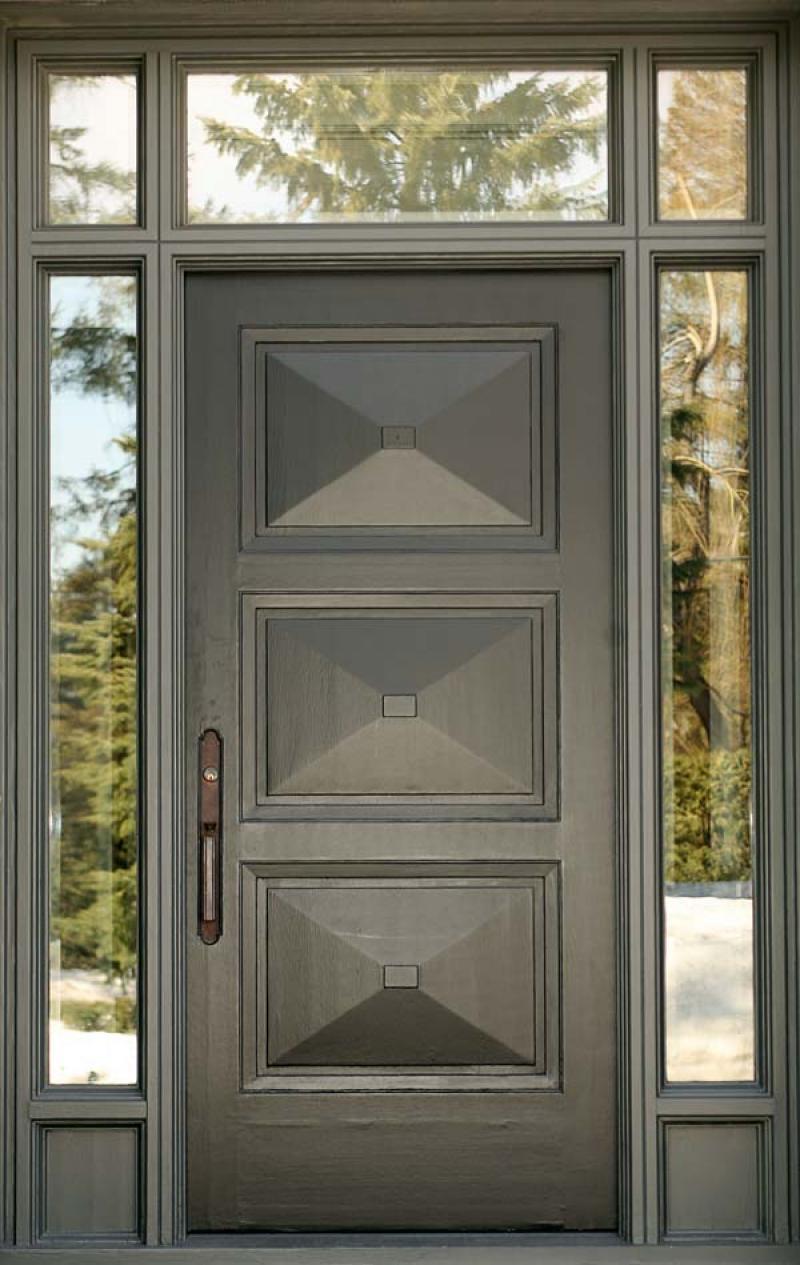
Another important factor is whether your home is 'weather-tight.' Make sure all doors and windows are properly sealed. If not, you may be losing heat at the same rate your heating system is producing it. Check with a heating contractor who can tell you whether the new unit is sized correctly for your home.

-- Associated Press


May 18

Advertisement

Renovation & Design

Help your garden grow quite contentedly

As gardening season begins, here are 15 ways to help your garden grow quite contentedly.

1. When purchasing garden ornaments, some gardeners make the mistake of inappropriate quantity and size. Ornament selections have a tendency to be too small, too big, too many and positioned without much thought. Remember, less is more and proper portions are key.

2. Place garden ornaments inconspicuously. While a large focal ornament or statue makes a bold statement, there is a simple delight in strolling through a garden to find a small cherub statue or a gazing ball peeking from underneath the leaf of a plant. Tip: Just like a picture on your wall, garden statuary looks best with some kind of frame. A background of traditional clipped box, yew or a mixed border of grasses frames your statuary in the landscape. A stone wall or trellis covered with roses or even a simple wooden fence is all you need.

3. Don't be discouraged if your new perennial garden isn't what you had hoped. There is a saying that goes " The first year they sleep, the second year they weep, the third year they leap." With this in mind, research the mature size of the plants so they don't outgrow the garden. Tip: Also, look for insect and disease resistant plants to minimize maintenance and insure that your garden is healthy.

4. Adding a pathway can make a huge difference in the way you see your garden. Something as simple as laying irregular slate stepping stones will draw the eye towards a desirable destination and away from something less attractive. For a garden that does not have a physical need for a pathway, start the stones far apart and irregularly spaced, and gradually bring them closer together to form a path as they approach your new focal area. The eye will generally follow a visual path, and the focus will be off of the eyesore.

5. Pond kits are very popular and available in most garden centres, but they are often installed without appropriate surroundings. Before you install a pond feature in your garden, reflect on where a small pond might occur in nature and how plants would grow in and around it. Select a spot in your garden where the pond could appear to happen naturally. If your pond is designed to draw focus away from a less desirable feature of your garden, consider how you will draw attention to this new feature from a distance. Installing a bubbling fountain feature towards one end of your pond will keep the water moving.

6. Natural style garden ponds are built to create the illusion of a mountain stream with waterfalls. Larger boulders and flat stones can be used in combination to create the look of a naturally formed stream. The sound of falling water can be fine-tuned through the careful arrangement and placement of stone.

7. Koi garden ponds must be able to accommodate fish that can grow to about 2.5 feet in length. Many koi ponds have no plants because koi have a tendency to eat certain types of plants. You must plan for an extremely large pond, and provide adequate surface area for the absorption of oxygen into the water. Ponds for koi must be at least 3 feet deep to provide room for mobility. They also require filtration to keep the water clean.

8. Part of the secret to a "wow" garden is to keep things simple. Place art singly, as an enhancement or complement to the surrounding garden space, place ornaments in groups if they are of similar design, colour, or material. Soften the edges of ornaments with plants to make them an integral part of the garden. Much of the artwork is made of rusty metal, a form that blends naturally into the landscape.

9. Wind ornaments are not just chimes. They are wind sculptures that surf currents of air atop tall or short stakes that can be stuck in among the flowers of a garden bed or a large container garden or even submerged in ponds.

10. Just like the rooms within our home, lighting is key. When it comes to garden lighting always conceal the light source, either with a glare guard on the luminaire or by tucking it behind a shrub, large branch, wall, or rock. Ideally, you will be unable to see where the exterior light originates. Tip: Don't over light. Extremely bright garden lighting often loses the intended effect.

11. Grouping n ew plant pots simply create interest to gardens. Don't worry if your pots are slightly chipped, this gives them additional character. You can also draw attention away from the pots by filling them with simple plants. Use trailing plants such as Veronica Georgia Blue, lobelia, ivy or creeping jenny because they grow quickly to camouflage unsuitable pots.

12. There are several sources of beauty in nature, if you're looking for it. Keep your eyes open for natural sculpture, like interesting pieces of driftwood, a fallen branch from a tree, stones, boulders and rocks. Tip: Break up the monotony of a long plain wall or fence by hanging a classy piece of artwork.

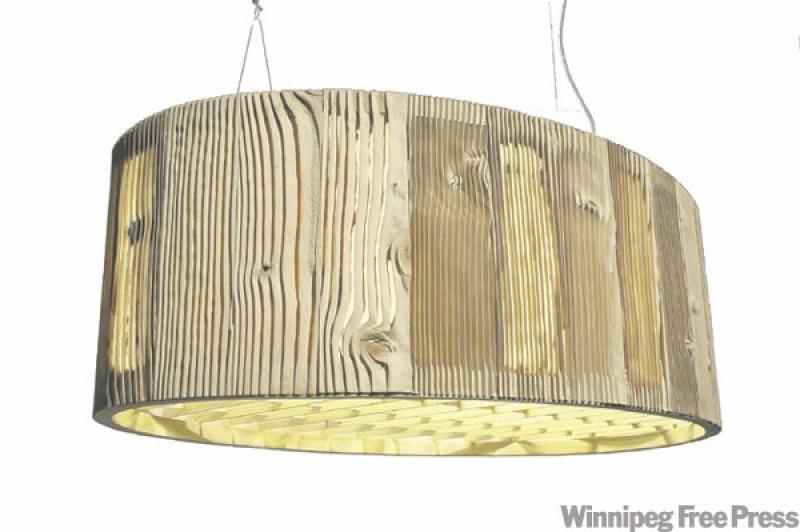
13. Other beautiful accessories to consider: small ponds and fountains, stained glass, relief sculptures, and outdoor chandeliers. An outdoor chandelier is not only a very attractive accessory, it is also a very practical source of illumination, and can serve as an excellent insect-repellent.

14. Bird feeders, houses and bird baths are also desirable accessories. If setting up a bird bath, remember that it should be shallow, never exceeding two inches in depth, and always contain fresh water. If you have a notion to increase your bird watching experience choose a heated bath, a mister/dripper, or a fountain, as a source of water for birds to bathe and drink. All the birds that normally visit your bird feeder will come to your birdbath. In addition, you'll attract many birds that don't necessarily visit feeders. Some of these include robins, thrushes, vireos, orioles, and warblers.

15. Don't count out the beauty of bats. Invite bats to your garden by including plants that attract night-flying moths, which will then attract bats to eat they. Plants such as phlox, stock, fireweed, mock orange and Nocotiana.

Solutions is compiled from various sources: seattlepi.nwsource.com, hmk.om.ca, uri.edu, taunton.com, ezinearticles.com, gardensupermart.com, magicalgarden.com, gardening.tips.net, gardening.about.com, allweatherlighting.co.uk, gardenwiseonline.ca, wild-bird-watching.com, wnetwork.com. Thank you to all who contributed! Similar information may be found elsewhere.

Solutions sleuth Reena Nerbas is a home economist and speaks professionally on the topic of household challenges; she is also the author of two national bestsellers, Household Solutions 1 with Substitutions and Household Solutions 2 with Kitchen Secrets. She can be heard on radio and television programs across Canada.

www.householdsolutions.com

Reena Nerbas - Solutions
May 11

Renovation & Design

Swinging door, new stairs will keep Fido safe

QUESTION -- We read with interest a previous column on old pocket doors that repeatedly fall off their tracks. We have two such doors. One is fine, but we seldom use it. The other is at the top of the basement stairs, and it has fallen off its track three times this year. The first two times I had a local handyman repair it. He took the moulding and frame all apart, re-hung the door and replaced the moulding. After the second repair I read your column, which basically said the problem will continue and there is no point repeatedly fixing it as the door should be replaced. When it fell off a third time, we didn't bother calling the repairman back. The problem is we need this door to keep our dog out of the basement. We continue to use it, dragging it back and forth across the flooring. We are not prepared at this point to rip out all the surrounding drywall to replace the door with new hardware. A baby gate has been suggested, but I'm afraid the dog is so stupid she might jump it and fall all the way down the stairs. Is there any other type of door or barrier that we could use to close off the basement stairs and that could be installed in the existing door frame without ripping out the whole wall?

--Dorothy and Michael Stephens, e-mail

Answer -- The simplest solution to your dilemma would be to get a smarter dog, but that might create larger problems of an entirely different nature. Since that is not a likely option, I will give you at least one other possibility for your troublesome stairway area.

While an open doorway directly above your basement stairway may present a hazard to your intellectually challenged pet, it may also pose the same risk for any human inhabitants of the home. If your stairs go straight down to the basement floor, without a landing or change in direction, an open doorway could be just as hazardous to small children or others. Many older homes have basement stairways that were installed for very limited use and may be a trip hazard because they did not have adequate space for proper landings. The door at the top is not only functional to close off the basement area from the living space above, but acts like a barrier to accidentally tumbling all the way down to the basement floor slab. Care must be taken when doing any repairs to ensure the current safety level is at least maintained or improved.

It is somewhat unusual to install a pocket door above a stairway. It is more normal to see an outward swinging door in this location. The door must swing away from the stairs to prevent accidental falls, due to an unlatched door or when reaching for the knob over the open stairway. I would expect the builder of your home may have installed the pocket door to save space or due to lack of clearance between an open, swinging door and the area adjacent. If this is not the situation, a simple solution to your dilemma might be possible. You could replace the existing pocket door with one that swings. In that case, modifications may only have to be made to the door jamb on the side that the pocket door now enters the wall and the top.

To install a typical swinging door, the old split jamb of the pocket door could be easily removed from one side and the top by prying off the casing, as done in your previous repairs. A new, full width jamb can be installed, after having the hinges mounted on this side and the door edge. Once mounted in the rough opening, the casing can be replaced, a door stop installed, and a knob and striker plate drilled and secured. The only concern with this method is the height and width of the new door. The opening may be smaller than the standard size due to the previous installed pocket door. The new door will have to be ordered to suit this opening or cut down from the norm. If the old door is not too damaged from years of opening and closing without proper mounting to the track, it may be possible to trim it to suit the new configuration. That way, additional finishing or painting the door to match the existing trim may not be required.

Should modification of the door to a swinging one not be practical, there is one further possibility to ensure safety. Modifications to the basement stairs may be another way to prevent the need for the door, altogether. This could be accomplished by removal of the old straight stairs and replacement with two sets of new, shorter stairs divided by a landing. This will have to be done with the top set of short stairs running at right angles to the lower set, so there must be enough room in the existing basement to accommodate it. A good guard railing will also be required at the side of the landing to prevent your dog from sliding off.

While both of the proposed options are possibilities, the first one will definitely be less invasive or costly, as long as there is room to allow for the swinging door. If neither looks like something you would consider, my original, tongue-in-cheek proposal might not be out of the question.

Ari Marantz is the owner of Trained Eye Home Inspection Ltd. and the President of the Canadian Association of Home & Property Inspectors - Manitoba (www.cahpi.mb.ca). Questions can be e-mailed or sent to: Ask The Inspector, P. O. Box 69021, #110-2025 Corydon Ave., Winnipeg, MB. R3P 2G9. Ari can be reached at (204) 291-5358 or check out his website at www.trainedeye.ca

trainedeye@iname.ca

Ari Marantz - Ask the Inspector
May 11

Renovation & Design

Use low-number papers for rough sanding

QUESTION -- What is meant by the term "grade of abrasive paper" and what is meant by the term "raising the grain"?

ANSWER -- The "grade" (or grit) of abrasive paper refers to the size of the abrasive particles in the sandpaper. Given the same number of passes and the same amount of pressure, paper with larger particles sands deeper and rougher than paper containing smaller particles. A lower number indicates that the grade of the paper is used for rough sanding where a high number indicates the sandpaper is meant for finish sanding.

Generally speaking, 30- and 60-grit papers are used for rough sanding, 100- to 150-grit sandpaper is for medium sanding and 220-grit sandpaper is used for finish sanding. But this changes with the type of wood and whether the sanding is done by hand or with a machine. The best way to determine what grit to use is to test-sand. Start with the finer grits (150 to 220) and slowly work up to the rougher grades.

Sanding a soft wood with rough sandpaper, or sanding perpendicular to the wood fibres, could possibly tear the wood fibres -- causing the grain to raise to the surface. Another way of causing the grain to raise is to over-wet wood; it's what painters must contend with after the first coat of paint is applied. At this point, and once the paint or varnish has dried, the first coat and the raised surface must be smoothed. The second coat of finish usually will not raise the grain because the wood is protected from absorbing moisture by the previous coat.

-- Associated Press

Morris and James Carey
May 11

Renovation & Design

Stay cool this summer with fine-tuned air conditioner

You don't have to pay through the nose to keep cool this summer. Here are some steps you can take to lower your bill, improve comfort and help save the planet.

Dehumidify

An air conditioning system does more than just cool the air. It lowers humidity and removes dust and dirt by moving the air through filters. One of the most appealing aspects of having less humid air is that it actually feels cooler to the skin, thus allowing you to raise the thermostat.

If you don't already have one, you may want to consider adding a dehumidifier if you live in a particularly humid climate. It can result in significant energy savings, a lower utility bill and less wear and tear on your cooling system.

Check the filters

When filters become clogged with dirt, the system must work harder to do its job. This wastes energy and inflates utility bills. Disposable filters should be checked every two months (once a month during peak use) and replaced when necessary. Stay away from cheap, Fiberglas mesh filters. A pleated filter will cost three times more, but normally last three to five times as long and does a better job of protecting your system.

If your air conditioning system has either a permanent or electronic filter, it should be cleaned or replaced according to the manufacturer's instructions.

Go whole-house

If you live in a dusty area or suffer from allergies, kick up your air cleaning horsepower by installing a whole-house air cleaner. You'll get the best of all worlds: a clean system and fewer allergens that make you wheeze and sneeze.

Monitor your refrigerant

Air conditioners use a refrigerant gas that is circulated throughout the system to produce cool air. Minute leaks in the system can allow the refrigerant to escape. When this happens, more electricity is used with less cooling effect. Have a heating and cooling contractor check the refrigerant level every year or two.

Go heavy on metal

If those funny paper-thin metal separators on the exterior portion of the system (the condensing unit) are bent, efficiency is reduced because air flow is diminished. Use an old dinner knife or thin-bladed screwdriver to straighten out bent fins. It isn't important that the fins look nice -- only that air passes freely between all of them.

Shut it

Some people like to "help" their air conditioner by opening doors and windows on warm days. But doing so lets all the cool, dehumidified air rush outside and lets in the hot, humid air. The more your home seals out heat, humidity, and dust, the more efficiently your system will do its job.

Insulation, weather-stripping, window coverings and shade trees are a few things that can be used to help your home beat the heat.

Program

A programmable thermostat can save energy and money. Programmable thermostats automatically change the thermostat's set temperature between comfort levels and energy-saving levels at specified times, according to the programs you set up. Generally, to save energy, you would set up four program periods for each day -- two comfort (cooling) programs and two energy saving (idle or higher temperature) programs.

Get efficient

When an air conditioner begins to show its age, it is usually a major component such as a motor or compressor that wears out. In the short run, replacing failed components will usually cost the least amount of money. But the government-backed Energy Star program recommends replacing your air conditioner with a new, more energy-efficient model if it is 10 years or older. Eventually, the more efficient unit should pay for itself through decreased utility bills.

-- Associated Press

James and Morris Carey
May 11

Renovation & Design

170 attend MHBA renovation seminar

The Manitoba Home Builders' Association recently hosted its 3rd annual Renovation Seminar at the Norwood Hotel. More than 170 people attended. The event was free to the public and featured a number of experts addressing many topics related to home renovation.

Tim Loeb from Manitoba Hydro talked about Power Smart and the variety of financial incentive programs offered to those who are committed to making their homes more energy efficient. Sylvia Hartry and Elvira Krahn from Steinbach Credit Union gave the audience a variety of alternatives relating to the financing of renovations, whether they be big or small jobs.

Martin Grady from the City of Winnipeg Zoning and Permits department clarified which jobs needed a permit and the potential dangers of not taking out a permit when required. Kim Schroeder from Charisma told everyone how to Go Green With Style and gave tips on ecologically friendly design.

There were five professional renovators on the panel who shared their expertise with the room. Brad Sveinson (Character Homes), Grant Sakiyama (Sakiyama Construction), Glen Dudeck (Paramount Windows) and Tony Teunis and Marcel Verrier from All Canadian Renovations answered any and all questions from the audience and gave many valuable recommendations.

A renovation project should be an exciting and rejuvenating time for the home owner. By taking the time and effort to do your homework before starting the project, it will be an enjoyable experience for everyone.

Look for the RenoMark Renovation Parade in October. The Manitoba Home Builders' Association will be highlighting a number of outstanding renovation projects that will be open for public viewing.

Michael Moore is president of the Manitoba Home Builders' Association

Checklist

Some of the key points to consider when renovating are:

Develop a realistic budget of what you can afford

Check with the municipality about licensing and zoning

Define the scope of work with plans and specifications

Decide what type of contractor you need

Gather names from friends, home shows or professional associations

Narrow the field by asking about liability insurance, workers compensation coverage, business or GST numbers

Check references

Get it in writing; insist on a written proposal

Avoid the cash deal; you may save a few dollars at the front end but you will have no legal protection in the event that something goes wrong

Maintain control with regular meetings and updated information

Michael Moore
May 11

Browse Homes

Browse by Building Type