Renovation & Design

Renovation & Design
Style options endless for galley kitchen
QUESTION -- We have just moved into a home that requires some renovating. In particular, we want to focus on the kitchen. One of the features we liked was the reclaimed brick wall between the kitchen and the dining room.
The kitchen is a long, galley style and feels a little claustrophobic. We want new cabinets and wonder if we could remove the wall across from the brick wall. (There's a hallway on the other side.)
Do you have any suggestions to open this space up and what wood stains go with the brick?
ANSWER -- You have two interesting design questions. First, the redesign of your galley kitchen plan, and second, how to work with a rustic brick feature wall.
Galley kitchens were first introduced to residential designs in the late 1920s. This efficient design was borrowed from the galley kitchens found on ships, trains and aircraft at this time. The galley kitchen style is recognizable by its long, continuous cabinet and counter display. This linear design often consists of two banks of cabinetry units facing each other. Space is limited, so there's no room for table and chairs.
To increase storage, vertical space is the way to go. Hanging pots, dish racks and ceiling-mounted cabinets are common.
To successfully redesign your kitchen, you'll need to identify which walls are load-bearing. Obviously, the brick wall will be staying, and is likely the main weight-bearing wall. If the wall separating the kitchen and a hallway is not weight-bearing, you will have greater flexibility for opening this space.
Of course, by eliminating a portion of this wall, you reduce storage space. You may be able to replace a portion of the countertop with a custom-designed island, depending on the width of your hallway and the space your kitchen opens into. The island would offer storage below, while at the same time provide a seating area.
If you remove the upper cabinets, the space will feel more open. If your blueprints indicate this is in fact a weight-bearing wall, you could provide support with strategically placed pillars at each end of the island.
When it comes to selecting the new cabinetry, your options are endless. Reclaimed bricks are equally stylish in a country setting as well as a contemporary, urban kitchen. If a country theme is more your style, a weathered barn-wood door front would complement the rustic ambience the bricks provide.
Equally at home with rustic brick are painted surfaces. Country blue, sage green and butter yellow provide the perfect accompaniment to the russet colour. For a traditional setting, new cabinets in maple, oak, cherry or alder woods would provide an updated look.
Selecting a darker stain will provide contrast to the brick wall. A similar tone will provide a homogeneous effect, but without contrast, the overall effect may become uninspired.
If the tone of the wood is similar to the wall, add visual contrast by installing upper cabinets in varying heights. For a more contemporary and urban feel, consider a high-gloss laminate cabinetry in black, royal blue or brilliant yellow. This sleek contrast to the rustic wall sets the tone for a modern European style.
Stainless-steel cabinetry is an alternate option and perfect for a metro-loft feel. This look can be further enhanced by adding a practical application of clear glass as the backsplash over the brick.
Before you begin removing walls, consult a kitchen specialist.
QUESTION -- I have heard some concern regarding radon emissions from granite countertops. How much of a threat is this and how can I tell if my granite is safe?
ANSWER -- Radon is a naturally occurring radioactive gas that is commonly found below the Earth's surface in many parts of the world. It is caused by the natural process of decaying uranium.
Recently, there has been attention given to home-building products that may emit this gas. As a gas, radon can move freely through rock and soil layers. This doesn't mean every rock formation or soil layer is in contact with this uranium byproduct.
Since radon is a colourless and odourless gas, however, it is possible granite, or other stones for that matter, may be contaminated without anyone's knowledge. Most granite that is used for counter applications has proven to be free from radon.
If you are concerned about your product, contact the Radiation Safety Institute of Canada at www.radiationsafety.ca or call 1-800-263-5803.
-- Canwest News Service


Renovation & Design
It's in your hands to prepare home for winter cold
Feel a chill? It's not just the falling temperature. It's the scary prospect of higher heating bills. Oil prices may have fallen, but the American Gas Association still is predicting that on average, bills for people who heat their homes with natural gas may be more than 18 per cent higher this year than last. Simple things can make a difference in how much you spend this winter. We talked with Angie Hicks, founder of Angie's List (angieslist.com), a website that helps consumers find contractors, for some tips.1. Get the furnace checked.Pay to have a professional spot problems and fix them. It will be a lot cheaper than paying weekend rates for an emergency visit when the furnace cuts out on a cold Friday night. According to Hicks, 80 per cent of emergency calls could be prevented with routine maintenance.
2. Change the filter.Hicks suggests you let paying the monthly gas bill be your reminder to replace the furnace filter on a forced-air system. A clean filter makes the furnace run more efficiently, using less gas, saving money and reducing air pollution.
3. Lower the thermostat.It's an immediate way to burn less gas. If you don't have a programmable thermostat that can be set to automatically turn the heat way down while you're snuggled asleep or while you're off at work, get one. Depending on your skill level and the complexity of your heating system, you may be able to install one yourself.
4. Add insulation.Even if you have some insulation in your attic, you probably don't have enough. In Chicago, Hicks recommends attic insulation with an R-value of 49 -- which would require layers of standard fiberglass batting laid 19 inches deep. The batting is messy to handle, Hicks says, but easy enough for homeowners to install and inexpensive compared to the energy it saves. Other types of insulation may be more effective in tight spaces but require professional installation. Remember that many older brick houses, such as Chicago's 1920s bungalows, were built with no insulation in the walls. Be sure to caulk and weatherstrip around doors and windows to seal heat-sucking small gaps.
5. Consider a new furnace.It's an investment of several thousand dollars, but any furnace more than 10 years old is likely to burn far more gas than today's, Hicks says. Furnaces with the Energy Star label use gas at least 15 per cent more efficiently than other models (energystar.gov). It's crucial to size a furnace just right -- neither too small and unable to heat the home, nor too powerful and therefore wasteful. Prices will vary widely, depending on the size of the house and the complexity of the installation. Get bids from several contractors; question them closely about what they recommend and why; and check references, licenses and insurance before signing a contract.
-- Chicago Tribune
Renovation & Design
Create cosy haven to ward off chill
While the frigid temperatures have somehow been held at bay, winter is here to stay for another few months. Creating a cosy, cheerful environment at home can help fight the winter blues.Many people, including myself, suffer from SAD (seasonal affective disorder) which can put you into a real funk once the days start getting shorter. Lack of natural light combined with shorter days and cold temperatures are a challenge for those who suffer from SAD and even for those who don't.
The best way to alleviate the depressive offshoots of the winter blues is to focus on what makes you feel good. Cheery colours, cosy comforts, good friends, music and good food are all things that can help you make it through yet another winter. By making a few changes to your décor you can enhance any or all of these experiences so that your home will be a haven of comfort and pleasure which can help make winter a little more bearable.
Even those who enjoy winter can benefit from these changes to their décor. As they say, a change is as good as a rest, after all
Cosy, warm rooms or areas in the home are a great place to battle winter chills. Soft, textures, sumptuous finishes and plush surfaces will be a comfort after a day out in the cold. Whether you choose to create this oasis in your bedroom, on the living room sofa or a favourite reading chair, be sure to fill the area with lots of soft pillows, cosy throws and decadent plush surfaces from head to toe. A fireplace is warm and inviting and might be just the spot to unwind and cuddle up in after a chilly winter day.
There's nothing better than a roaring fire in the winter. Whether wood burning, gas or electric, a fireplace warms up a room literally and figuratively. The new technology available in electric fireplaces allows for most any home to be able to have a fireplace in any room. They are beautiful and much more energy efficient than their predecessors. So, if you think you can't have a fireplace...think again. Check out your options in stores or on the Internet just to get an idea of what's out there. If not, an arrangement of large, chunky candles placed on a non-flammable tray can mimic a roaring fire. Just be sure to be safe with any open flame.
If you find that your rooms feel dim, especially in the darker winter months, you might want to cheer them up with colour. Splashes of vibrant colour, like yellow, can help keep your mood light and your outlook cheerful. You can add colour in a non-permanent way via area rugs, accessories, linens and window treatments. If your room needs freshening, however, new wall colour might be necessary. Again, choose a colour that lightens your mood. The colour purple encourages creativity and might be good in a den or child's room; yellow will instantly cheer up a room and therefore would be great in the kitchen; red stimulates and energizes which might work in the living room or den; blue and green are calming and would be great in a bedroom or home office. Use colours to their full potential by taking into account the affects they have on mood as well as how they look.
Entertaining guests helps keep spirits up so create an environment that is beneficial to the style of entertaining you prefer to do. You may love having dinner parties so stock your kitchen with great utensils and cookware and make your dining room dramatic and elegant. Perhaps you like to have friends over for card games, to watch sports or just to visit with. Ensure that each activity coincides with a comfortable setting and proper seating for the purpose intended.
The right song can change your entire outlook so be sure to add music to your day. Whether you play an instrument or can only play the radio, music will lift your mood and keep your outlook positive. The right background music will also enhance your dining experience and other group functions.
There's nothing like a long, hot bath to chase away the winter chills. Create a spa-like setting in the bathroom by treating yourself to at least one set of luxurious, high end towels. Decorative soaps in attractive containers make great ready-to-use accessories. Thick and thirsty bath mats will keep your feet toasty and will provide a sense of luxury. These are all small items that, even at high end prices, are affordable, so treat yourself.
On a final note, photographs or paintings of summer settings can help you while away the dark winter months. Keep them in plain view to remind yourself that summer is coming. Green houseplants (even fake ones) can make you feel summery inside. The lack of seeing green grass can put a damper on your mood but having some houseplants around to look at and tend to can help fill the void.
Your home should be an oasis at any time so treat yourself to a few non-necessary items that will make you and your family feel spoiled and special. Summer is a few short months away.
Connieoliver@shaw.ca
Renovation & Design
Be sure to keep your sump pumps maintained Secondary, battery-powered pump is good safety measure
Q: I recently purchased a property, which is a side-by-side condo. The property is three years old. We have a sump pump that is automatic. A previous article of yours raises some questions for my pump.Is there such a thing as a water tight sump pit?
Regarding pump failure: What is the proper method for installation of a second pump, powered by a 12-volt system? Where and what type of sump pump is available for this setup?
Thank you,
---- Art Mensch, Steinbach
Answer:You have raised a concern that is held by many homeowners with newer homes, particularly in rural or semi-rural areas. Sump pumps are an integral component in these homes for soil moisture management and can lead to significant problems if they fail or are not functioning properly. I will answer your question and add some extra information about these important mechanical devices in homes.
I am constantly surprised, when inspecting newer homes, about the lack of knowledge many homeowners have regarding their sump pits and pumps. I would guess that there is little thought given to these important systems until there is a failure or problem. As anyone who has experienced difficulty with this issue, once a problem is seen it is usually very, very noticeable. The biggest issue many homeowners have in this regard is where to divert the discharge hose to avoid saturating their lawns or driveways.
The function of a sump pit in a newer home is to create a reservoir underneath the basement floor slab to temporarily store excess groundwater collected by the weeping tile system. The perforated plastic drainage tile, which is laid outside the base of the foundation before backfilling, collects groundwater from rain and melting snow. These collector pipes connect to non-perforated ones installed underneath the basement floor slab. The excess groundwater is drained through these pipes, which terminate in the sump. The purpose of the sump pump is simply to redirect this water, through solid ABS plastic pipes, back to the exterior of the house, where it can be recycled back into the soil. The pump should engage when either an external float switch rises to the on position or a pressure switch inside the pump activates.
Where this system has a possible flaw is in the pump, itself. If the pump or float switch fail to activate when needed, the pit may fill to the top or overflow. This excess water can cause flooding in the basement, or heaving of the basement floor slab due to excess pressure from the weeping tiles under the slab. This may happen due to normal deterioration of the pump or float switch or due to a power failure.
Most sump pumps plug into a regular duplex receptacle on a normal 15-amp circuit. This circuit should be dedicated to the sump pump only, as large appliances connected to the same circuit may cause the breaker to trip if they are activated at the same time as the sump pump. Sometimes, homeowners unplug the pump for the winter or accidentally knock the plug out of the receptacle, which may lead to major problems. Also, many homes, particularly in rural areas, may be subject to power supply failures. This is often experienced during strong summer electrical storms, when the sump pump is most needed due to the heavy rainfall associated with these storms.
To solve this problem some creative homeowners or contractors install a secondary sump pump that is powered by a 12-volt battery. This smaller pump is typically installed with the float or activation switch near the top of the pit, rather than the bottom, so that it does not engage until the other pump fails. This pump should only engage when there is a problem with the electrical pump, likely due to power failure. This second pump can be connected to the same discharge piping with a second check valve to prevent backing up of water into the connection pipes. Often, these pumps are connected to a large marine grade 12-volt battery, sitting just outside the sump pit.
To answer both your direct questions, the smaller, battery powered sump pumps should be readily available through plumbing contractors or suppliers and may be installed with some modifications to the top plastic cover of the sump. Sump pit lids are now designed with gaskets and grommets to be fairly airtight, but this is not designed to stop water leakage under pressure. These components are to prevent soil gasses, like radon, from entering the living space from the soil underneath the basement floor slab. Care should be taken to re-seal this lid around the discharge pipe and wiring after modifications to install the second pump.
The final thing to address is the possible failure of the second pump. The worst-case scenario is the secondary pump not engaging when it is most needed. This may be due to a battery that is low on charge or other defect. It is critical to test the secondary pump on a regular basis by engaging the switch and allowing it to run for a short period of time. Also, a moisture sensor may be installed above the level of the secondary pump float switch, connected to a sump alarm or regular home alarm system. If the water level in the pit reaches this sensor, the alarm sounds which will let you know that both pumps are not operational & immediate service is needed.
Ari Marantz is the owner of Trained Eye Home Inspection Ltd. and the president of the Canadian Association of Home & Property Inspectors - Manitoba (www.cahpi.mb.ca). Questions can be e-mailed or sent to: Ask The Inspector, Box 69021, #110-2025 Corydon Ave., Winnipeg, MB. R3P 2G9. Ari can be reached at (204) 291-5358 or check out his website at www.trainedeye.ca.
trainedeye@iname.com
Renovation & Design
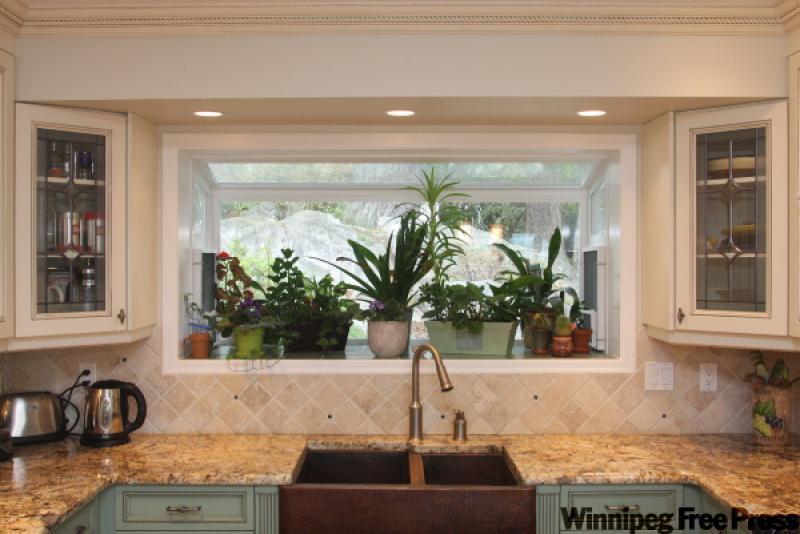
Keep in tune with indoor plants, keep them well
It is always a joy to see plants with fresh new leaves, and blossoms unfolding. All too often though, the little gems we find that look so healthy soon look tired and slowly (or quickly) go to their demise.Indoor plants can perish for a number of reasons, but the key reasons are too much or too little light, too much or too little water. Lack of humidity, the wrong soil and food, and incorrect temperatures can all combine as well, to cause a plant to get weak enough to be attacked by bugs and diseases.
Light is a variable that is difficult to pinpoint. How much light a plant needs is often a guess unless information on the plant tag indicates.
Even then it is a matter of deciding where the plant will go. Bright light to one person might be low light to the trained eye.
Plants should always be located as near a light source as possible. It is always surprising to me when someone asks me for plants that can grow in the dark. Save for mushrooms and fungus, no plant can survive in the dark. Some last longer under these circumstances than others, but they all will have a short shelf life.
Leaf drop and yellowing leaves, and stretching or sprawling branches are all signs of low light. If the situation is not corrected, it will eventually kill the plant.
Just as unfortunate is the plant that is placed in full sun when it really requires shade. Leaf scorch and fading leaves occur in these conditions. The plants will turn crisp and dry up but can be revived if moved soon enough. Unfortunately, the dried leaves and branches are lost, and this ultimately changes the look of the plant, and sometimes so much so that the symmetry of the plant can be lost forever.
Watering is key to the health of a plant. Over-watering kills a plant faster than any disease, and it is difficult to downright impossible to bring an over-watered plant back to health.
Safer's Oxygen Plus is useful in reviving some plants that have deteriorated, but much of the time over-watered plants wilt and are soon dead. If you over-water your plants consistently, try planting them in clay pots. Clay is porous; it breathes throughout the pot, unlike plastic.
Under-watering can be just as hard on a plant. Keep plants watered regularly on a consistent basis. Depending on the light, you may have to check daily to see approximately when your plant is beginning to dry out.
If you are in tune with your plants, you will see the changes before the plant collapses. In the case of succulent plants, when they feel plump, they do not need water. Even if the soil is dry, refrain from watering them. When the plant feels soft or lacks turgor, it should be watered.
-- -- Canwest News Service
Renovation & Design
Patching linoleum won't take long, and it works
Q: We have a cigarette burn on our almond coloured sheet linoleum. It is rather deep. I have tried to "shave" it clean and I have also tried bleaching, with the area with toothpaste. Any ideas?-- Celine, Lorette
If you have already tried to insert shavings of linoleum into the space and cover the area with clear nail polish, yet have not been successful, then you need to find another piece of linoleum from the same dye lot. If you do not have a spare piece, cut a little piece from behind the fridge or from the closet. To remove a little piece from another area, hold a putty knife blade perfectly perpendicular to the floor. Score the area and then heat it with a hairdryer and lift it up carefully using the putty knife.
Lay the patch over the area to be repaired making sure that the pattern lines up. Place masking tape across to make sure the scrap piece does not move. Use a sharp razor blade knife and cut along the pattern on the patch through the damaged piece right through to the sub.
Remove the masking tape, the patch piece and the burnt area using a hairdryer and putty knife. Scrape the sub floor underlay clean and apply a thin coat of adhesive allow that to dry for 30 minutes. Next apply the adhesive to the back of the patch and the sub floor. Position the patch into place and push it down firmly. Lay a piece of parchment or wax paper on the patch and pile it with books, leave overnight. In the morning apply a seam weld (from a hardware store) along the pattern joint to hide the repair.
I know that this sounds like a lot of work but if you buy really good adhesive glue and seam weld, the project won't take long and you will be happy with the results.
Q: My son had an old car that left grease stains on our cement car port and I have tried everything to clean it, do you have any suggestions?
-- Susan, Brandon
You can purchase products formulated for cleaning concrete. The following are other options, always wear eye and skin protection when using chemicals. Bleach, dilute as the directions indicate for cleaning. Let the solution sit on the stained area for several minutes, then scrub and rinse. Or TSP, dilute one cup in one gallon of hot water. Pour it on the area and let it sit for 15 minutes. Scrub with a stiff brush. Rinse off with hose and repeat if needed. Or muriatic acid although this is not a stain remover or cleaner. The acid actually etches away the concrete itself, and sometimes the stain as well. You will need to scrub and rinse this chemical also. Follow the directions carefully! Use muriatic acid only if you seal the driveway with masonry sealer afterwards. Remember that you will be altering the level of the surface if you remove a lot of material. If you use a pressure washer, make sure you have the right nozzle. A jet that is too concentrated can damage concrete. Use a nylon scrub brush.
Q: My friend heard you on the radio giving a window cleaner recipe; she tried it and loved it but can't find the recipe. Could you give me the correct measurements for the ingredients? I would appreciate this as I clean windows in a church building and I dread the streaks! Thank you.
-- Marlis, Winnipeg
The window cleaning recipe is a cinch to make. In a spray bottle combine 1 tsp. cheap shampoo or dish soap, one-quarter cup rubbing alcohol. Fill the remainder of the bottle with white vinegar. Spray onto windows and wipe with three-day old or older newspaper. Super cleaner!
Q: I am getting ready to store my tools for the winter. Any suggestions on how to keep rust from forming on the blades?
-- Darren, Selkirk
Begin by cleaning the tools and any already rusted areas with fine steel wool and light oil such as WD-40. If you do not have WD-40 on hand you can opt for cooking, mineral or baby oil. You can also sharpen your tools now, which means they will be ready when spring comes a-calling.
Q: I burnt popcorn in the microwave and the entire house smells (especially the kitchen). What can I do to combat the smell?
-- Larry, Winnipeg
Here are a few tricks to tackle this quandary: You can either heat lemon juice or vinegar in the microwave until it boils over and then wipe out the interior. Or combine into a bowl; vanilla and water and heat until it boils over or another option is to combine lemon slices, vinegar, vanilla, dish soap and water in a bowl and heat. Alternatively combine and heat baking soda and water. If the odour persists, store coffee grounds in a bowl in the microwave to absorb excess odours. All the best!
Reena Nerbas is the author of the national bestsellers, Household Solutions 1 with Substitutions, Household Solutions 2 with Kitchen Secrets and the soon to be released book Household Solutions 3 the Green Edition available on-line and in stores across Canada.
I enjoy your questions and tips, keep them coming!
www.householdsolutions.org